
Iran’s widening war nearly reached NATO’s doorstep after a ballistic missile fired toward Turkey was intercepted before entering Turkish airspace.
During a Pentagon briefing early Wednesday morning, Mary Margaret Olohan, White House correspondent for The Daily Wire, asked War Secretary Pete Hegseth whether the incident could trigger NATO’s collective defense clause known as Article 5.
Hegseth acknowledged the engagement but suggested the alliance does not currently see the incident as meeting the threshold for invoking NATO’s mutual defense provision.
“I’ll have to get back to you on exactly what the intercept looked like,” Hegseth said. “We’re aware about that particular engagement. Although, no sense that it would trigger anything like Article 5.”
Article 5 of the NATO treaty states that an attack on one member is considered an attack on all members of the alliance, potentially triggering a collective military response.
According to regional reports, the Iranian missile traveled across Iraqi and Syrian territory before being intercepted over the Eastern Mediterranean by NATO air defense systems. Debris from the intercept reportedly fell into Turkey’s Hatay province near the Syrian border.
Turkey is a NATO member, making the strike particularly sensitive as the United States and Israel continue their joint military campaign against Iran known as Operation Epic Fury.
Turkey’s Defense Ministry said it reserves the right to respond to what it described as a hostile act.
Despite the rising tensions, Turkey has maintained a complicated relationship with Iran for years.
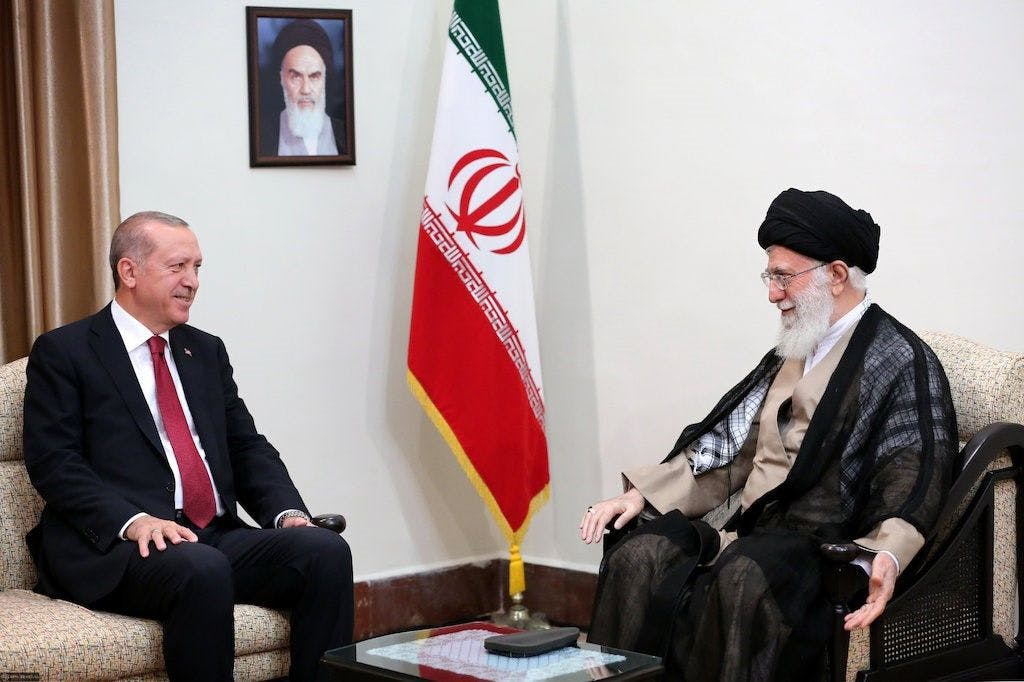
Turkish President Recep Tayyip Erdoğan has cultivated close diplomatic ties with Tehran while also positioning himself as a defender of Turkish sovereignty in the region. Analysts have long noted that Ankara views the stability of Iran as strategically important, particularly to avoid a refugee crisis along their shared border and to prevent Kurdish militant groups from exploiting instability in the region.
Turkey also relies on Iran for roughly 10% of its natural gas imports and maintains key trade routes with the country.
At the same time, Erdoğan has been sharply critical of Israel during the broader conflict.
He has repeatedly condemned United States and Israeli strikes on Iran as a violation of international law and described the widening regional conflict as a “ring of fire.”
Erdoğan has also been one of Israel’s most vocal critics internationally, frequently accusing the Israeli government of war crimes and refusing to designate Hamas as a terrorist organization, instead describing the group as “liberation fighters.”