
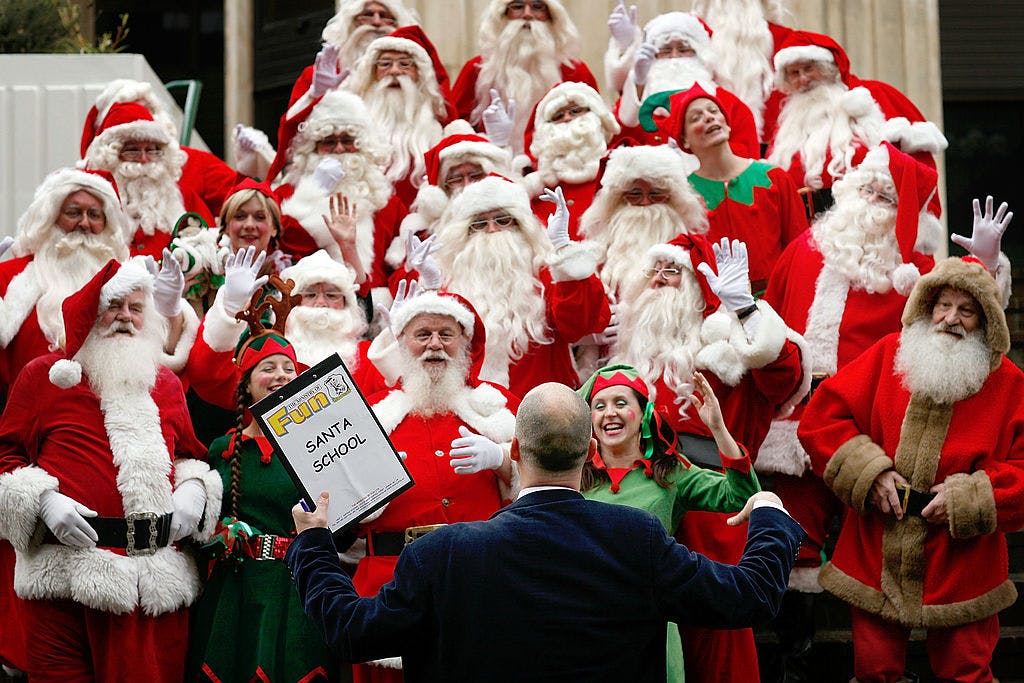
Just in time for the holidays, Brighton and Hove Museums is redefining Christmas for modern sensibilities — but not in a way anyone celebrating the season might enjoy. The museum, which was granted over $1.2 million in taxpayer dollars earlier this year, has a guide on “decolonizing” Father Christmas, claiming that the jolly old man is too white, too male, and far too judgmental for contemporary audiences.
According to the museum, Santa’s traditional “naughty and nice” list teaches children that a Western figure has the power to judge everyone, imposing colonial assumptions and erasing Indigenous cultural practices.
The museum’s Joint Head of Culture Change, Simone LaCorbinière, published a blog post in 2023 that stated:
… the tale of a white, Western Santa who judges all children’s behaviour has problems … who decided Santa should be the judge of children’s behaviour in every community? How can he assess, for example, Indigenous children practicing their own cultural traditions? Told like this, the story presents Santa as the ultimate authority of all societies. This asks us to accept colonial assumptions of cultural superiority. It doesn’t recognise the complex realities colonised people face.
And it can erase Indigenous cultural practices and sovereignty. For example, in many Santa storybooks of my youth, and later when exploring the story with children in the family, other cultures appeared simply as backdrops for Santa’s adventure. There might be a flag, and illustrations of children in their national costume, but we learned nothing about those places and people.
This perpetuates the harmful ‘colonial gaze’. Non-Western cultures are ‘othered’. It says that the coloniser has the power to judge all people. And it ignores many communities’ histories and traditions. Telling the story like this teaches new generations that the coloniser knows best.
And what do we say by having an old white man supervise the elves’ work? Is it something entirely innocent – elves are magical, mythical beings completely separate from the real world – or is there more to it? Are they representative of other groups? How do they reinforce how marginalised groups view not only ‘father figures’ but also themselves?
Mythical maybe, but elves are identifiably different to what is often presented as ‘normal’, which is white, male and non-disabled. And in the stories, the ‘different’ ones make the toys and the white, non-disabled man supervises them.
Christmas Sale – Get 40% off New DailyWire+ Annual Memberships
The post, which remains on the museum’s website, also included suggestions such as these:
Remove Santa rewarding children based on a Western binary of ‘naughty/nice.’ Focus on bringing joy to kids of all backgrounds rather than judging them. Put Santa to work in the factory alongside the elves. This shows him and the elves as equal. Have Santa be a more diverse character who celebrates cultural exchange. Avoid promoting one culture’s dominance. An inclusive adaptation could include many Santas from different regions. Include some Mother Christmases. Patriarchy and colonialism went hand in hand. Show the next generation that men don’t have to be in charge.Critics were not impressed. Senior Tory MP Sir Alec Shelbrooke called the initiative “the worst possible use of taxpayer funds,” while Lord Young of Acton of the Free Speech Union derided the museum as “po-faced,” sarcastically questioning whether children in non-Christian countries should now demand Santa leave a note apologizing for centuries of white supremacy.
The museum defends the project as “prompting reflection” rather than prescribing behavior, claiming it’s intended to teach children about historical narratives and cultural perspectives. In practice, it reads more like a manual for scrutinizing Christmas traditions through a lens of social justice, replacing timeless family fun with guilt and ideology.
Meanwhile, taxpayers are footing the bill.