

NTSB Chair Says D.C. Plane Crash That Killed 67 Was ‘100% Preventable’

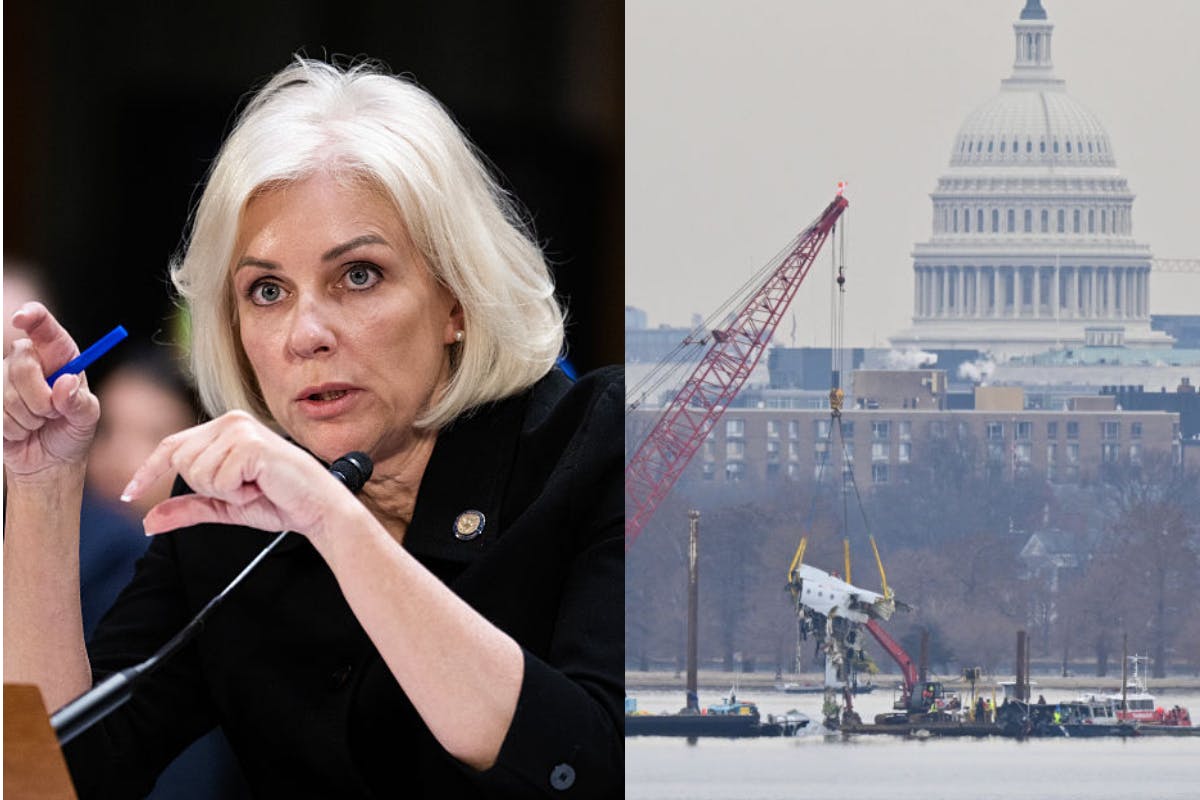
The National Transportation Safety Board (NTSB) held a meeting on Tuesday to discuss what their investigation revealed about the 2025 mid-air collision between an American Airlines passenger jet and a United States Army helicopter that killed 67.

The hearing comes nearly a year to the day of the crash that happened January 29, 2025. NTSB Chair Jennifer Homendy told a reporter after Tuesday’s hearing that the incident that took place in Washington, D.C., was “100% preventable.”

Investigators said the Federal Aviation Administration (FAA) ignored warning signs about a dangerous level of air traffic at Reagan National Airport (DCA) before the tragic crash.

“We have an entire tower who took it upon themselves to try to raise concerns over and over and over and over again only to get squashed by management and everybody above them within FAA,” Homendy said at the hearing.

Homendy and other NTSB members said the crash resulted from systemic failures at multiple institutions, including too much reliance on pilots to maintain visual separation between aircraft — the safe distance every plane has to maintain to avoid collisions.

During the hearing, NTSB members showed the most accurate recreation of the crash to date. A series of presentations showed how the Army helicopter and the American Airlines jet collided, with the helicopter blade slicing off one of the wings of the jet. Both aircraft immediately fell into the Potomac River.

According to The Washington Post, there was a wide array of issues that led to the tragedy. Per the outlet, instruments gave inaccurate readings, there was a lack of identification and collision avoidance technology on both the helicopter and the commercial jet, the airspace was crowded, and basic failures occurred including FAA maps that didn’t have clear guidance on the exact details of the helicopter’s route. The plane crew was never warned about the helicopter from air traffic controllers.

Per The Washington Post, the helicopter crew most likely confused the American Airlines aircraft with a plane that was farther away. Investigators also found the helicopter crew thought the aircraft was flying lower than it was. Investigators said Tuesday that the crash could have been prevented if the helicopter crew knew the instruments on the aircraft might have displayed inaccurate information about the altitude.

Homendy, who was visibly frustrated, said the two routes were close together and the FAA should have known the dangers.

“How is it that no one, absolutely no one in the FAA did the work to figure out there was only 75 feet, at best, 75 feet of vertical separation between a helicopter on Route 4 and an airplane landing on runway 33?” she asked at the hearing.

A controller at DCA was managing five helicopters and six aircraft after working alone for more than five hours at the time of the crash. The Washington Post reports nine times in the 18 minutes before the crash, the approaching collision alerts can be heard in the background of tower transmissions. However, investigators said there’s no evidence that any of the pilots or controllers involved that night were unqualified, impaired, or sleep-deprived — but they said the FAA did not conduct timely drug and alcohol testing for the controllers in the tower that evening in the aftermath of the accident.

Since this incident, the FAA banned non-essential helicopter traffic near DCA and closed the route the Black Hawk chopper took the night of the crash.

The helicopter had three crew members on board. The commercial jet was carrying 60 passengers, including youth figure skaters and coaches. United States figure skater Maxim Naumov lost his parents in the crash. He will compete in next month’s Winter Olympics in his parents’ honor.
Southwest Enters A New Era As Airline Officially Ends Open Seating

It’s the end of an era for Southwest Airlines. For the first time in 53 years, passengers will have assigned seating for their flights.

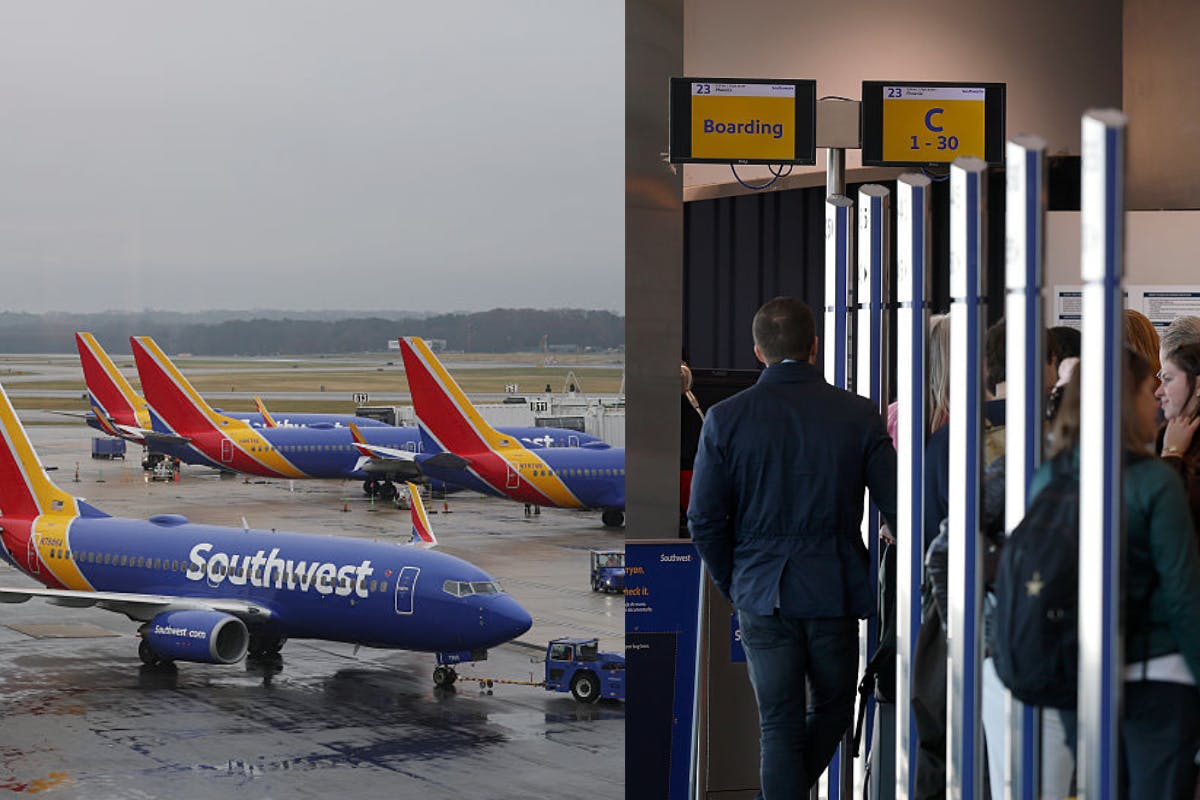
The change takes effect January 27 and will officially end the old boarding system that required travelers to line up in assigned groups and claim any available seat on the plane.

The Dallas-based airline updated its boarding policy to keep up with competitors, including American Airlines and Delta Airlines. The new assigned seating offers three types of seats: Standard, Preferred, and Extra Legroom.

The Extra Legroom seats provide passengers with three to five additional inches of legroom compared to the standard seats and are available at the front of the cabin and near the exit rows. These seats will board with Group 1 and 2, securing early bin access, extra snacks, and an extra complimentary premium beverage, per Southwest.

The Preferred seats are located near the front of the plane, while Standard seats are located in the back.

For Southwest Airlines Rapid Rewards Members, the boarding process will depend on their membership tier, with eight total boarding groups. A-List Preferred Members will board no later than Group 2. A-List Members will board no later than Group 5. A-List Preferred Members can also select any available seats, including Extra Legroom seats, when booking at no extra cost.

A-List Members can select any available Preferred and Standard seats when booking and have the opportunity to choose an Extra Legroom seat within 48 hours of their flight at no additional cost. Customers with a Southwest Rapid Rewards Credit Card can also select a seat within 48 hours of takeoff, regardless of what fare is purchased.

Southwest will continue with its same fare tiers: Choice Extra, Choice Preferred, Choice, and Basic. For passengers traveling on the airline’s Basic fare, a standard seat will be assigned at the gate.

The new era of assigned seating is described as an “orderly boarding approach” on the Southwest Airlines website.

“The goal of this shift is to maintain an efficient and orderly boarding approach that is optimized to assigned seating, prioritizing Customers into boarding groups based on seat location, beginning with Extra Legroom seats in boarding groups 1 and 2,” the website states. “Our premium fares and our most loyal Customers will have access to better seat types and will board earlier in the process. Take a look at our new boarding groups below.”

The new changes were announced back in July of 2024. At the time of the announcement, Executive Vice President of Customer and Brand at Southwest, Tony Roach, said the new process takes the uncertainty out of travel.

“Our customers want more choice and greater control over their travel experience,” Tony Roach said in a statement last July. “Assigned seating unlocks new opportunities for our customers including the ability to select Extra Legroom seats and removes the uncertainty of not knowing where they will sit in the cabin. This is an important step in our evolution, and we’re excited to pair these enhancements with our legendary customer service.”

At airports across the nation, the familiar silver towers where passengers lined up by groups will be phased out. The screens at check-in will now show which group is boarding, similar to other airlines.

This is the latest change for Southwest, which has rolled out several new policies recently. In May, Southwest got rid of its “bags fly free” policy that allowed two free checked bags with every ticket.

It’s now $35 for the first checked bag and $45 for the second.

About Us

Virtus (virtue, valor, excellence, courage, character, and worth)

Vincit (conquers, triumphs, and wins)