
EXCLUSIVE: After decades of strained relations, Bolivia is seeking a new partnership with the U.S. as it repositions itself in the region and works to reduce its dependence on China.
The country’s pro-business conservative President, Rodrigo Paz, was sworn in last month, and made quick work of pivoting his country away from alliances with China and Venezuela and toward Western nations.
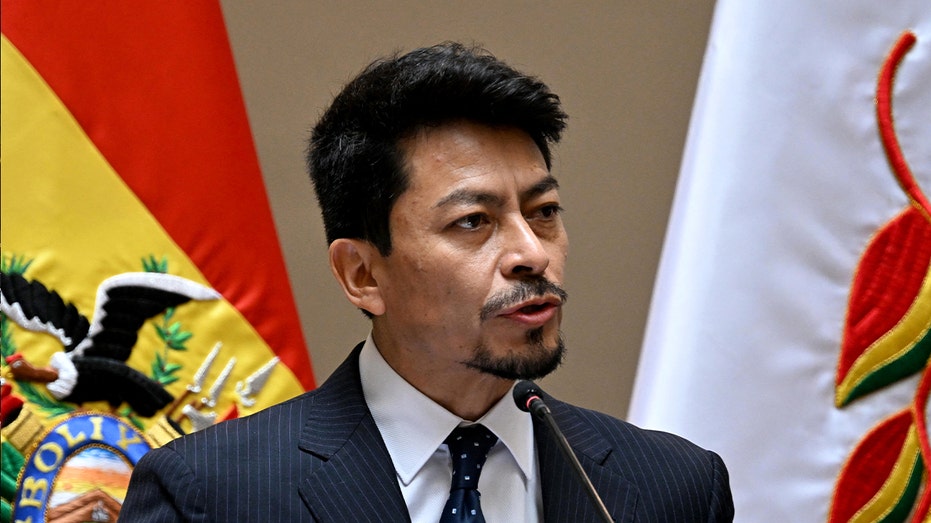
Foreign Minister Fernando Aramayo spoke with Fox News Digital as he visited Washington this week to sign an agreement reestablishing diplomatic ties with Israel, which had been cut off during the war in Gaza by the previous government.
HOUSE REPUBLICANS SPLIT OVER WHETHER TRUMP SHOULD PURSUE REGIME CHANGE IN VENEZUELA
"We are looking for a long-term relationship with U.S., relations based on the same values and interests that we share, for democracy and to create a new alliance in South America," Aramayo said.
Paz's victory followed the unraveling of nearly two decades of leftist rule under Evo Morales and Luis Arce, whose MAS party fractured amid economic crises, corruption scandals and mounting public anger over alleged narcotrafficking networks embedded in the state. The collapse of that political machine opened the door for a conservative, pro-business candidate — a dramatic turn for a country that had been one of China and Venezuela’s closest ideological allies in the region.
Aramayo said his nation would institute new laws and regulations to attract U.S. investment and break up China’s "monopoly" on mining its natural resources, particularly lithium.
The "U.S. has a lot of technology and has a lot of experience and sustainable extraction of resources," Aramayo said. "We want to take advantage of that. Of course, we want to receive some technology transfers and to be part of the whole chain of production."
PUTIN DOUBLES DOWN ON BACKING MADURO AMID MOUNTING US PRESSURE ON VENEZUELA
Aramayo said he "of course" shares U.S. concerns that China uses its investments in Latin America to extract leverage. "We want to diversify our portfolio and we want serious investors."
Aramayo said one of the region’s most urgent challenges is the growing influence of transnational criminal organizations, which he argues have flourished amid years of political instability. He warned that cartels have embedded themselves across South America and that Bolivia is still grappling with the legacy of what he described as "narco authorities" governing the country over the past two decades.
"We’re very concerned about the presence of these cartels in South America," he said, noting that criminal networks undermine confidence in state institutions and fuel cross-border instability.
The interview comes as the U.S. steps up pressure on Venezuelan leader Nicolás Maduro, striking what U.S. officials describe as narco-trafficking vessels linked to his regime and seizing an oil tanker allegedly used to evade sanctions. Aramayo did not criticize or oppose the U.S. actions, saying instead that Washington — like any government — "has the right to represent their own interests." He added that South American nations broadly share concerns about Venezuela’s trajectory and are open to diplomatic efforts to defuse the crisis.
Bolivia’s new administration, he said, intends to support a "democratic transition" in Venezuela and work with regional partners to help restore the "legitimacy and reliability" of its institutions after years of political repression and economic collapse.