

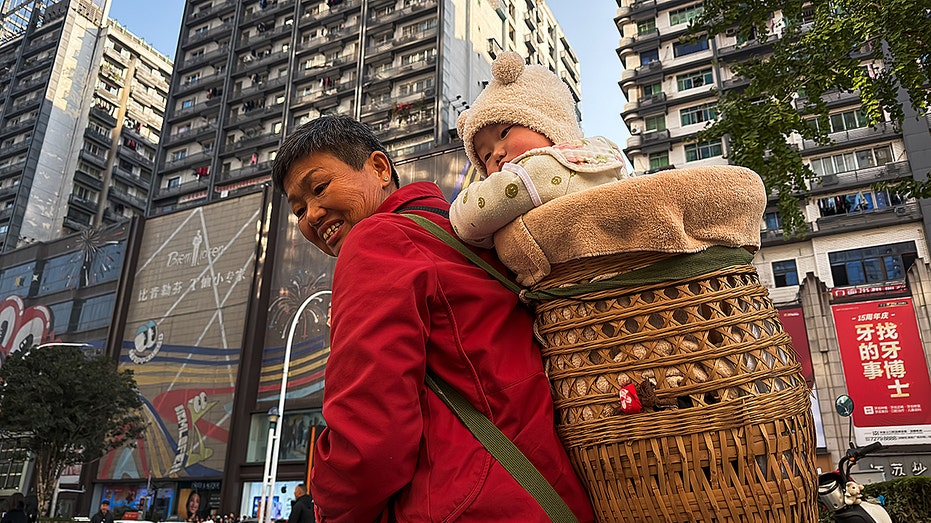
China will begin charging a 13% value-added tax on contraceptives starting Jan. 1 while exempting childcare services from the same tax, a move authorities say is part of a broader effort to boost births as the country faces a sustained population decline, according to the BBC and The Associated Press.
The tax overhaul, announced late last year, removes exemptions that had been in place since 1994, when China was still enforcing its decades-long one-child policy.
Alongside the new tax on contraceptives such as condoms and birth control pills, the Chinese government is exempting childcare, marriage-related services and elderly care from the value-added tax (VAT), the BBC reported.
Beijing has been pressing young people to marry and have children as it grapples with an aging population and a sluggish economy. Official figures show China’s population has shrunk for three consecutive years with about 9.54 million babies born in 2024.
WHY GEN Z DOESN'T WANT TO HAVE KIDS
That figure is roughly half the number of births recorded a decade earlier, when China began easing limits on family size, according to national statistics cited by the BBC and the AP.
China’s population pressures have been mounting for years. Births fell from about 14.7 million in 2019 to roughly 9.5 million in 2024. In 2023, India officially overtook China as the world’s most populous country.
The new tax on contraceptives has drawn ridicule and concern inside China. On social media, some users joked about stockpiling condoms before prices rise, while others argued that the cost of contraception is insignificant compared with the expense of raising a child, the BBC reported.
"I have one child, and I don’t want any more," Daniel Luo, a 36-year-old resident of Henan province, told the BBC. He said the price increase would not change his family plans, comparing it to small hikes in subway fares that do not alter daily behavior.
Others worry the policy could have unintended consequences. Rosy Zhao, who lives in the central city of Xi’an, told the BBC making contraception more expensive could lead students or people under financial strain to take risks. She called that the policy’s most dangerous potential outcome.
A SOLUTION TO THE HOUSING AFFORDABILITY PROBLEM: MARRIAGE
Health experts echoed those concerns in interviews with the AP, warning that higher prices could reduce access to contraception and contribute to more unintended pregnancies and sexually transmitted infections. China recorded more than 670,000 cases of syphilis and over 100,000 cases of gonorrhea in 2024, according to data from the National Disease Control and Prevention Administration.
China has also reported some of the highest abortion numbers in the world. Between 2014 and 2021, authorities recorded between 9 million and 10 million abortions annually, according to the National Health Commission. China stopped publishing abortion data in 2022.
Demographers and policy analysts remain skeptical that taxing contraceptives will meaningfully raise birth rates. Yi Fuxian, a senior scientist at the University of Wisconsin–Madison, told the BBC the idea that higher condom prices would influence fertility decisions amounts to overthinking the policy.
Value-added tax revenue, which totaled close to $1 trillion last year, accounts for about 40% of China’s tax collection, according to figures cited by the BBC.
Henrietta Levin of the Center for Strategic and International Studies (CSIS) described the move as symbolic, reflecting Beijing’s attempt to lift what she called strikingly low fertility numbers. She also cautioned that many incentives and subsidies depend on provincial governments that are already heavily indebted, raising questions about whether they can fund the measures adequately.
JAPAN REJECTS SAME-SEX MARRIAGE TO SAVE ITSELF FROM DEMOGRAPHIC COLLAPSE
Public health experts interviewed by the AP said the policy could disproportionately affect women, who shoulder most responsibility for birth control in China. Research released by the Bill and Melinda Gates Foundation in 2022 found condoms are used by about 9% of couples, while 44.2% rely on intrauterine devices and 30.5% on female sterilization. Male sterilization accounts for 4.7%.
Some women say the tax revives resentment toward the government’s long history of involvement in reproductive decisions. The Communist Party enforced the one-child policy from roughly 1980 until 2015 through fines, penalties and, in some cases, forced abortions, according to the AP. Children born outside the policy were sometimes denied household registration, effectively rendering them non-citizens.
"It is a disciplinary tactic, a management of women’s bodies and my sexual desire," Zou Xuan, a 32-year-old teacher in Jiangxi province, told the AP.
Concerns about further state intrusion have also surfaced in recent months. The BBC reported that women in some provinces have received calls from local officials asking about menstrual cycles and pregnancy plans. A health bureau in Yunnan province said the information was needed to identify expectant mothers, a move critics say risks alienating the very families Beijing hopes to encourage.
Levin warned that such approaches could damage public trust. She told the BBC, "The [Communist] party can't help but insert itself into every decision that it cares about. So, it ends up being its own worst enemy in some ways."
While the government is adjusting policies once used to limit population growth, experts caution that reversing decades-long demographic trends will be much more difficult than increasing prices at the checkout counter, especially after years of policies that shaped whether families could have children.