Federal prosecutors charged three men linked to Super Micro Computer Inc. in a sweeping scheme to smuggle billions of dollars in U.S. artificial intelligence technology to China using fake documents, shell companies and staged equipment, officials said.
The defendants allegedly diverted $2.5 billion worth of AI servers — including $510 million in just a few weeks in 2025 — to China.
Yih-Shyan Liaw, 71, a U.S. citizen, and Ting-Wei Sun, 44, of Taiwan, were arrested Thursday, while a third individual, Ruei-Tsang Chang, 53, also of Taiwan, remains at large.
"The indictment unsealed today details alleged efforts to evade U.S. export laws through false documents, staged dummy servers to mislead inspectors, and convoluted transshipment schemes, in order to obfuscate the true destination of restricted AI technology — China," Assistant Attorney General for National Security John A. Eisenberg said in a statement. "These chips are the product of American ingenuity, and NSD will continue to enforce our export-control laws to protect that advantage."
TOP AI FIRM ALLEGES CHINESE LABS USED 24K FAKE ACCOUNTS TO SIPHON US TECH
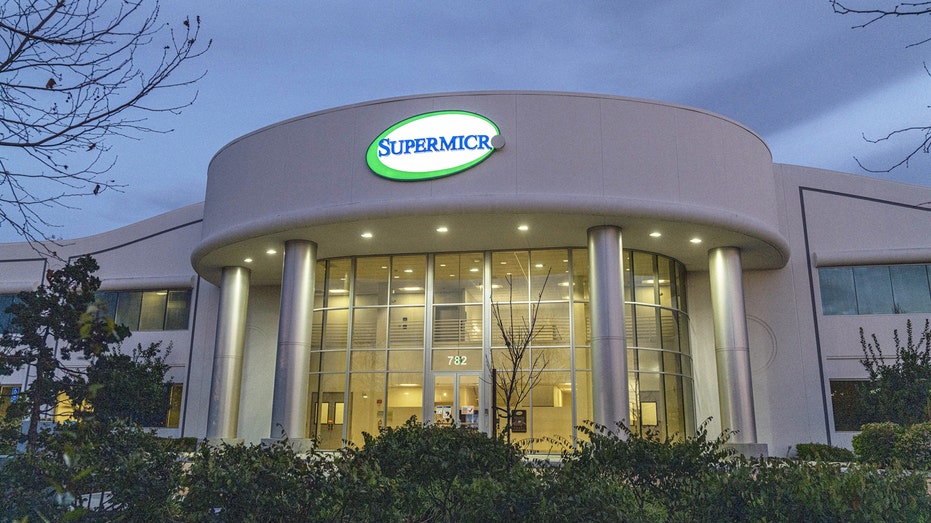
Supermicro said Thursday it was informed by the U.S. Attorney’s Office for the Southern District of New York that three individuals associated with the company had been indicted in connection with an alleged export-control scheme. The company said it is not named as a defendant.
Supermicro said Liaw was a co-founder, senior vice president of business development and board member, Chang was a sales manager in Taiwan, and Sun was a contractor.
Supermicro said it placed the two employees on administrative leave and terminated its relationship with the contractor.
FCC, STATE AGS TO JOIN FORCES IN CRACKDOWN ON CHINA-LINKED COMMUNICATIONS TECHNOLOGY
"The conduct alleged in the indictment violates the company’s policies and efforts to comply with export control laws," Supermicro said.
According to the indictment, Liaw and Chang — who worked with brokers and customers in China — allegedly directed executives of a Southeast Asia-based company to place purchase orders with a U.S. manufacturer for servers equipped with certain GPUs, purportedly for that company.
The servers were often assembled in the U.S. before being delivered to the Southeast Asia-based company, which then repackaged them in unmarked boxes to conceal their contents before shipping them to China.
CHINESE NATIONALS ARRESTED AT TOP SCHOOL SHOWS HOW CCP VIEWS US UNIVERSITIES AS 'WEAK LINK,' EXPERTS WARN
The defendants and company executives allegedly prepared false documents and communications to show that the company was the end user of the servers.
U.S. Attorney Jay Clayton for the Southern District of New York accused the defendants of participating in a "systematic scheme" to divert servers with U.S. artificial intelligence technology to customers in China.
"They did so through a tangled web of lies, obfuscation, and concealment—all to drive sales and generate revenues in violation of U.S. law," he said. "Diversion schemes like those disrupted today generate billions of dollars in ill-gotten gains and pose a direct threat to U.S. national security."
DEMOCRATS WARN TRUMP GREEN-LIGHTING NVIDIA AI CHIP SALES COULD BOOST CHINA’S MILITARY EDGE
Roman Rozhavsky, assistant director of the FBI’s Counterintelligence and Espionage Division, added that "controlling the export of sensitive U.S. artificial intelligence technology is essential to safeguarding our national security and defending the homeland."
Prosecutors said the defendants took "extensive measures" to conceal the scheme.
According to the indictment, the defendants staged thousands of "dummy" servers — nonworking physical replicas of the U.S. manufacturer’s servers — to deceive its compliance team.
Officials said surveillance video captured the defendants preparing the dummy servers in a warehouse. Ahead of an inspection by the U.S. Department of Commerce, they allegedly used a hair dryer to remove and reapply labels and serial number stickers to server boxes and the dummy servers.
They then repackaged the dummy servers in the U.S. manufacturer’s boxes, according to the indictment.
The defendants were charged with conspiracy to violate the Export Control Reform Act, which carries a maximum sentence of 20 years, as well as conspiracy to smuggle goods and conspiracy to defraud the United States, each carrying up to five years.
© https://www.foxnews.com