
Rams withstand Caleb Williams' heroic touchdown to stun Bears in overtime, move on to NFC title game
The Los Angeles Rams and Chicago Bears gave it all they had in the NFC Divisional Round on Sunday night and they delivered an epic matchup that NFL fans will remember for a while.
Rams rookie kicker Harrison Mevis nailed the game-winning field goal to send Los Angeles home happy, 20-17. The Rams will meet the Seattle Seahawks in the NFC Championship.
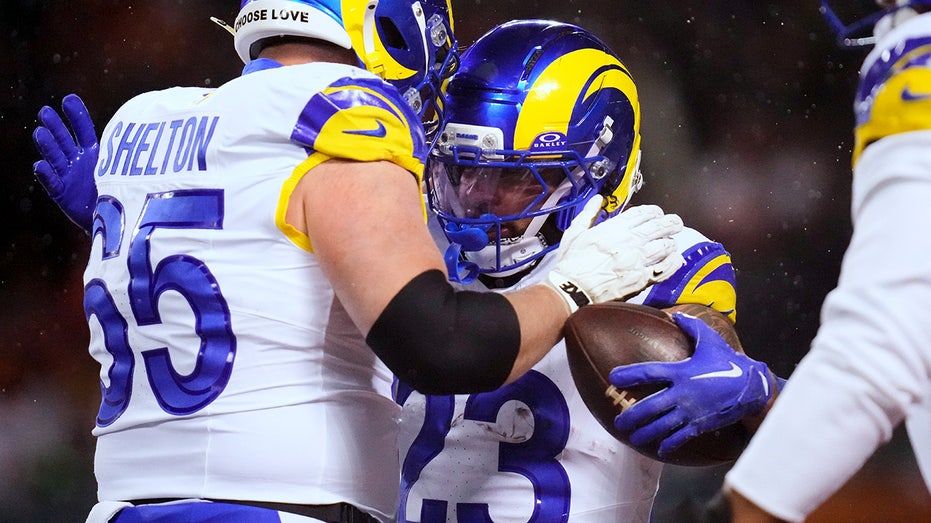
Los Angeles running back Kyren Williams punched the go-ahead score into the end zone and the defense stymied the Chicago Bears at the goal line in what appeared to be the last stand.
CLICK HERE FOR MORE SPORTS COVERAGE ON FOXNEWS.COM
Williams’ 5-yard touchdown run ended a 14-play, 91-yard drive with 8:50 left in the game. It was Williams’ second touchdown of the game and it was exactly what Los Angeles needed to win the game as scoring was extremely difficult to come by in the second half.
The Bears failing to get into the end zone after a 12-play, 61-yard drive was the closest Chicago got in the second half. The Bears punted three times and Caleb Williams threw a crucial interception in the third quarter on their previous second-half drives.
But Williams had one trick up his sleeve.
With their backs against the wall, the Bears star mustered up the last bit of magic he could. He took the snap on 4th-and-4 from the Rams’ 14-yard line. He felt the pressure and ran about 25 yards backward before he decided to fire the ball into the end zone with three Rams defenders in his face.
Somehow, Williams found tight end Cole Kmet in the end zone for the touchdown. Kmet broke free from Rams cornerback Cobie Durant and secured the catch. Cairo Santos hit the game-tying extra point and the game was sent into overtime.
BEARS' NATIONAL ANTHEM SINGER SENDS NFL FANS INTO FRENZY WITH PERFORMANCE BEFORE PLAYOFF GAME
Williams made a similar play in the NFC Wild Card Round matchup against the Green Bay Packers. The play saved their season – as did the one on Sunday night.
In the overtime period, Williams put the game on his shoulder. He made a long run on third down to keep the drive alive early in the series. On 4th-and-1, the Bears didn’t flinch and went for a first down. Again, Williams’ number was called and he got the yardage needed to extend the drive. Just when it appeared that the Bears had everything going their way, Williams threw his third pick of the night to Kam Curl.
Matthew Stafford then locked in and led the Rams on the game-winning drive that ended with the Mevis field goal.
Stafford was 20-of-42 with 258 passing yards. He was sacked four times. Williams led the Rams with 87 rushing yards on 21 carries. Colby Parkinson had three catches for 56 yards.
Williams was 23-of-42 with 257 passing yards, two touchdown passes and three picks. D’Andre Swift had 76 rushing yards on 19 carries. Bears tight end Colston Loveland led the team with four catches for 56 yards.
The Rams are back in the NFC Championship Game for the first time since the 2021 season. In that year, Los Angeles topped the San Francisco 49ers and then defeated the Cincinnati Bengals in Super Bowl LVI.
It will be the third conference title game appearance in the Sean McVay era. The Rams defeated the New Orleans Saints in the controversial NFC Championship in the 2018 season. But Los Angeles lost to the New England Patriots in the Super Bowl.
Los Angeles will take on the Seahawks for the right to play in Super Bowl LX. The winner will either face the Denver Broncos or New England Patriots.
Follow Fox News Digital’s sports coverage on X and subscribe to the Fox News Sports Huddle newsletter.