

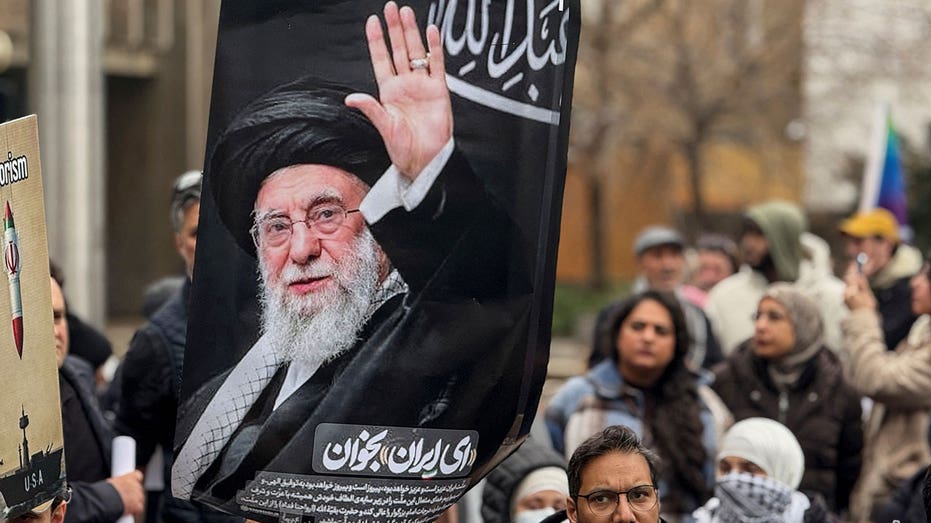
As President Donald Trump warned this week about Iranian "sleeper cells" potentially operating in North America, Canadian opposition lawmakers are accusing their government of allowing operatives linked to Tehran’s regime to remain in the country.
Speaking on Wednesday, Trump said U.S. authorities were monitoring Iranian networks believed to have entered the United States in recent years.
"I have been [briefed], and a lot of people came in through Biden with his stupid open border," Trump said in response to a question from Fox News’ Peter Doocy. "But we know where most of them are. We've got our eye on all of them."
The remarks come amid growing concern among Western security officials about Iranian intelligence activities targeting critics abroad.
FROM HOSTAGE CRISIS TO ASSASSINATION PLOTS: IRAN’S NEAR HALF-CENTURY WAR ON AMERICANS
In Canada, senior Conservatives say the government has failed to act against Iranian regime officials despite identifying individuals linked to Tehran.
In a statement released in Ottawa, Deputy Conservative leader Melissa Lantsman, immigration shadow minister Michelle Rempel and Pierre Paul-Hus, Conservative Québec Lieutenant, called upon the Liberal government to table a plan within one week to take immediate action to stop Iranian regime activities in Canada.
"The Liberals have known for years that there are hundreds of Iranian regime officials in Canada, 239 of whom have had their visas cancelled," the lawmakers said.
NATIONAL SECURITY EXPERT URGES DHS TO RAISE TERROR THREAT LEVEL, WARNS OF SLEEPER CELL RISKS IN US
They added that government officials told a parliamentary immigration committee earlier this week that only one person has been deported so far, citing legal obstacles including asylum claims, the absence of direct flights to Iran and privacy protections.
Maryam Shariatmadari, one of the faces of the "Girls of Revolution Street" protests against Iran’s mandatory hijab laws who fled Iran after being imprisoned and now lives in exile in Canada, told Fox News Digital that "The presence of agents of the Islamic Republic in Canada is not a new issue. For years, the people of Iran have expressed concern about the presence of these individuals and their children in Canada."
"A clear example is Mahmoud Reza Khavari and Marjan Al-Agha, who are known embezzlers. What is striking is that an economic magazine that introduces entrepreneurs has presented the son of Mahmoud Reza Khavari — the former CEO of Bank Melli and a convicted criminal in Iran — as an ‘inspiring businessman’ in Canada and has described him as ‘a young leader,’" she said.
"But these days we are seeing more of these individuals," Shariatmadari added. "Their presence has become more visible, and they are organizing gatherings under the slogan ‘No to War,’ while expressing support for Hamas and Hezbollah. Meanwhile, they remained completely silent about the killing of Iranians."
DHS REMAINS UNFUNDED AS IRAN SLEEPER CELL FEARS SPIKE NATIONWIDE AMID SECURITY WARNINGS
Exiled Iranian journalist Mehdi Ghadimi who now lives in Canada told Fox News Digital that individuals linked to Iran’s regime often arrive in Western countries through several different channels. "Some arrive as students, academics or ordinary immigrants but were already connected to the Islamic Revolutionary Guard Corps through family ties or ideological affiliation", he said, "They often try to identify activists and critics so those individuals can face legal or judicial problems either in Iran or even abroad," he said.
Ghadimi said another category operates primarily through financial networks tied to the regime. "Another group includes people who used to be members of the IRGC or other state institutions and later enter countries like Canada as private investors," he said. "When someone brings several million dollars for investment, it raises questions about where that money came from."
He added that wealthy business figures who move capital abroad may also do so with the approval of Iran’s security establishment. "If someone is moving large amounts of money out of Iran and investing abroad, it is very difficult to do that without the approval of the IRGC and the security institutions of the Islamic Republic," he said.
Ghadimi also pointed to past corruption scandals involving Iranian officials who moved large sums of money overseas, including the case of former Bank Melli CEO Mahmoud Reza Khavari, who fled Iran after a major banking scandal and later settled in Canada.
The criticism comes as Canadian police investigate the disappearance of Iranian dissident Masood Masjoody, a mathematician and critic of Iran’s clerical leadership who vanished earlier this year in Burnaby, British Columbia.
Investigators with Canada’s Integrated Homicide Investigation Team say evidence suggests Masjoody was likely the victim of murder, though authorities have not publicly identified suspects and the investigation remains ongoing, according to The Guardian.
Police say investigators are reviewing Masjoody’s background and personal history as part of the probe, and Canadian media reports have noted aspects of his past that authorities are examining as they work to determine a possible motive.
The case has heightened concerns among Canada’s Iranian diaspora, many of whom have warned for years that Tehran monitors and intimidates critics abroad.
Conservatives argue weaknesses in immigration enforcement have allowed individuals linked to the Iranian regime to remain in the country despite visa bans and sanctions imposed by Ottawa.
They are calling on the government to urgently enforce deportation orders against Iranian regime officials, disrupt financial networks linked to Tehran and establish a long-delayed foreign influence registry aimed at exposing agents working on behalf of foreign governments.
"The Liberals can take action against the Iranian regime today, at home within our own borders. Too much is at stake. We expect a plan within the week," they said in the statement.
"It’s not complicated, Iran’s regime must not find safe haven in Canada," Lantsman said.
The Canadian government directed Fox News Digital to the Canada Border Services Agency, which did not respond to a request for comment.
