
In the early days of fast-food drive-thrus, Rat Pack legend Dean Martin once destroyed an expensive vintage car trying to get a burger for his girlfriend’s son.
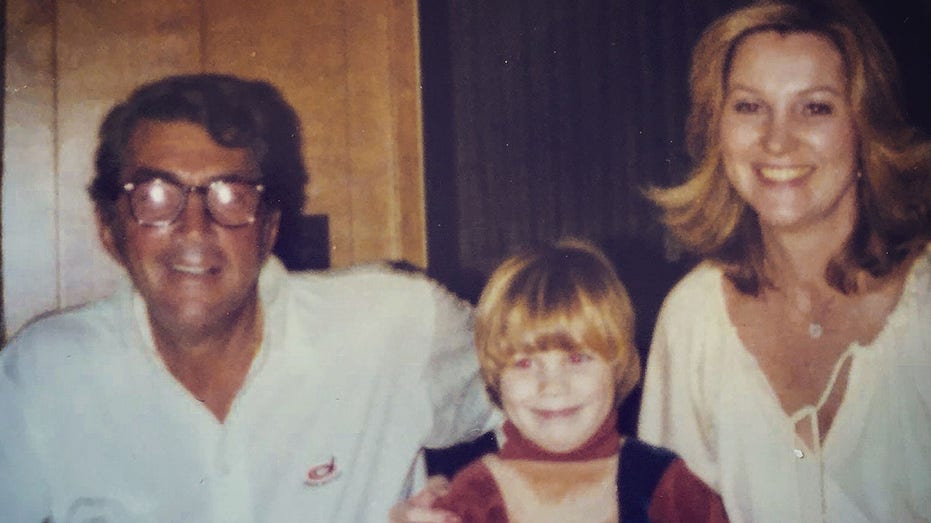
Phil Crosby Jr., Bing Crosby’s grandson, told Fox News Digital about how his mother once dated and was even engaged to Martin — who always called him "the kid" — following her "tumultuous" marriage to the "White Christmas" singer’s son, Phil Crosby Sr.
"I was almost Dean Martin's stepson," he said in a recent interview with Fox News Digital. "So, if that had happened, I would have grown up with a silver spoon in my mouth, but that didn't happen."
Crosby said he was very young at the time his mom, Peggy Crosby, now 85, began seeing the "That’s Amore" singer after meeting him at a club where she worked, following her short-lived marriage to Crosby.
‘BRADY BUNCH’ STAR MAUREEN MCCORMICK SHARES KEY TO SUCCESSFUL 40-YEAR HOLLYWOOD MARRIAGE
"And I think my mother, she wasn't really ready [to be married again]," Crosby said of their eventual breakup. "She was still a young, beautiful woman. She's still a beautiful woman."
He said that Martin, who was 23 years older than his mother, "was very on in years" at the time they dated.
And although he was very young when he knew Martin, he does remember him.
His best memory of the crooner was when he peeked into his mother’s bedroom one time looking for her, and Martin was in there and asked him to grab him a pack of cigarettes.
"My only real recollection of him is a little too stereotypical," Crosby said. "He used to call me ‘the kid.’ And this is a true story. I was ‘The kid. ’‘Where's the kid at?’ Even years later when my mom bumped into him, I was ‘The kid.’"
Crosby said the singer asked him, "‘Hey, kid, you know, go downstairs and bring me up some cigarettes,' as an adult of those days should be able to ask a child and the child's supposed to do it."
BEN STILLER REFLECTS ON THE ‘DARK UNDERSIDE’ OF HOLLYWOOD FAME
"Well, I am from like the first of a bit of the spoiled generation where we lost that respect for our elders," he continued. "And I told him, I said, ‘You can't tell me what to do. You're not my father.’ So that's my recollection of my Dean Martin story, which I wish it was a little bit better."
But he said his story of Martin destroying his own classic car while trying to get "The kid" fed has been passed down to him.
"I don't really have this recollection myself, but it's a story I've been told, and I call it the Stutz and the drive-thru, because Dean had a Stutz [Blackhawk], or I've been told a Stutz Bearcat," Crosby said. "When I do research now, I see pictures of him with a Stutz [Blackhawk]. These were very large, vintage automobiles."
'BLACK RABBIT' STAR JASON BATEMAN SAYS CHILD STARDOM NEARLY KILLED HOLLYWOOD CAREER
Crosby explained that Stutz cars were "these very classic, very, very valuable collectors, vintage automobiles, but they are wide."
"I was a bit of a spoiled kid. I did not like to eat a lot of different types of food, but I loved McDonald's," Crosby explained. "So, we were driving back in his Stutz, my mom and Dean and I, and I'm in the back seat, probably complaining, didn't eat dinner and probably complaining about being hungry."
He continued, "So, Dean decides, ‘All right, McDonald's has a drive-thru that's open,' and drive-thrus were probably pretty new" at the time, saying this took place around 1976 in Santa Monica, California.
"But it was too narrow," Crosby explained. "So, Dean takes this thing, and he just drives it right into this [drive-thru] and it just crunches the sides, scrapes the side of this — I mean, we're talking one of the most valuable, you know, collectors' vehicles."
CLICK HERE TO SIGN UP FOR THE ENTERTAINMENT NEWSLETTER
He said his mom just laughed "because by the time we got up to the window, the people there just had this horrified look, like aliens had just arrived. They just heard this terrible crunching sound, and here's Dean Martin sitting in there."
Crosby said he wished he could have remembered Martin better because "from what I know about him, especially from what his reaction to having expensive damage done to his car so he could feed the little spoiled brat, he blew it off."
LIKE WHAT YOU’RE READING? CLICK HERE FOR MORE ENTERTAINMENT NEWS
Crosby said the damage was "nothing to him" because he wasn’t a "materialistic man."
"He wasn't a temperamental guy. He really was a sweet man and what I've heard from, even some of the Rat Pack stuff, that, compared to the other guys anyway, he was pretty faithful and a pretty, you know, pretty good guy."
When he was a teenager, Crosby said he got to meet Martin once more before he died.
"That was pretty cool," he said. "He was a class act."
Crosby also reflected on what Christmas meant to his grandfather.
"Bing was a great American, and I think it meant a lot to him, you know, for his Catholic faith, that [Christmas] be honored and enjoyed," he said of his grandpa, who died when he was a baby.
"He came from a big family," Crosby continued. "So, I think, I mean, Christmas just became such an important American tradition … and I know they did it up pretty good in the Crosby House, tall trees, lots of presents."
He added, "Obviously, Christmas is dominated, still, with the voice of Bing Crosby."
CLICK HERE TO DOWNLOAD THE FOX NEWS APP
Crosby said, although he never met his grandfather, he still enjoyed many festive Crosby Christmases as a child.
"I grew up with a few of my cousins and a couple of my uncles … and I'd see them on some holidays," he said. "We had great big holidays with lots of Crosbys. So, I definitely had Crosby Thanksgivings and Crosby Christmases with Bing's other sons and their wives and children. And I was very, very thankful and happy for that."
Crosby is also releasing two singles for the holidays: a cover of a rarely-heard Bing Crosby song called "A Time to be Jolly," and an original titled "Guess Who's Coming Tonight."
"It's a Christmas song nobody else recorded," Crosby said of "A Time to be Jolly." "But it's fun song. It's a little silly … I'd never heard it before … You won't find it done by Dean Martin or anybody else. So I hope people enjoy it."