

U.S. Destroys Three Suspected Narco-Terrorist Boats On Presidents’ Day

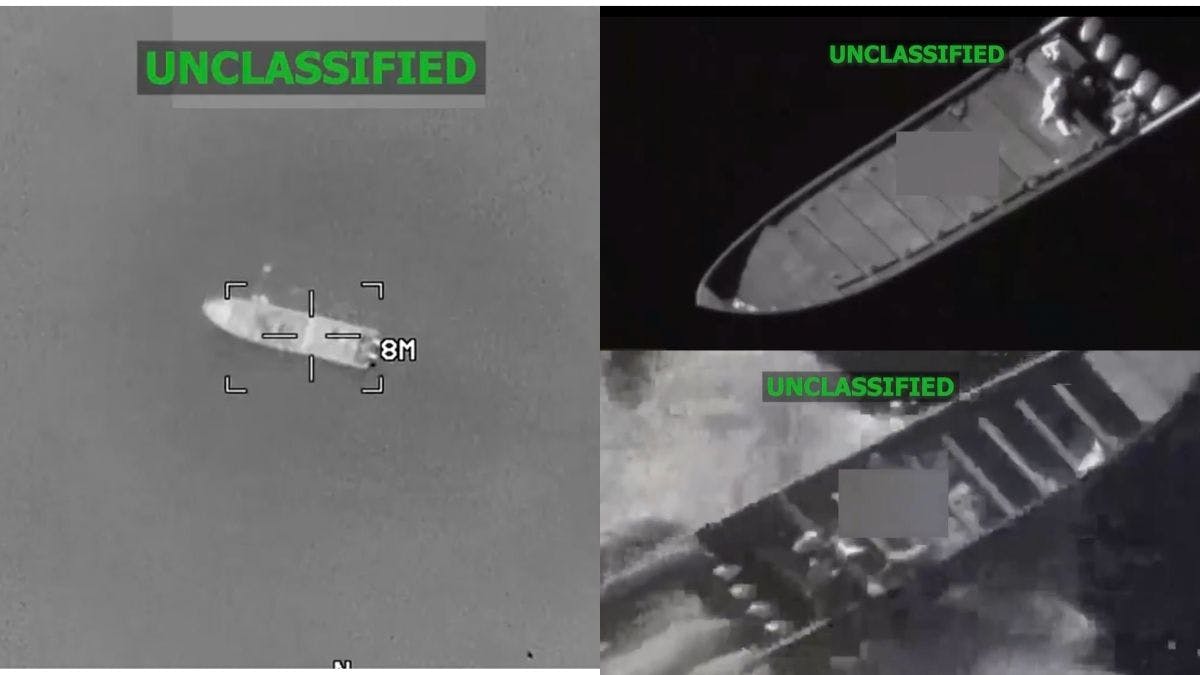
The United States military, under the command of President Donald Trump and War Secretary Pete Hegseth, took out three boats suspected of trafficking drugs on Monday, killing 11 “male narco-terrorists,” according to U.S. Southern Command.

The kinetic strikes targeted two boats in the Eastern Pacific and one boat in the Caribbean. U.S. Southern Command said that the suspected drug-runners were “transiting along known narco-trafficking routes and were engaged in narco-trafficking operations.” On Tuesday, the U.S. military shared unclassified video footage of all three strikes.

“Turns out President’s Day — under President Trump — is not a good day to run drugs,” said War Secretary Pete Hegseth.

With the latest strikes, at least 145 suspected drug runners have been killed in 42 strikes targeting “narcoterrorist” boats in the Pacific and Caribbean since last September. Monday’s operations followed a strike on Friday that destroyed a boat and killed three suspected drug smugglers.

President Donald Trump has defended his authority to carry out the strikes as Democrats argue that Congress must be given a say in the military operations being conducted without a declaration of war. Some Democrats have even claimed that Trump’s boat strikes in international waters amount to murder. Trump, however, has not backed down on his vow to obliterate suspected drug boats and argues that the United States is in an “armed conflict” with drug cartels that seek to transport deadly substances into the United States.

Shortly after the United States began conducting strikes against suspected drug traffickers, Trump said in a speech at the United Nations, “To every terrorist thug smuggling poisonous drugs into the United States of America, please be warned that we will blow you out of existence.”

Responding to criticism from lawmakers over the strikes in October, Trump told reporters, “I don’t think we’re going to necessarily ask for a declaration of war. I think we’re just going to kill people that are bringing drugs into our country, OK? We’re going to kill them.”

Trump has also suggested that the United States could target suspected narco-terrorists on land, which he said could include strikes inside Mexico and Colombia.

The U.S. strikes were further scrutinized by some lawmakers late last year after it was revealed that the U.S. military conducted a second strike on one boat in early September after some of the suspected narco-terrorists survived the first attack. The War Department has not publicly released the footage of the second strike and has only shown a select few lawmakers footage of the “double tap” strike.

Trump’s military campaign against drug traffickers led to the capture of Venezuelan dictator Nicolás Maduro last month.

Maduro, who was accused of conspiring to traffic drugs to the United States, raged against the U.S. strikes in the Caribbean and vowed to fight U.S. forces if the United States made a move on Venezuela.

Following his capture, Maduro was charged with narco-terrorism conspiracy and cocaine importation conspiracy, and he now awaits trial in New York.
Iranian Official Says Nuclear Talks Are Progressing — Even As Military Tensions Rise

The Islamic Republic of Iran’s foreign minister called the latest round of nuclear negotiations with the United States a success, even as both parties heighten their military posture.

Following the conclusion of talks in Geneva, Switzerland, Iranian Foreign Minister Abbas Araghchi told reporters that “the path for a deal has started,” calling the latest round of talks “serious” and “constructive.” The United States delegation, led by Special Envoy Steve Witkoff and Jared Kushner — who went immediately from Switzerland to a high-stakes trilateral meeting with Russia and Ukraine — has yet to release a formal readout of the meeting.

But the ostensible progress is set against military tension between Washington and Tehran. The United States is continuing to surge assets toward Iran, with the USS Abraham Lincoln carrier strike group reportedly around 700 kilometers away from Iran. Meanwhile, the USS Gerald R. Ford — the world’s largest warship — and its accompanying strike group are en route from the Caribbean. 

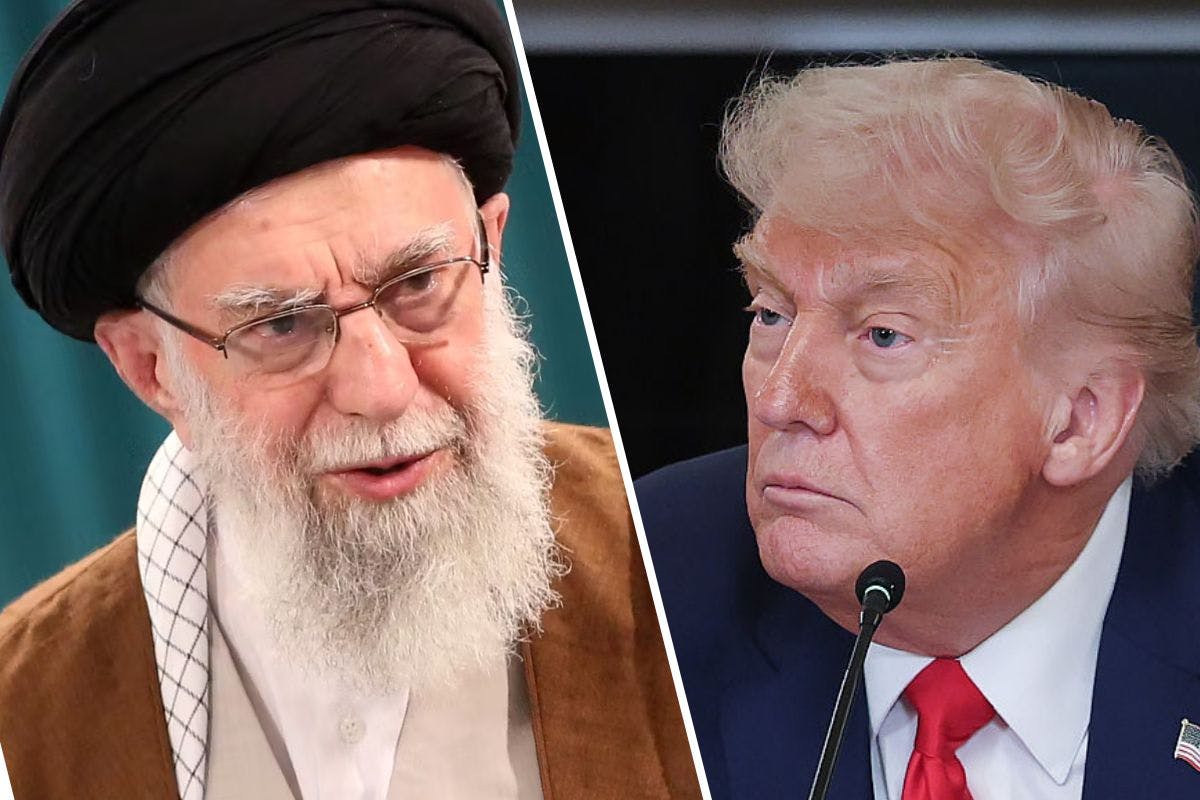
Iran’s Supreme Leader Ayatollah Ali Khamenei on Tuesday taunted President Donald Trump’s military buildup, stating that while American aircraft carriers are “dangerous machines,” the “weapon that can sink the aircraft carrier to the bottom of the sea” is more dangerous.

Iran has also been flexing its own military muscle. On Tuesday, the Islamic Revolutionary Guard Corps (IRGC) briefly closed parts of the Strait of Hormuz for what it called “security precautions” as it conducted exercises in the strategic chokepoint, a critical artery for global oil shipments.

Iran also has plans to hold joint naval exercises with Russia and China for the “Maritime Security Belt 2026.” Russian presidential aide Nikolay Patrushev said that the exercises, which have been held periodically since 2019, “proved to be relevant.” Iranian news outlet Wana reported that the exercises are scheduled for late February and involve naval deployments from all three countries.

In total, there are at least 12 U.S. warships in the Middle East, according to satellite imagery reviewed by the BBC. They include the USS Abraham Lincoln and its three Arleigh Burke-class destroyers, which form a full carrier strike group; two additional destroyers; and three specialized ships designed for near-shore combat, currently positioned at Bahrain’s naval station in the Gulf. Two other destroyers have been spotted in the eastern Mediterranean, and another in the Red Sea.

There has reportedly been an increase in F-15 and EA-18 fighter jets stationed at Muwaffaq Salti Air Base in Jordan, along with cargo planes, refueling aircraft, and communications planes moving toward the region.

Trump told reporters on Monday aboard Air Force One, “I don’t think they want the consequences of not making a deal,” while describing Iran as “tough negotiators” and confirming his indirect involvement in the talks.

Hardline rhetoric has also come from Iran’s IRGC senior advisor General Mohammad Reza Naghdi, who declared last week that the United States is “incapable of doing a damn thing even if it deploys 12 aircraft carriers.”

That’s a markedly different tone from Araghchi, the foreign minister, who said “good progress was made compared to the previous session, and we now have a clearer path ahead, which I consider positive.” The foreign minister of Oman, who moderated the talks, echoed that positive assessment, saying the talks concluded with “good progress towards identifying common goals and relevant technical issues” and highlighting the “constructive spirit” of the discussions. 

Curbing Iran’s missile capabilities has remained a top concern for Israel, which repeatedly raised the issue with Trump in December. Trump reportedly told Israeli Prime Minister Benjamin Netanyahu he would support an Israeli strike on Iran’s ballistic missile program if diplomacy failed.

About Us

Virtus (virtue, valor, excellence, courage, character, and worth)

Vincit (conquers, triumphs, and wins)