

‘America the Beautiful’ Singer At Super Bowl Thrilled To Represent ‘Queer Community’

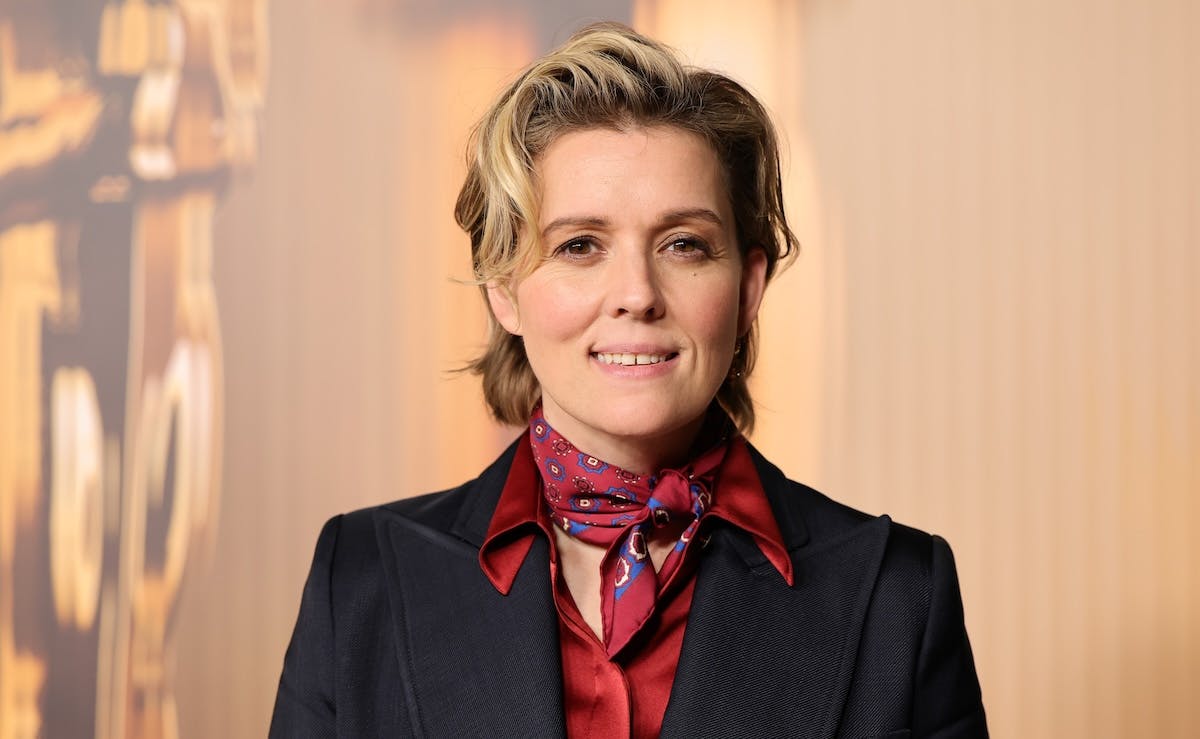
Super Bowl organizers tapped singer Brandi Carlile to perform“America the Beautiful” at the big game on Sunday, and the vocalist said she viewed that as a good opportunity for her to represent “the queer community.”

The 11-time Grammy Award winner did an interview with Variety to discuss singing the patriotic song at the game. Unlike many other recording artists who have made headlines recently for trashing America, Carlile indicated that she still loved this country. But she also said that she believes the song “America the Beautiful” has an underlying message about radical change, which as an LGBT activist, she fully supports.

“I have my own moral code, my own moral imperative, that I have to answer to at the end of the day, as a wife and mother, and I believe in my ability and responsibility to do this, and that’s why I’m here,” she told the outlet of deciding to sing at the Super Bowl despite ongoing political tensions. 

“And the throughline to being queer and being a representative of a marginalized community and being put on the largest stage in America to acknowledge the fraught and tender hope that this country is based on, it’s something you don’t say no to. You do it.”

“I think if we’re gonna save this country as a people, we have to be reminded on some level that deep down we love it,” she added.

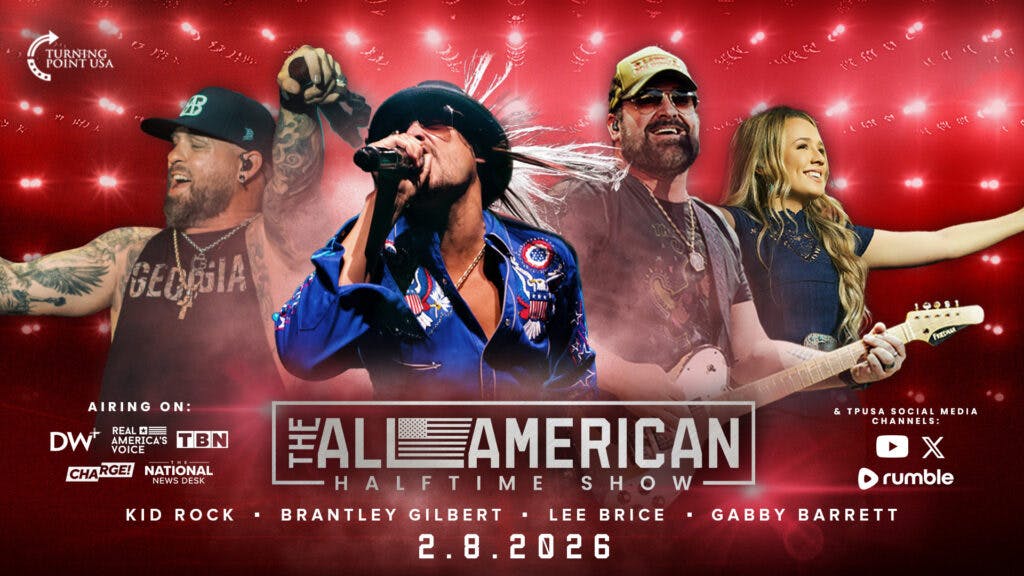
WATCH THE ALL-AMERICAN HALFTIME SHOW LIVE ON DAILYWIRE+
“America the Beautiful” was written by American author and poet Katharine Lee Bates in 1893. The interviewer pointed to a line of the song which he suggested could be a call to change the country in a certain way.

“’God mend thine every flaw…’,” he began, prompting Carlile to respond,

“’… Confirm thy soul in self-control / Thy liberty in law’! Yeah. I don’t want to put words in her mouth; she was beyond brilliant. But it almost feels like she was feeling the way about the country when she wrote it that I’m feeling today singing it. Just this fragile hope, love and belief in where it could be, and acknowledging where it’s been, and acknowledging that we’re not there yet.”

The singer also said Bates was “totally gay.” Though this has been the speculation of some scholars due to her close female friendships, there is no definitive proof that Bates was part of any same-sex romantic relationships.

“I feel motivated by the fact that she was very likely gay, and a woman relying on her intellect in a time when that was difficult for women to do so, and living with a partner who was doing the same thing,” Carlile told Variety. “And still choosing … to still love America and to still believe that it could get to a place of goodness. I won’t say greatness, because that feels a little, you know, patriarchal. But goodness. And I believe the same thing.”
Olympians Say They Have ‘Mixed Emotions’ Representing America Under Donald Trump

Several American Olympians have used the press conferences to criticize the state of the United States under President Donald Trump, saying their participation comes with personal moral and political considerations.

Freestyle skier Hunter Hess said representing the United States currently “brings up mixed emotions,” explaining that he views national representation selectively. Hess said he considers himself to be representing “friends and family back home” and “the things that I believe are good about the U.S.”

“If it aligns with my moral values, I feel like I’m representing it,” Hess said.

Trump responded to Hess directly in a Truth Social post on Sunday, saying, “U.S. Olympic Skier, Hunter Hess, a real Loser, says he doesn’t represent his Country in the current Winter Olympics. If that’s the case, he shouldn’t have tried out for the Team, and it’s too bad he’s on it. Very hard to root for someone like this. MAKE AMERICA GREAT AGAIN!”

Freestyle skier Chris Lillis also acknowledged discomfort with current political conditions, citing immigration enforcement and recent protests as factors shaping his perspective. “A lot of times athletes are hesitant to talk about their political views and how we feel about things,” Lillis said. “I feel heartbroken about what’s happened in the United States,” in reference to ICE and border enforcement efforts.

Lillis said he hopes the country can better reflect values he believes should define the United States. “I think as a country we need to focus on respecting everybody’s rights, making sure that we’re treating our citizens, as well as anybody, with love and respect,” he said. “That’s the America we’re trying to represent.”

The remarks, made by athletes across multiple sports, highlight a broader tension between individual political views and the traditional role of Olympic competitors as representatives of the nation as a whole.

Political messaging surrounding the Olympics has also come from figures outside the current U.S. team. Gus Kenworthy, a U.S. and U.K. dual citizen who previously competed for the United States but is representing Great Britain this year, posted a photo on social media showing the phrase “f*** ICE” written in urine in the snow.

The caption accompanying the post included a script for Americans to use when calling elected officials, urging them to end funding for Immigration and Customs Enforcement and U.S. Border Patrol. Kenworthy was not disciplined by either the International Olympic Committee or the British Olympic Association.

Figure skater Amber Glenn also addressed the issue, framing her Olympic platform as an opportunity to speak out on political and social concerns, particularly those affecting the LGBT community. “It isn’t the first time we’ve had to come together as a community and fight for our human rights,” Glenn said.

She added that policies under the Trump administration are “not just affecting the queer community but many other communities,” and said she hopes to use her visibility to encourage others. “I hope I can use my platform to encourage people to stay strong in these hard times,” Glenn said.

Glenn also addressed criticism directed at athletes who speak publicly about politics. “A lot of people will say, ‘You’re just an athlete, stick to your job, shut up about politics,’” she said. “But politics affect us all. It is not something I will just be quiet about.”

The comments have drawn attention as the Olympic Games have historically emphasized national unity, with athletes competing under their country’s flag rather than as representatives of individual political causes. U.S. Olympians traditionally serve as representatives of the entire nation during international competition, regardless of personal political views — a role that has periodically come into tension during times of domestic political division.

The U.S. Olympic and Paralympic Committee has not commented on the athlete statements.

About Us

Virtus (virtue, valor, excellence, courage, character, and worth)

Vincit (conquers, triumphs, and wins)