

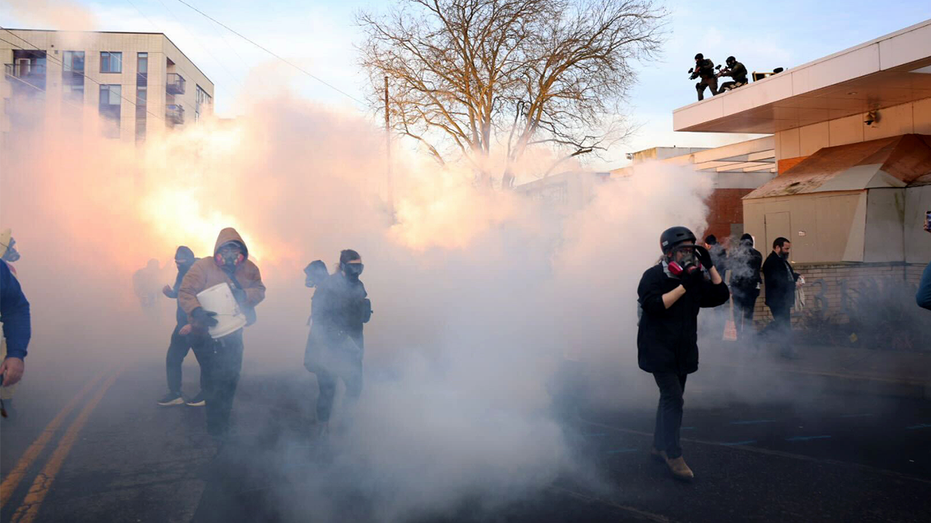
Oregon judge limits federal agents’ tear gas use at Portland ICE protests

A federal judge in Oregon on Monday placed new limits on federal agents’ use of tear gas and other crowd-control munitions during protests outside the U.S. Immigration and Customs Enforcement building in Portland.

U.S. District Judge Michael Simon issued a preliminary injunction in a lawsuit brought by the American Civil Liberties Union of Oregon on behalf of protesters and freelance journalists. The suit names the Department of Homeland Security and argues that officers’ use of chemical munitions amounts to retaliation that chills First Amendment rights.

The order followed a three-day hearing in which plaintiffs — including a demonstrator known for wearing a chicken costume, a married couple in their 80s and two freelance journalists — testified that federal officers used chemical spray and projectile munitions against them.

In his written opinion, Simon said video evidence submitted in court depicted officers spraying OC spray into the faces of protesters engaged in passive resistance and deploying tear gas and pepper-ball rounds into crowds.

JUDGE RULES FEDERAL AGENTS MUST LIMIT TEAR GAS AT PROTESTS NEAR PORTLAND ICE BUILDING

"Plaintiffs provided numerous videos, which were received in evidence and unambiguously show DHS officers spraying OC Spray directly into the faces of peaceful and nonviolent protesters engaged in, at most, passive resistance and discharging tear gas and firing pepper-ball munitions into crowds of peaceful and nonviolent protestors," Simon wrote.

"Defendants’ conduct — physically harming protestors and journalists without prior dispersal warnings — is objectively chilling."

The Department of Homeland Security has previously said that the agents have "followed their training and used the minimum amount of force necessary to protect themselves, the public, and federal property."

A federal judge also ruled to restrict agents' use of tear gas in a separate case brought by the residents of an affordable housing complex across the street from the ICE building.

This comes amid demonstrations across the country against President Donald Trump's mass deportation agenda.

In his ruling, Simon barred agents from using chemical or projectile munitions such as pepper balls and tear gas unless someone poses an imminent threat of physical harm. He also instructed agents not to fire munitions at the head, neck or torso "unless the officer is legally justified in using deadly force against that person."

Agents are also prohibited from the use of pepper spray against a group in an indiscriminate way that would affect bystanders. Additionally, they must only target people who are engaging in violent unlawful conduct or actively resisting arrest, or use it "as reasonably necessary in a defensive capacity."

Simon said that trespassing, refusing to move and refusing to obey an order to disperse are acts of passive resistance, not active resistance.

The judge also granted provisional class certification, which means his order covers a broader group of all people who have peacefully protested or reported on demonstrations at the ICE building in recent months.

The preliminary injunction will remain in place while the lawsuit proceeds.

Last month, Portland Mayor Keith Wilson called on ICE to leave the city after federal officers deployed tear gas at a crowd of demonstrators outside the agency’s building. The mayor described the protests as peaceful and criticized federal officers’ use of pepper balls, flash-bang grenades and rubber bullets.

PORTLAND MAYOR DEMANDS ICE LEAVE CITY AFTER FEDERAL AGENTS USE TEAR GAS ON PROTESTERS: 'SICKENING DECISIONS'

"Federal forces deployed heavy waves of chemical munitions, impacting a peaceful daytime protest where the vast majority of those present violated no laws, made no threat, and posed no danger to federal forces," he said in a statement at the time.

"To those who continue to work for ICE: Resign. To those who control this facility: Leave," he said, accusing federal officials of "trampling the Constitution."
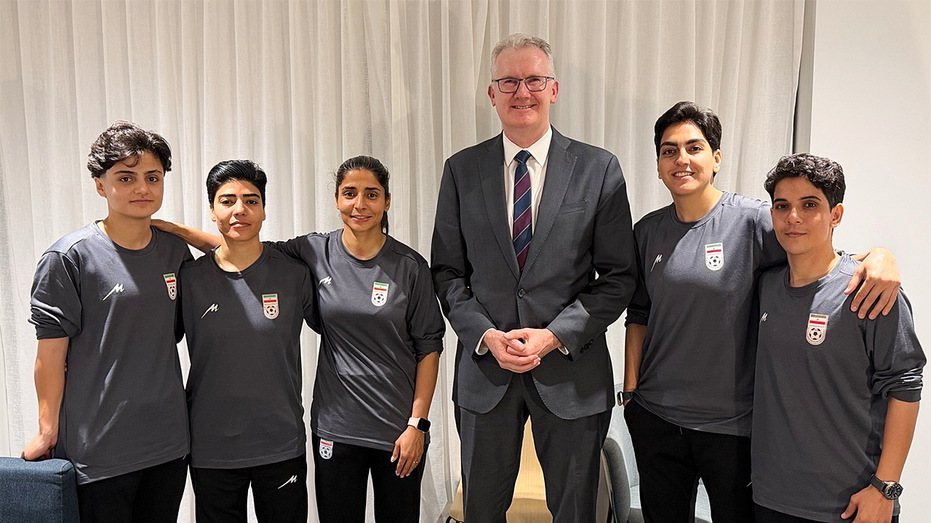
21 Iranian women’s soccer players weigh return home after 5 granted asylum

The fate of 21 members of Iran’s women’s national soccer team remained uncertain Tuesday after five teammates were granted asylum in Australia, leaving the rest of the squad to decide whether to return to a country still reeling from war.

The Iranian team arrived in Australia for the tournament before the U.S.-Israeli attacks against Iran began on Feb. 28.

An official roster lists 26 players, along with coaches and staff. While Australian authorities confirmed that five players were transported by federal police to a secure location overnight to finalize humanitarian visas, the remaining members of the delegation have not publicly indicated whether they will seek similar protections or return to Iran.

While only five players were granted asylum, Australian Home Affairs Minister Tony Burke said the offer was given to everyone on the team.

IRANIAN WOMEN'S SOCCER FANS SHOW SUPPORT FOR TRUMP AS TEAM APPEARS TO PIVOT ON NATIONAL ANTHEM STANCE

"I don't want to begin to imagine how difficult that decision is for each of the individual women, but certainly last night it was joy, it was relief," Burke told reporters after signing the documents. "People were very excited about embarking on a life in Australia."

"These women are tremendously popular in Australia, but we realize they are in a terribly difficult situation with the decisions that they’re making," he added. "The opportunity will continue to be there for them to talk to Australian officials if they wish to."

The move comes after the team refused to sing the Iranian anthem before their first Women’s Asian Cup match early last week against South Korea — a gesture some interpreted as protest and others as mourning amid turmoil at home. The team later sang and saluted the anthem in two subsequent matches, including ahead of their final match, when they were eliminated by the Philippines.

After the team was knocked out of the tournament over the weekend, they faced potentially returning to a country still under bombardment. The team's head coach, Marziyeh Jafari, said on Sunday the players "want to come back to Iran as soon as we can."

Outside the team’s hotel on Australia's Gold Coast on Tuesday, a brief commotion erupted as demonstrators gathered near a white bus believed to be transporting players. Some protesters knelt or lay in front of the vehicle, chanting "Save our girls" and waving pre-Revolution Iranian flags before the bus departed minutes later.

The five women granted asylum said they were happy for their names and pictures to be published, according to Burke, who emphasized that the players wanted to make clear that they were not political activists.

IRAN FLAG REMOVED FROM PARALYMPICS OPENING CEREMONY AFTER SOLE ATHLETE WITHDRAWS OVER TRAVEL SAFETY CONCERNS

"Last night I was able to tell five women from the Iranian Women’s Soccer team that they are welcome to stay in Australia, to be safe and have a home here," Burke said on X.

It remains unclear when the remaining players and staff will depart Australia or whether additional asylum requests will be made.

For the majority of the squad, the next move carries significant personal stakes — balancing family, national loyalty and safety as conflict continues in their home country.

"Australians have been moved by the plight of these brave women," Prime Minister Anthony Albanese told reporters. "They're safe here and they should feel at home here."

"They then had to consider that and do it in a way that did not present any danger to them or to their families and friends back home in Iran," he continued.

The asylum offer came after U.S. President Donald Trump on Monday called on Australia to grant asylum to any team member who wanted it.

Trump had blasted Australia on social media, saying Australia was "making a terrible humanitarian mistake" by allowing the team to be "forced back to Iran, where they will most likely be killed."

"The U.S. will take them if you won’t," Trump said, despite his administration's efforts to limit the number of immigrants in the U.S. who can receive asylum for political purposes.

Just hours later, Trump praised Albanese in another post.

"He’s on it! Five have already been taken care of, and the rest are on their way," Trump wrote.

Albanese said Trump had called him for "a very positive conversation," about the issue. The prime minister said he explained "the action that we'd undertaken over the previous 48 hours" to support the women.

The Associated Press contributed to this report.

About Us

Virtus (virtue, valor, excellence, courage, character, and worth)

Vincit (conquers, triumphs, and wins)