

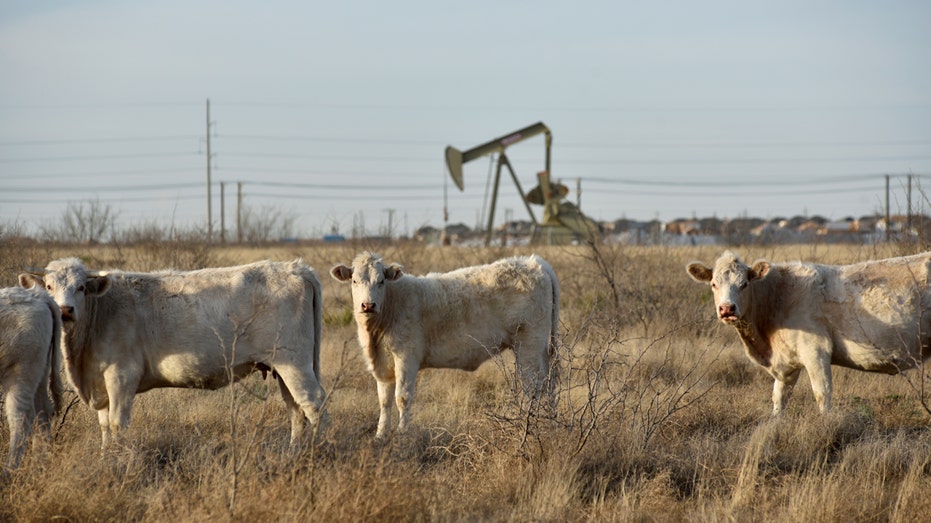
Bird flu-infected cows have died in 5 states as experts closely monitor the disease

Dairy cows infected with avian flu in five U.S. states have died or been slaughtered by farmers because they did not recover, state officials and academics told Reuters.

Reports of the deaths suggest the bird flu outbreak in cows could take a greater economic toll in the farm belt than initially thought. Farmers have long culled poultry infected by the virus, but cows cost much more to raise than chickens or turkeys.

A U.S. Department of Agriculture spokesperson said the agency knew of a few deaths but that the vast majority of cows recover well. Reuters was not able to determine the total number of cows with bird flu that died or were killed in South Dakota, Michigan, Texas, Ohio and Colorado.

WHO CONFIRMS FIRST HUMAN DEATH FROM A(H5N2) BIRD FLU

Avian flu has infected dairy cows in more than 80 herds across 10 states since late March, according to the USDA.

Some of the animals died of secondary infections contracted after bird flu weakened their immune systems, said state veterinarians, agriculture officials, and academics assisting in state responses to bird flu. Other cows were killed by farmers because they failed to recover from the virus.

Cattle infected with bird flu suffer reduced milk production, digestive issues, fever, and diminished appetite, according to farmers and veterinarians.

In South Dakota, a 1,700-cow dairy sent a dozen of the animals to slaughter after they did not recover from the virus, and killed another dozen that contracted secondary infections, said Russ Daly, a professor with South Dakota State University and veterinarian for the state extension office who spoke with the farm.

"You get sick cows from one disease, then that creates a domino effect for other things, like routine pneumonia and digestive issues," Daly said.

A farm in Michigan killed about 10% of its 200 infected cows after they too failed to recover from the virus, said Phil Durst, an educator with Michigan State University Extension who spoke with that farm.

Michigan has more confirmed infections in cattle than any state as well as two of three confirmed cases of U.S. dairy workers who contracted bird flu.

In Colorado, some dairies reported culling cows with avian flu because they did not return to milk production, said Olga Robak, spokesperson for the state Department of Agriculture.

Ohio Department of Agriculture spokesperson Meghan Harshbarger said infected cows have died in Ohio and other affected states, mostly due to secondary infections.

The Texas Animal Health Commission also confirmed that cows have died from secondary infections at some dairy operations with avian flu outbreaks.

Officials could not provide figures for the number of statewide cow mortalities.

New Mexico's state veterinarian, Samantha Uhrig, said farmers increasingly culled cows due to decreased milk production early in the outbreak, before the U.S. even confirmed bird flu was infecting cattle. Culling decreased as farmers learned that most cows gradually recovered, she said.

Officials in North Carolina and Kansas said there have been few to no cow deaths associated with bird flu in their states. Idaho officials did not respond to requests for information.

Bird flu virus particles were found in beef tissue taken from one dairy cow sent to be slaughtered for meat, and meat from the animal did not enter the food supply, USDA said last month.

The agency has reported that no viral particles were found in samples of ground beef collected at retail stores, and that no bird flu virus was found after cooking ground beef to medium to well done, after it was injected with a virus surrogate as part of an experiment.
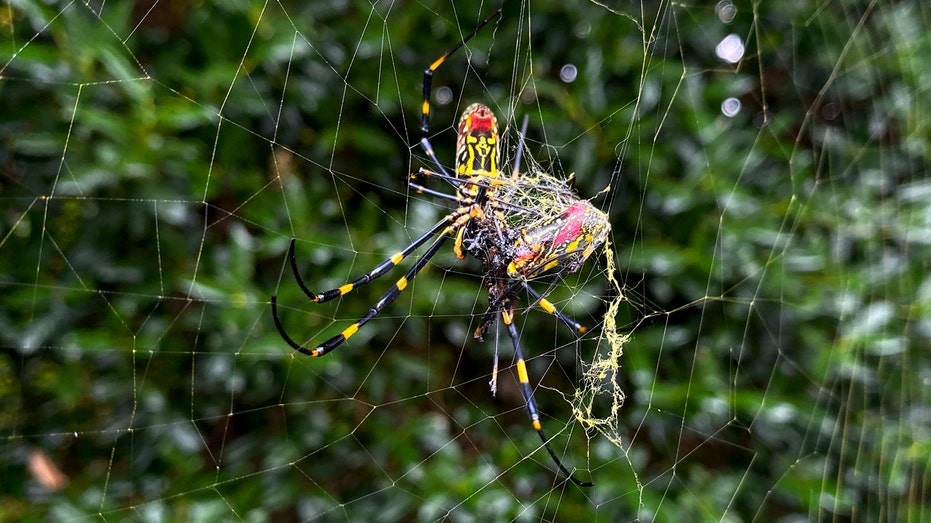
The Joro spider is spreading in the US, but it's not the invasive species we have to worry about

A large, brightly colored invasive species called the Joro spider is on the move in the United States. Populations have been growing in parts of the South and East Coast for years, and many researchers think it's only a matter of time before they spread to much of the continental U.S.

But spider experts say we shouldn’t be too worried about them.

"My sense is people like the weird and fantastic and potentially dangerous," said David Nelsen, a professor of biology at Southern Adventist University who has studied the growing range of Joro spiders. "This is one of those things that sort of checks all the boxes for public hysteria."

LARGEST MALE SPECIMEN OF WORLD'S MOST VENOMOUS SPIDER DISCOVERED IN AUSTRALIA

Scientists instead worry about the growing prevalence of invasive species that can do damage to our crops and trees — a problem made worse by global trade and climate change, which is making local environmental conditions more comfortable for pests that previously couldn't survive frigid winters.

"I think this is one of those ‘canary in the coal mine’ type species where it’s showy, it's getting a lot of attention," said Hannah Burrack, professor and chair of the entomology department at Michigan State University. But the shy critter poses little risk to humans. Instead, Burrack said, introduced pests like fruit flies and tree borers can do more damage.

"This is a global concern, because it makes all the things that we do in terms of conservation, in terms of agricultural production, in terms of human health, harder to manage," she said.

The Joro spider is one of a group of spiders called orb-weavers, named for their wheel-shaped webs. They're native to East Asia, have bright yellow and black coloring and can grow as long as three inches when their legs are fully extended.

However, they’re pretty hard to spot at this time of year because they’re still early in their life cycle, only about the size of a grain of rice. A trained eye can spot their softball-sized webs on a front porch, or their gossamer threads of golden silk blanketing the grass. Adults are most commonly seen in August and September.

Scientists are still trying to figure that out, said David Coyle, an assistant professor at Clemson University who worked with Nelsen on a study on the Joro's range, published last November. Their central population is primarily in Atlanta but expanding to the Carolinas and southeastern Tennessee. A satellite population has taken hold in Baltimore over the last two years, Coyle said.

As for when the species will become more prevalent in the Northeast, an eventual outcome suggested by their research? "Maybe this year, maybe a decade, we really don’t know," he said. "They’re probably not going to get that far in a single year. It’s going to take a bunch of incremental steps."

The babies can: using a tactic called "ballooning," young Joro spiders can use their webs to harness the winds and electromagnetic currents of the Earth to travel relatively long distances. But you won't see fully-grown Joro spiders taking flight.

Joro spiders will eat whatever lands in their web, which mainly ends up being insects. That could mean they'll compete with native spiders for food, but it might not all be bad — a Joro's daily catch could also feed native bird species, something Andy Davis, a research scientist at the University of Georgia, has personally documented.

As for some observers' hope that Joro spiders could gobble up the invasive spotted lanternflies destroying trees on the East Coast? They might eat a few, but there's "zero chance" they'll make a dent in the population, Coyle said.

Joro spiders have venom like all spiders, but they aren't deadly or even medically relevant to humans, Nelsen said. At worst, a Joro bite might itch or cause an allergic reaction. But the shy creatures tend to stay out of humans' way.

What could one day truly cause damage to humans is the widespread introduction of other creatures like the emerald ash borer or a fruit fly called the spotted wing drosophila that threaten the natural resources we rely upon.

"I try to stay scientifically objective about it. And that’s a way to protect myself from maybe the sadness of it. But there’s so much ecological damage being done all over the world for, for so many reasons, mostly because of humans," Davis said. "This to me is just one more example of mankind's influence on the environment."

About Us

Virtus (virtue, valor, excellence, courage, character, and worth)

Vincit (conquers, triumphs, and wins)