

Report exposes 'catalog of failures' by UK government in infected blood scandal that killed thousands

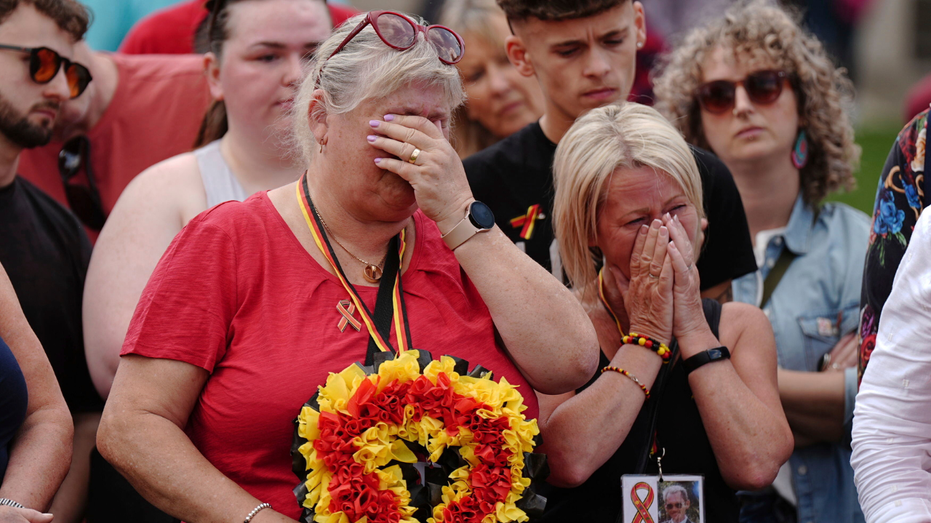
British authorities and the country's public health service committed a "catalog of failures" and knowingly exposed tens of thousands of patients to deadly infections through contaminated blood and blood products, an inquiry into the U.K.’s infected blood scandal found Monday.

An estimated 3,000 people in the United Kingdom are believed to have died and many others were left with lifelong illnesses after receiving blood or blood products tainted with HIV or hepatitis in the 1970s to the early 1990s.

The scandal is widely seen as the deadliest disaster in the history of Britain’s state-run National Health Service since its inception in 1948.

PIONEER OF AMERICA'S GLOBAL HIV/AIDS PROGRAM RECALLS HOPE AFTER YEARS OF DESPAIR

Former judge Brian Langstaff, who chaired the inquiry, slammed successive governments and medical professionals for failing to avoid the tragedy to save face and expense. He found that deliberate attempts were made to conceal the disaster, and there was evidence of government officials destroying documents.

"This disaster was not an accident. The infections happened because those in authority — doctors, the blood services and successive governments — did not put patient safety first," he said. "The response of those in authority served to compound people’s suffering."

Many of those affected were people with hemophilia, a condition affecting the blood’s ability to clot. In the 1970s, patients were given a new treatment that the U.K. imported from the United States. Some of the plasma used to make the blood products was traced to high-risk donors, including prison inmates, who were paid to give blood samples.

Because manufacturers of the treatment mixed plasma from thousands of donations, one infected donor would compromise the whole batch.

'VAMPIRE FACIALS' AT UNLICENSED SPA LIKELY RESULTED IN HIV INFECTIONS: CDC

The report said around 1,250 people with bleeding disorders, including 380 children, were infected with HIV -tainted blood products. Three-quarters of them have died. Up to 5,000 others who received the blood products developed chronic hepatitis C, a type of liver infection.

Meanwhile, an estimated 26,800 others were also infected with hepatitis C after receiving a blood transfusion, often given after childbirth, surgery or an accident, the report said.

Campaigners have fought for decades to bring official failings to light and secure government compensation. The inquiry was finally approved in 2017, and over the past four years it reviewed evidence from more than 5,000 witnesses and more than 100,000 documents.

British Prime Minister Rishi Sunak is expected to apologize later Monday, and authorities are expected to announce compensation of about $12.7 billion in all to victims. Details about that payment are not expected until Tuesday.

Des Collins, a lawyer representing 1,500 of the victims, called the report's publication a "day of truth."

"They have spent years bravely telling their stories, campaigning and spurring collective action in order to get to this point. For some, it has been 40 years since their lives were forever blighted or loved ones were lost in cruel circumstances," he said. "Several thousands, sadly, have not lived to see this day."

Diana Johnson, a lawmaker who has long campaigned for the victims, said she hoped that those found responsible for the disaster will face justice including prosecution — though the investigations have taken so long that some of the key players may well have died since.

"There has to be accountability for the actions that were taken, even if it was 30, 40, 50 years ago," she said.
Taiwan's new president urges China to halt 'military intimidation' tactics

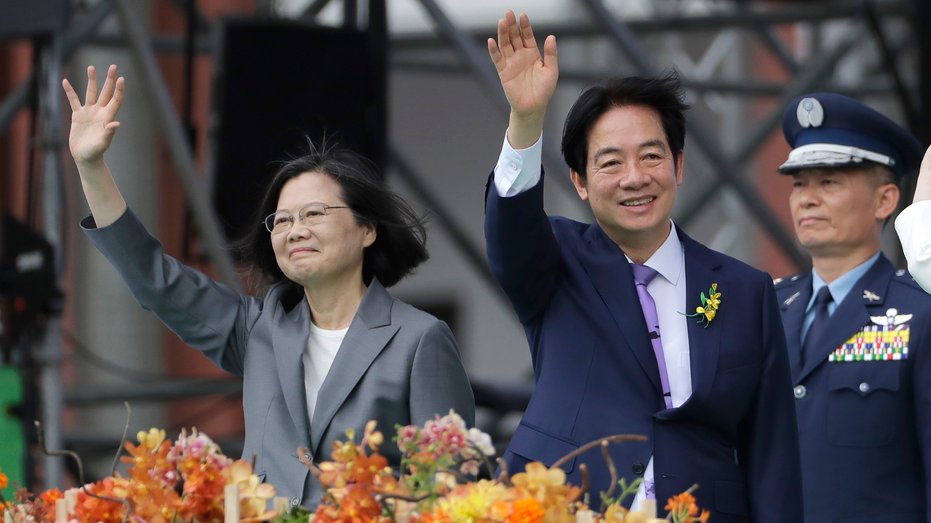
Taiwan’s new president, Lai Ching-te, said in his inauguration speech Monday that he wants peace with China and urged it to stop its military threats and intimidation of the self-governed island that Beijing claims as its own territory.

"I hope that China will face the reality of (Taiwan)’s existence, respect the choices of the people of Taiwan, and in good faith, choose dialogue over confrontation," Lai said after being sworn into office.

Lai pledged to "neither yield nor provoke" Beijing and said he sought peace in relations with China. But he emphasized the island democracy is determined to defend itself "in the face of the many threats and attempts at infiltration from China."

TAIWAN STANDS AS MAJOR LINE OF DEFENSE AGAINST GLOBAL WAR WITH CHINA, CRITICAL FOR US SECURITY

Lai’s party, the Democratic Progressive Party, doesn’t seek independence from China but maintains that Taiwan is already a sovereign nation.

The Chinese office in charge of Taiwan affairs criticized Lai’s inauguration speech as promoting "the fallacy of separatism," inciting confrontation and relying on foreign forces to seek independence.

"We will never tolerate or condone any form of ‘Taiwan independence’ separatist activities," said Chen Binhua, spokesperson of the Taiwan Affairs Office of China’s State Council.

"No matter how the situation on the island changes, no matter who is in power, it cannot change the fact that both sides of the Taiwan Strait belong to one China ... and cannot stop the historical trend of the motherland’s eventual reunification," Chen said.

CHINA INCREASES AGGRESSIVE MOVES AGAINST TAIWAN AS ISLAND PREPARES TO INAUGURATE NEW PRESIDENT

The Chinese Ministry of Commerce on Monday also announced sanctions against Boeing and two other defense companies for arms sales to Taiwan.

Lai, 64, takes over from Tsai Ing-wen, who led Taiwan through eight years of economic and social development despite the COVID-19 pandemic and China’s escalating military threats. Beijing views Taiwan as a renegade province and has been upping its threats to annex it by force if necessary.

Lai is seen as inheriting Tsai's progressive policies, including universal health care, backing for higher education and support for minority groups, including making Taiwan the first place in Asia to recognize same-sex marriages.

In his inauguration speech, Lai pledged to bolster Taiwan’s social safety net and help the island advance in fields such as artificial intelligence and green energy.

Lai, who was vice president during Tsai’s second term, came across as more of a firebrand earlier in his career. In 2017, he described himself as a "pragmatic worker for Taiwan’s independence," drawing Beijing’s rebuke. He has since softened his stance and now supports maintaining the status quo across the Taiwan Strait and the possibility of talks with Beijing.

Thousands of people gathered in front of the Presidential Office Building in Taipei for the inauguration ceremony. Donning white celebratory hats, they watched the swearing-in on large screens, followed by a military march and colorful performances featuring folk dancers, opera performers and rappers. Military helicopters flew in formation, carrying Taiwan's flag.

Lai accepted congratulations from fellow politicians and delegations from the 12 nations that maintain official diplomatic relations with Taiwan, as well as politicians from the U.S., Japan and various European states.

Lai, also known by his English name William, has vowed to continue his predecessor’s push to maintain stability with China while beefing up Taiwan’s security through imports of military equipment from close partner the U.S., the expansion of the defense industry with the manufacture of submarines and aircraft, and the reinforcing of regional partnerships with unofficial allies such as the U.S., Japan, South Korea and the Philippines.

U.S. Secretary of State Antony J. Blinken congratulated Lai on his inauguration. "We look forward to working with President Lai and across Taiwan’s political spectrum to advance our shared interests and values, deepen our longstanding unofficial relationship, and maintain peace and stability across the Taiwan Strait," Blinken said in a statement from his office.

The U.S. doesn’t formally recognize Taiwan as a country but is bound by its own laws to provide the island with the means to defend itself.

Lai’s relatively conciliatory tone will come across as reassuring to foreign governments that may have been concerned about his past reputation as a firebrand, said Danny Russell, vice president of the Asia Society Policy Institute.

"There is virtually nothing that Lai could have said, short of ‘unconditional surrender,’ that would satisfy Beijing," he said.

Although Lai signaled he would maintain the overall direction of Tsai's policy regarding Beijing, he struck a more sovereignty-affirming tone in his speech, said Amanda Hsiao, a senior analyst with the International Crisis Group.

"This likely fits within Beijing's low expectations of Lai, so it won't necessarily change their response," Hsiao said. "China was always going to respond negatively to Lai."

During her tenure, Tsai oversaw a controversial pension and labor reform and extended the military conscription length to one year. She also kickstarted a military modernization drive.

Tsai’s leadership during the pandemic split public opinion, with most admiring Taiwan’s initial ability to keep the virus largely outside its borders but criticizing the lack of investment in rapid testing as the pandemic progressed.

About Us

Virtus (virtue, valor, excellence, courage, character, and worth)

Vincit (conquers, triumphs, and wins)