

Army Helicopter Flights Suspended Near DCA After Two Planes Forced To Abort Landings

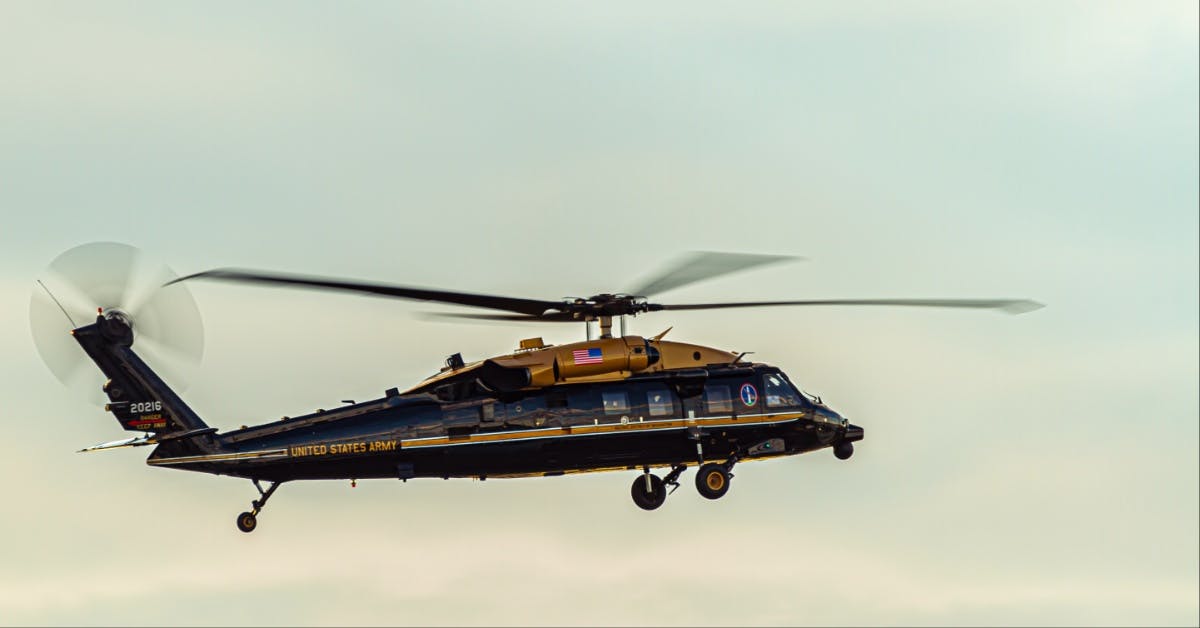
The Army put helicopter flights to the Pentagon on hold on Monday after another incident last week forced air traffic controllers to divert two commercial planes that were preparing to land at Reagan National Airport (DCA), POLITICO reported.

The 12th Aviation Battalion, which transports political and military VIPs, will not be allowed to fly near DCA as the Army conducts an internal inquiry after a military helicopter reportedly “took a scenic route around the Pentagon versus proceeding directly from the west to the heliport” last Thursday. The incident prompted commercial flights to abort their landings, according to POLITICO, which cited “an email sent by an FAA official.”

Last week’s aborted landings came just over three months after an Army Black Hawk helicopter collided with an American Airlines plane near DCA, killing all 64 people aboard the plane and all three helicopter pilots.

Transportation Secretary Sean Duffy said on Friday that the Army helicopters’ “scenic route” was “unacceptable,” adding that he would speak with the Defense Department “to ask why the hell our rules were disregarded.” An Army spokesman disputed that the flight was “scenic,” calling the characterization “inappropriate,” according to The Washington Post. According to the Army official, the helicopter had been approved to land at the Pentagon, but was asked by the Pentagon flight tower to circle again before landing. The helicopter’s second pass appears to have caused air traffic controllers at DCA to divert two planes’ landings, the Army spokesman said.

The helicopter’s flight on Thursday was done “in accordance with published FAA flight routes,” according to the Army.

Congressional leaders called on the Army and the FAA to prevent more dangerous incidents between military helicopters and commercial aircraft around DCA. Sen. Ted Cruz (R-TX) said the Army was “once again putting the traveling public at risk.”

“Thank God there was a decisive response from air traffic controllers and pilots, or else these two close calls could have resulted in the loss of hundreds of lives,” Cruz (R-TX) added. “I believe it’s time for the FAA to act swiftly and assert control over the national airspace so the Army stops running air taxis for military officials near Ronald Reagan Washington National Airport.”

Sen. Jerry Moran (R-KS), chairman of the aviation subcommittee, said, “The tragic accident at DCA in January and the data that has come to light on near-misses at DCA over the last four years overwhelmingly demonstrate that new safety measures must be implemented before military helicopters resume operations near the airport. … The Army and FAA need to reevaluate their operations and return to Capitol Hill to explain what needs to be done to make certain the DCA airspace is safe. We already had a tragedy that should not have happened.”

Sen. Maria Cantwell (D-WA) added, “It is outrageous that only three months after an Army Black Hawk helicopter tragically collided with a passenger jet, the same Army brigade again flew a helicopter too close to passenger jets on final approach at DCA. It is far past time for [Defense] Secretary [Pete] Hegseth and the FAA to give our airspace the security and safety attention it deserves.”

Murder, Madness, Meaning: How Can We ‘Rejoice Always’ When The World Often Seems So Broken?

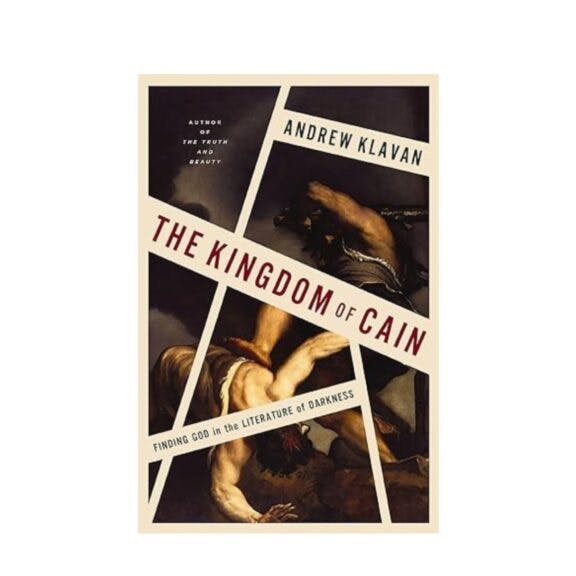
The following excerpt is from Andrew Klavan’s Amazon best-selling book, The Kingdom of Cain: Finding God in the Literature of Darkness, which you can order now.

REJOICE EVERMORE!

So Scripture commands us. But how can you rejoice in a world of so much darkness? At a time like twilight when darkness gathers, ready to fall? The comforting bromides of belief can seem pat and complacent in the shadow of very present wickedness. Everything happens for a reason. There must be evil so there can be free will. God is in charge and will make things right in the end. No doubt. And it is some comfort too. But here we are today, and faith in the things unseen, and hope in the far-off country of our salvation don’t have the tangible immediacy of our suffering and distress.

More than this, and deeper. From our first cry to our last one, life is little more than letting go, a long goodbye. The pain, the grief, the traumas physical and emotional that scar our minds: sorrow is so woven into the very fabric of material existence that to turn our faces from it is to turn away from life itself. In the face of our mourning mortality, even Jesus wept.

In part 1, I write about the three murders and the works of art that reveal the nature of their evil. In part 2, I reflect on creative practices of truth and beauty that allow one to confront this evil with love and, through love, with joy. By joy, of course, I don’t mean smiley-faced complacency or quietism. I’m talking about preserving the gusto of living, even when you are living honestly, which means acknowledging grief and pain.

The first murder is the 1834 killing of the French con man Jean-François Chardon and his mother by the violent but elegant and eloquent thief Pierre François Lacenaire. This murder was the beginning of a startling century-long dance between art and reality. Lacenaire’s philosophical musings inspired the Russian novelist Fyodor Dostoevsky to create the classic novel Crime and Punishment. Dostoevsky’s work predicted and inspired the atheistic philosophy of Friedrich Nietzsche. Nietzsche, in turn, inspired the famous American murderers of the 1920s, Leopold and Loeb. They then became the subjects of any number of books and movies, including Alfred Hitchcock’s innovative film, Rope. Throughout this bizarre and deadly story cycle, the theme in play is the death of Christian faith and the attempt to rewrite and rise above the Christian moral order—an attempt still being made today.

Next, I deal—as delicately as I can—with the monstrous crimes committed in the American Midwest of the 1950s by the psychopath Ed Gein. Gein murdered women and wore their bodies as costumes. These grotesque horrors inspired the novel Psycho by Robert Bloch, which was the basis of the Alfred Hitchcock movie of the same name, now regarded as one of the greatest works of American cinema. Psycho gave birth to an entire genre, the slasher film, which includes everything from disastrous trash and reprehensible torture porn to serious-minded horror like The Texas Chain Saw Massacre and ultimately the insightful novel and Oscar-winning film The Silence of the Lambs, also based on the Gein murders. The theme of this cycle is, of course, the confusion of sexual identity, but it is also the role of psychiatric theory in creating and confronting that confusion.

The last murder I write about is the first: the killing of Abel by Cain. The theme here is the failure of theodicy, the inability to accept the goodness of a God who presides over a world full of so much cruelty and injustice. I can’t write about the works of art inspired by Cain’s actions, because in some sense all art is inspired by his actions. He is the first man born after the fall, and all history flows out of him. This is Cain’s kingdom; we’re just living in it. Instead, I trace Cain’s continued presence throughout the Old and New Testaments because I believe the Bible contains, in microcosm, all history and all art.

The second part of the book is more personal. I don’t hold myself up as a role model of anything. I am not a pastor or a theologian. You should get your religious rule book from a better source. But because each inner life is different, each act of spiritual creation is unique. Whether a rainbow looks the same to me as it does to you, it is always only our own.

In light of this, I’ve chosen to write three brief reflections on practices that have deepened my relationship with Jesus Christ. My reason for this is that in Christ, I find I experience both the cross and the resurrection—that is, a heightened awareness of evil, injustice, and suffering accompanied by a seemingly absurd increase in serenity and joy.

The first of these reflections is on the ritual of communion—my answer to Lacenaire and to the intellectual collapse of the Christian moral order.

The second is a reflection on the atheistic psychotherapy that miraculously restored me to sanity in my youth and freed me to accept the grace of God. This is my answer to Ed Gein and, through him, the misbegotten nature of today’s therapeutic culture and the gender confusion that has arisen along with it.

The closing chapter is on art and beauty, and how it suggests to me a theodicy no mere philosophy can provide, a faithful response to suffering. This is my answer to Cain.

INTRODUCTION

To sum it up then:

My subject is murder and the imagination. My premise is that murder is evil. My belief is that God is love, and love is the source of joy.

If, then, I enter the literature of darkness, I do it with a sure and certain faith in the reality of light, not light in a future heaven but light in this world of sin and suffering, not light in the world to come but light in this world of present darkness, including the darkness of murder.

Light. Love. Joy. Beauty.
Here. Now. In the kingdom of Cain.

ORDER ON AMAZON TODAY

ORDER SIGNED COPIES TODAY

About Us

Virtus (virtue, valor, excellence, courage, character, and worth)

Vincit (conquers, triumphs, and wins)