

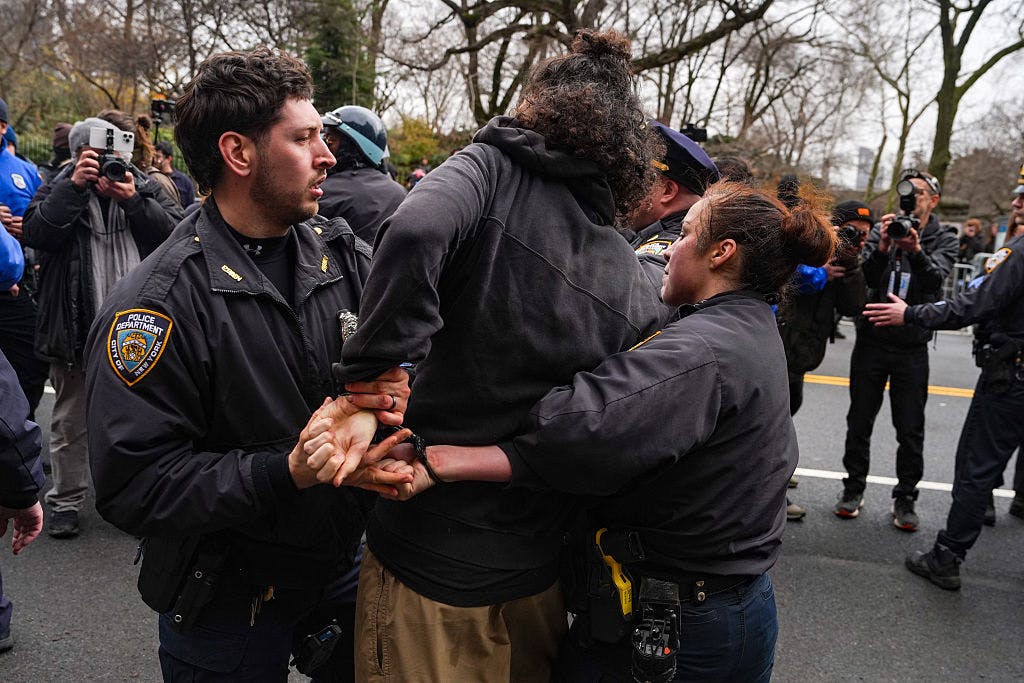
FBI Opens Terror Probe After Homemade Bombs In NYC Linked To ISIS

The FBI is reportedly looking at an attempted bombing in New York City as a potential act of terror after at least one of the suspects — who wielded a homemade bomb at a protest outside Gracie Mansion the day before — claimed that he had been inspired by ISIS.

NBC News correspondent Tom Winter reported on Sunday that one of the suspects referenced ISIS directly in statements to law enforcement after his apprehension, prompting the terror probe.

CNN reported that both suspects admitted to being “inspired by ISIS,” but said that officials do not believe that there is a connection between the New York City attack and the military action unfolding in Iran.

WATCH:

Emir Balat and Ibrahim Nikk, the two NYC terrorists who hurled an IED at protestors were reportedly inspired by ISIS. pic.twitter.com/gPiNeC0FoM

— Thomas Hern (@ThomasMHern) March 8, 2026

“Law enforcement sources [are] also telling us that the two suspects that were arrested in relation to those explosive devices have admitted to being inspired by ISIS,” correspondent Gloria Pazmino reported.

According to a report published Sunday by CBS News, the FBI’s Joint Terrorism Task Force has taken over the investigation into Emir Balat, 18, and Ibrahim Kayumi, 19 — both of whom live in Pennsylvania — after a lab in Quantico confirmed that what appeared to homemade bombs were not “hoax devices” but deadly Improvised Explosive Devices (IEDs) using components that have been seen in previous terror attacks.

The devices, two sources told CBS, contained sports drink bottles filled with explosives that were set inside glass jars packed with nails, bolts, and screws. The explosives were connected to a firework described as an “M-80-type” with a fuse.

The sources said that the explosive material inside was called triacetone triperoxide, or TATP, which is a white powder made from two readily available household chemicals: acetone and hydrogen peroxide.

Multiple reports suggest that the investigation is also likely to probe the recent travels of the suspects, both of whom have made extended visits to Istanbul in the last two years. Balat stayed in the Turkish city for months, from early May of 2025 to late August of the same year. Kayumi also traveled to Istanbul, but only stayed for a few weeks in July and August of 2024. He also traveled to Saudi Arabia in March of 2024.

Fox News congressional correspondent Bill Melugin also reported that “New York City IED suspect Emir Balat’s parents are both from Turkey & were naturalized into US citizens in 2017, while Ibrahim Kayumi’s parents are both from Afghanistan. Mom naturalized in 2009, dad naturalized in 2004.”

New York City’s Democratic socialist Mayor Zohran Mamdani issued a statement about the attack on Sunday, which had taken place as competing protests played out in front of Gracie Mansion.

Mamdani specifically named January 6th defendant Jake Lang — who led a protest of about 20 people — and referred to him as a “white supremacist,” saying his demonstration was “rooted in bigotry and racism” and was not welcome in New York City.

While he condemned the violent act that followed, he did not mention the names of the terror suspects or their potential inspiration. Instead, he said simply, “The attempt to use an explosive device and hurt others is not only criminal, it is reprehensible and the antithesis of who we are.”
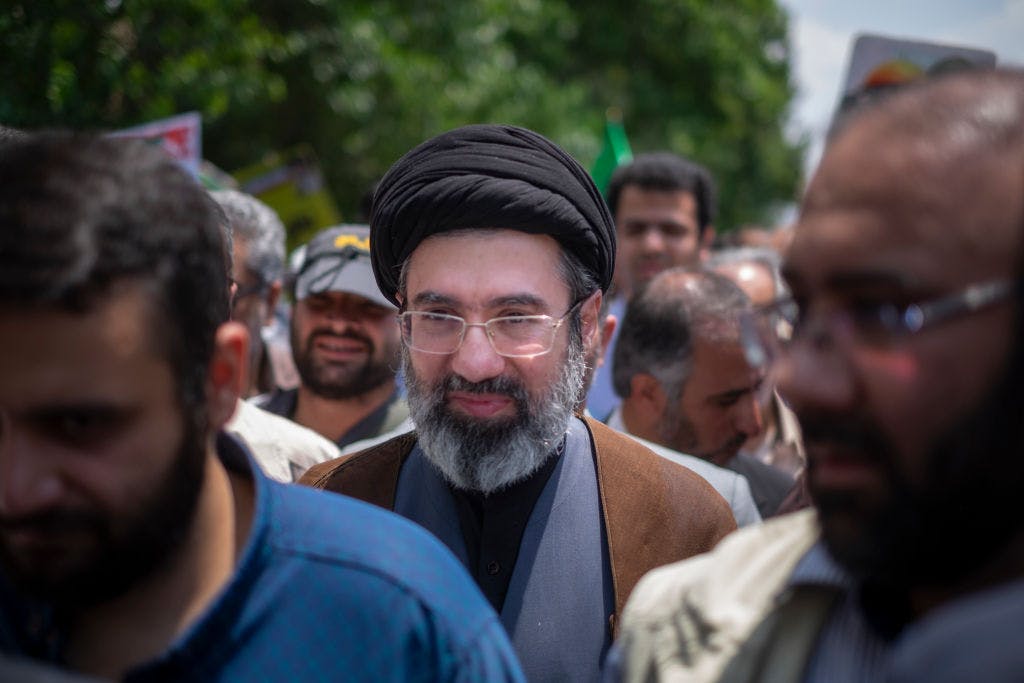
Iran’s Regime Declares New Supreme Leader — And The Bloodline Continues

The next supreme leader of Iran will be the late Ayatollah Ali Khamenei’s son, Mojtaba Khamenei, Iran’s clerical body that appoints the country’s supreme leader announced on Sunday.

Iran’s Assembly of Experts said the younger Khamenei had been chosen with a “decisive vote” and urged Iranians to rally behind him, putting an emphasis on the “elites and intellectuals of the seminaries and universities.”

Prior to the announcement, President Donald Trump said that the next supreme leader is “not going to last long” without U.S. approval.

“He’s going to have to get approval from us,” Trump said. “If he doesn’t get approval from us he’s not going to last long. We want to make sure that we don’t have to go back every 10 years, when you don’t have a president like me that’s not going to do it.”

The elder Khamenei was selected as supreme leader following the death of the Islamic Republic’s founder, Ayatollah Ruhollah Khomeini, who overthrew Iran’s dynastic shah during the 1979 revolution. With his son now assuming the position, the transition may raise questions about whether the Islamic Republic is drifting toward another form of dynastic rule. 

Mojtaba, a second son and mid-ranking cleric, was selected by the 88-member body following the death of his father, who ruled for 37 years until he was killed at the beginning of the conflict when the U.S. and Israel began to strike key targets on February 28.

Mojtaba, 56, has a reputation for being close to Iran’s Islamic Revolutionary Guard Corps (IRGC), which is a United States-designated terror organization. He has never held elected office or served in a senior government role. He was suspected of playing a role in the harsh crackdown on the Iranian Green Movement protests in 2009.

He served in the IRGC following high school before studying and teaching at an Islamic school. Mojtaba played a central role behind the scenes to assist his father and managed his family’s wealth and business affairs.

Mojtaba Khamenei was sanctioned by the United States in 2019, according to the U.S. Department of the Treasury.

The Treasury said he was targeted for “representing the Supreme Leader in an official capacity despite never being elected or appointed to a government position aside from work in the office of his father.”

According to the department, Iran’s supreme leader had delegated some leadership responsibilities to Mojtaba Khamenei, who worked closely with the commander of the Islamic Revolutionary Guard Corps–Quds Force and the Basij Resistance Force to advance his father’s destabilizing regional ambitions and oppressive domestic objectives.

Last week, Trump called Mojtaba a “lightweight.”

“They are wasting their time. Khamenei’s son is a lightweight,” Trump told Axios. “Khamenei’s son is unacceptable to me. We want someone that will bring harmony and peace to Iran.”

According to a report from the New York Post citing leaked U.S. diplomatic cables released through WikiLeaks, Mojtaba reportedly sought medical treatment in the United Kingdom for “impotency” after failing to produce children quickly. After multiple visits for treatment, including one stay lasting about two months, his wife was eventually able to conceive.

His wife was also reportedly killed alongside his father in the Israeli strike.

Before the vote, the IDF warned on its Farsi-language account that Israel would pursue any successor to Iran’s supreme leader.

“We want to tell you that the hand of the State of Israel will continue to pursue every successor and every person who seeks to appoint a successor,” the IDF posted.

About Us

Virtus (virtue, valor, excellence, courage, character, and worth)

Vincit (conquers, triumphs, and wins)