

‘Real Housewives’ Star Mary Cosby’s Son Dies At 23

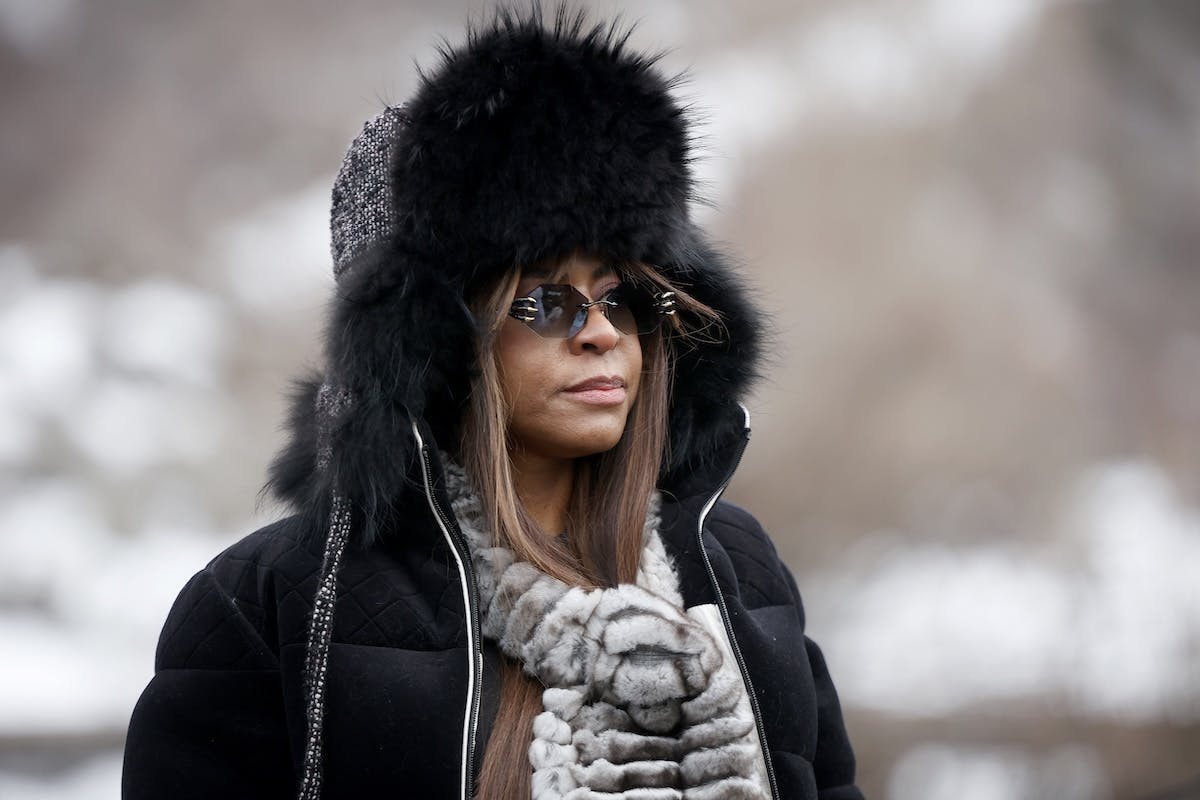
Robert Cosby Jr., who is the son of “The Real Housewives of Salt Lake City” star Mary Cosby, has died at the age of 23.

TMZ broke the news on Wednesday that Cosby Jr. died on Monday, but did not immediately reveal his cause of death. His parents, Mary and Robert Cosby Sr., told the outlet in a statement: “Our beloved son Robert Jr. has been called home to the Lord. Though our hearts ache, we take comfort in God’s promise and in knowing he is finally at peace. We are grateful for your prayers and trust in the Lord to carry us through this time of sorrow.”

The outlet noted that police responded to a possible overdose, but so far, that information is unconfirmed.

Cosby Jr. was seen on the popular reality show and discussed his substance abuse issues there, per Deadline. In a Season 5 episode, the reality star said he used Xanax, Adderall, acid, “Molly,” and cocaine. He also confessed to his mother that he had thoughts of suicide and self-harm in the past.

“You’re the only reason I didn’t kill myself,” he told his mom in one episode. His mother replied, “You have to know I love you more than anything, more than anything in this world. I think I love you more than dad — don’t ever tell [him] I said that. But you’re my friend, you’re my son, you’re my gift. God gave you to me. You’re the only thing that ever made me happy. Before I had you, I was never happy. You came, and you were so real. You [were] everything I hoped [for] in a person.”

Cosby Jr.’s wife, Alexiana Smokoff, filed for divorce in November 2025 following accusations of domestic violence and a restraining order. These all stemmed multiple domestic incidents, including one at Smokoff’s parents’ house, leading to more than a dozen charges being filed against Cosby Jr., several of which he pleaded guilty to. The divorce was finalized earlier this year. 

“Real Housewives” executive producer Andy Cohen responded to Cosby Jr.’s death on Threads, writing, “Devastatingly sad news out of SLC. This is every parent’s worst nightmare. My heart is broken for Mary, and I am sending all my love to her and Robert Sr.”
How The Left-Wing Climate Crusade May Be Nearing Its Breaking Point

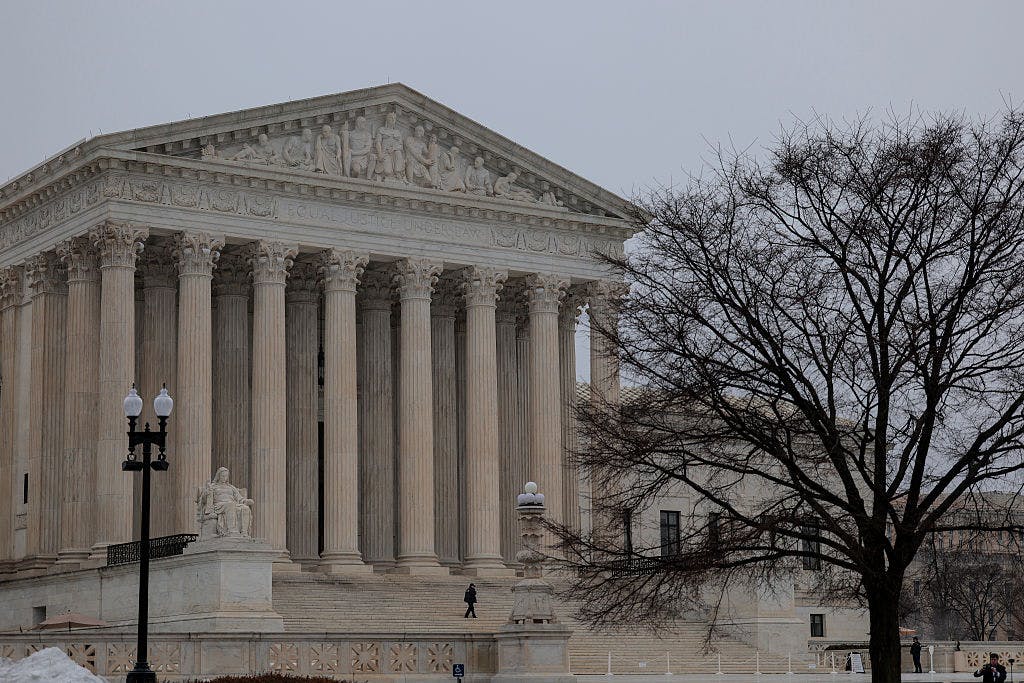
The U.S. Supreme Court announced Monday that it will take up a major climate change lawsuit targeting the energy industry — a case that could determine the future of similar lawsuits filed by left-wing states and municipalities across the country.

The Court agreed to review Suncor Energy Inc. v. County Commissioners of Boulder County. They granted the hearing after the Colorado Supreme Court allowed Boulder County’s state-law claims to proceed, rejecting arguments from energy producers that the lawsuit is preempted by federal law.

The decision comes amid a wave of nearly three dozen lawsuits brought by leftist jurisdictions seeking to hold oil and gas companies financially liable for alleged climate change damages.

Boulder County’s lawsuit accuses energy companies of knowingly contributing to climate change and claims the resulting environmental effects have caused millions of dollars in damage to local property and residents. Energy producers have countered that such claims attempt to regulate interstate and global emissions through state tort law, an approach they argue is incompatible with the Constitution and federal environmental statutes.

Legal experts say the Supreme Court’s intervention signals concern about allowing state courts to set national energy and climate policy.

Christopher Mills, a constitutional attorney and former law clerk to Clarence Thomas, said the Court is correctly recognizing the national stakes involved. “The Court’s action shows that it rightly recognizes that this is a national issue in need of an immediate national resolution,” Mills said. “Letting these copycat lawsuits fester in state courts across the country is a recipe for uncertainty, undermining American energy production and harming consumers.”

Todd Zywicki, a law professor at George Mason University’s Antonin Scalia Law School, described the case as a test of whether local governments can effectively impose national policy through litigation. “For years, trial lawyers and left-wing municipalities have used state law as a backdoor to impose their preferred energy policies on the entire country — without a vote, without Congress, and without accountability,” Zywicki said, adding that the Constitution does not permit such an end run around federal authority.

Former Bush administration official John Shu emphasized that greenhouse gas emissions, by definition, do not respect state borders, placing them squarely within Congress’s regulatory authority under the Commerce Clause and the Clean Air Act.

Boulder County, for its part, argued that Supreme Court review is premature because the case has not reached a final judgment. The justices nevertheless agreed to hear the dispute and directed the parties to address whether the Court has jurisdiction to review the case at this stage.

The incentive for Boulder to resist Supreme Court review right now is that State and local governments have generally had more success keeping these climate lawsuits alive in friendly state courts, where judges have been willing to treat them as traditional nuisance or consumer-protection cases. Once the Supreme Court weighs in, especially on the federal preemption question, a ruling against Boulder could wipe out not just this case but dozens of similar lawsuits nationwide in one stroke.

Oral arguments are expected in the fall, with a decision likely in 2026, and one that could determine whether state courts may continue serving as battlegrounds for national climate policy or whether such questions must remain with Congress.

About Us

Virtus (virtue, valor, excellence, courage, character, and worth)

Vincit (conquers, triumphs, and wins)