
The U.S. military is preparing for the possibility of sustained, weeks-long operations against Iran if President Donald Trump orders an attack, two U.S. officials told Reuters, in what could become a far more serious conflict than previously seen between the countries.
The disclosure by the officials, who spoke on condition of anonymity due to the sensitive nature of the planning, raises the stakes for the diplomacy underway between the United States and Iran.
U.S. envoys Steve Witkoff and Jared Kushner will hold negotiations with Iran on Tuesday in Geneva, with representatives from Oman acting as mediators. U.S. Secretary of State Marco Rubio cautioned on Saturday that while Trump’s preference was to reach a deal with Tehran, “that’s very hard to do.”
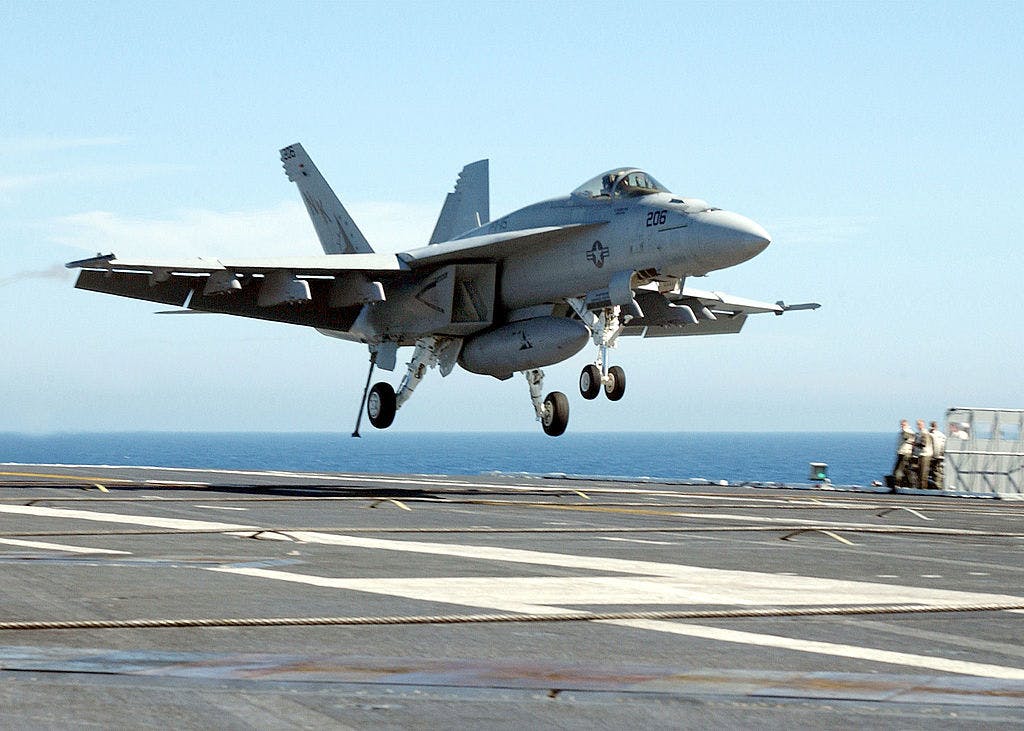
Meanwhile, Trump has amassed military forces in the region, raising fears of new military action. U.S. officials said on Friday the Pentagon was sending an additional aircraft carrier to the Middle East, adding thousands more troops along with fighter aircraft, guided-missile destroyers and other firepower capable of waging attacks and defending against them.
Trump, speaking on Friday after a military event at Fort Bragg in North Carolina, openly floated the possibility of changing the government in Iran, saying it “seems like that would be the best thing that could happen.” He declined to share who he wanted to take over Iran, but said, “there are people.”
“For 47 years, they’ve been talking and talking and talking,” Trump said.
Trump has long voiced skepticism about sending ground troops into Iran, saying last year, “the last thing you want to do is ground forces,” and the kinds of U.S. firepower arrayed in the Middle East so far suggest options for strikes primarily by air and naval forces. In Venezuela, Trump demonstrated a willingness to rely also on special operations forces to seize that country’s president, Nicolas Maduro, in a raid last month.
Asked for comment on the preparations for a potentially sustained U.S. military operation, White House spokesperson Anna Kelly said: “President Trump has all options on the table with regard to Iran.”
“He listens to a variety of perspectives on any given issue, but makes the final decision based on what is best for our country and national security,” Kelly said.
The Pentagon declined to comment.
The United States sent two aircraft carriers to the region last year, when it carried out strikes against Iranian nuclear sites.
However, June’s “Midnight Hammer” operation was essentially a one-off U.S. attack, with stealth bombers flying from the United States to strike Iranian nuclear facilities. Iran staged a very limited retaliatory strike on a U.S. base in Qatar.
The planning under way this time is more complex, the officials said.
In a sustained campaign, the U.S. military could hit Iranian state and security facilities, not just nuclear infrastructure, one of the officials said. The official declined to provide specific details.
Experts say the risks to U.S. forces would be far greater in such an operation against Iran, which boasts a formidable arsenal of missiles. Retaliatory Iranian strikes also increase the risk of a regional conflict.
The same official said the United States fully expected Iran to retaliate, leading to back-and-forth strikes and reprisals over time.
The White House and Pentagon did not respond to questions about the risks of retaliation or regional conflict.
Trump has repeatedly threatened to bomb Iran over its nuclear and ballistic missile programs and crushing of internal dissent. On Thursday, he warned the alternative to a diplomatic solution would “be very traumatic, very traumatic.”
Iran’s Revolutionary Guard has warned that in case of strikes on Iranian territory, it could retaliate against any U.S. military base.
The U.S. maintains bases throughout the Middle East, including in Jordan, Kuwait, Saudi Arabia, Qatar, Bahrain, the United Arab Emirates and Turkey.
Israeli Prime Minister Benjamin Netanyahu met Trump for talks in Washington on Wednesday, saying that if an agreement with Iran were reached, “it must include the elements that are vital to Israel.”
Iran has said it is prepared to discuss curbs on its nuclear program in exchange for lifting sanctions, but has ruled out linking the issue to missiles.
On Saturday, Iranian opposition figure Reza Pahlavi said U.S. military intervention in Iran could save lives and urged Washington not to spend too long negotiating with Tehran’s clerical rulers on a nuclear deal.
The exiled son of Iran’s toppled shah told Reuters in an interview there were signs that the Iranian government was on the brink of collapse and that an attack could weaken it or accelerate its fall.
“We are hoping that this attack will expedite the process and the people can be finally back in the streets and take it all the way to the ultimate regime’s downfall,” said Pahlavi, who is based in the United States and has lived outside Iran since before his father was toppled in the 1979 Islamic Revolution.
(Reporting by Phil Stewart and Idrees Ali; Editing by Don Durfee, Rosalba O’Brien, Rod Nickel)