

Breaking into the arts is difficult under any circumstances. Doing so as an openly conservative theater producer? Well, that’s nearly impossible. Robert Cooperman knows this better than anyone because he appears to be the only one who actually did.
Do a quick search of “conservative theater companies” and you’ll find just one response: Stage Right Theatrics in Columbus, Ohio. Cooperman founded the company in 2016 with the mission of presenting plays that reflect a conservative point of view. For the past decade, that decision has come with predictable consequences.
Stage Right has been boycotted, mocked, marginalized, and largely ignored by the local theater establishment and media. Cooperman himself has been branded a “clown,” a “fascist,” a “racist,” a “homophobe,” and every other label that conservatives are usually called.
“Right from the start, I was considered unserious or dangerous by the theater community, said Cooperman. “One member said I was dismissive of theater being a safe space for marginalized people.”
But despite the valiant effort to trample it into the dust, Stage Right has survived, and even thrived, in a world where liberals believe they “own” the arts and entertainment.
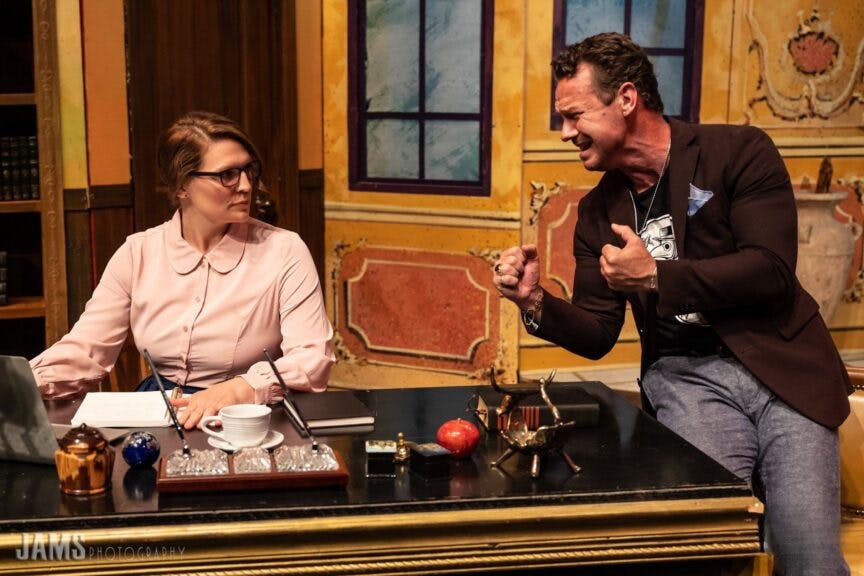
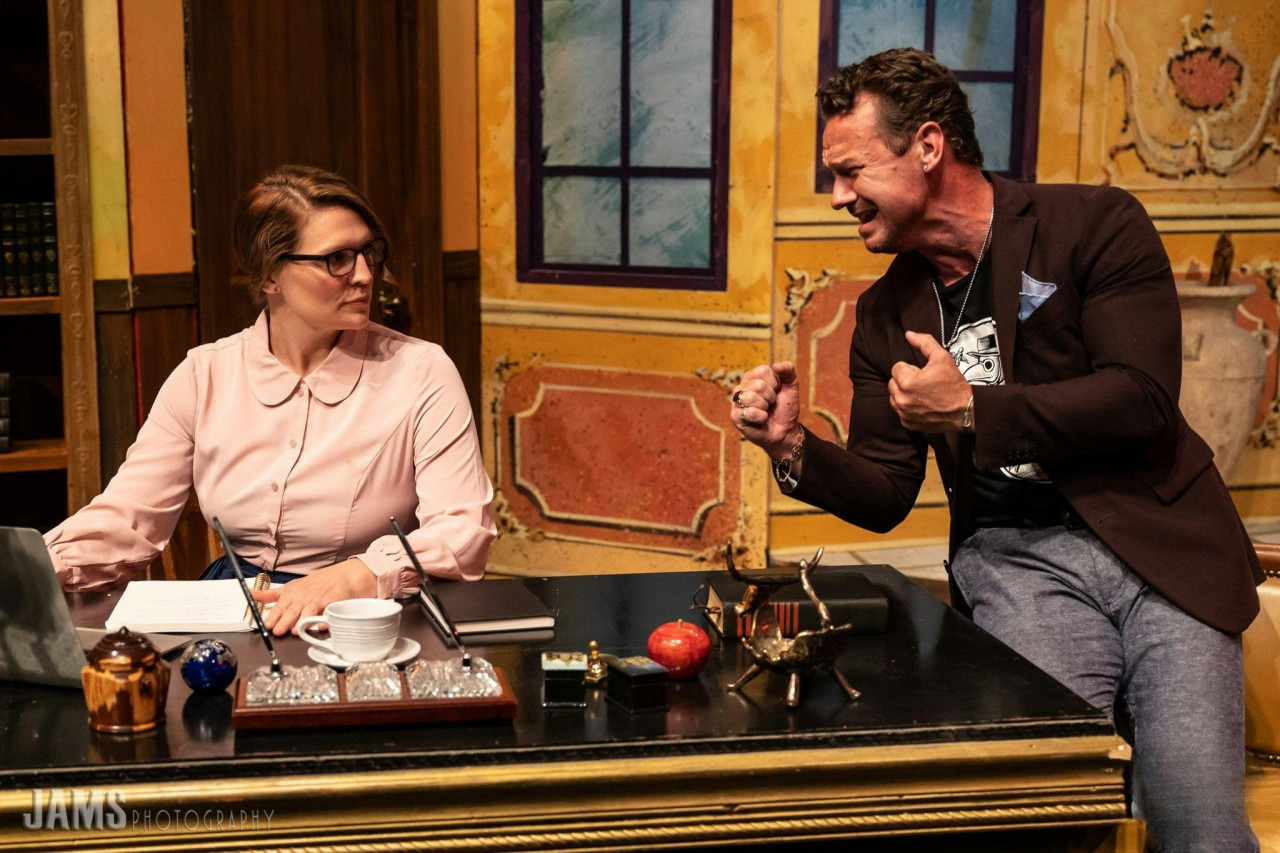
Stage Right Theatrics. “The Uncanny” by Andrew Klavan.
In January 2017, the company staged its first Conservative Theatre Festival, a modest one-night event featuring six short plays by conservative writers from across the country. The name was intentional and unapologetic. Stage Right was announcing itself to an industry that prides itself on “diversity” while blatantly discriminating against conservatives at every turn.
To the surprise of no one, progressives responded with derision and outrage, while conservatives showed genuine curiosity. Stage Right offered something rarely seen before. Instead of presenting conservatives as caricatures, they were painted as multi-faceted, inherently interesting individuals. The work was pro-tradition, pro-culture, and anti-woke.
What followed over the next decade was more of the same. The Left’s treatment of Stage Right mirrors its approach to every conservative institution. They kept up with the intimidation, ridicule, shunning, and a smug moral superiority. Despite their best efforts, Stage Right kept right on existing and promoting values that used to be mainstream.
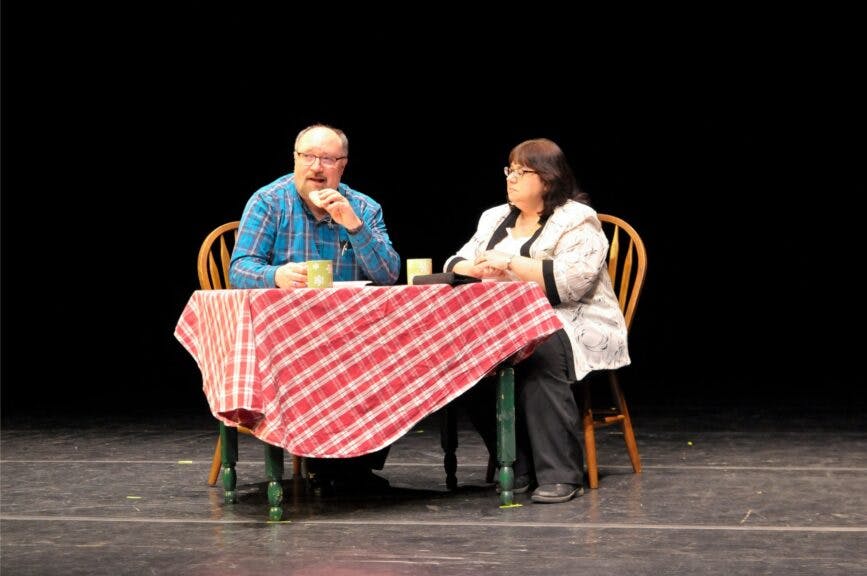
2019 annual theater festival. Robert and Sandra Cooperman in “Donut Shop Dates” by Jeff Strausser.
After the 2024 election, Cooperman briefly held out hope that the cultural temperature might shift. It wasn’t just that Trump was elected president, but more that voters indicated their exhaustion with endless woke virtue signaling and the dismantling of Western traditions. Instead, the leftists came out kicking and screaming.
“I really thought, naively it turns out, that the Left would see very clearly the moral and philosophical direction the country embraced in the 2024 election, said Cooperman. “I thought they would realize that they have been losing audiences — and now voters — and that the election results might humble them a little bit to reach out to half the population they have been disparaging for years. I was wrong. They doubled down.”
One incident clearly illustrates the hostility.
Following the assassination of Charlie Kirk, Cooperman dedicated three performances of Eugene O’Neill’s “Desire Under the Elms” to Kirk’s commitment to free speech. He framed the dedication as a celebration of the free exchange of ideas and invited post-show discussion.
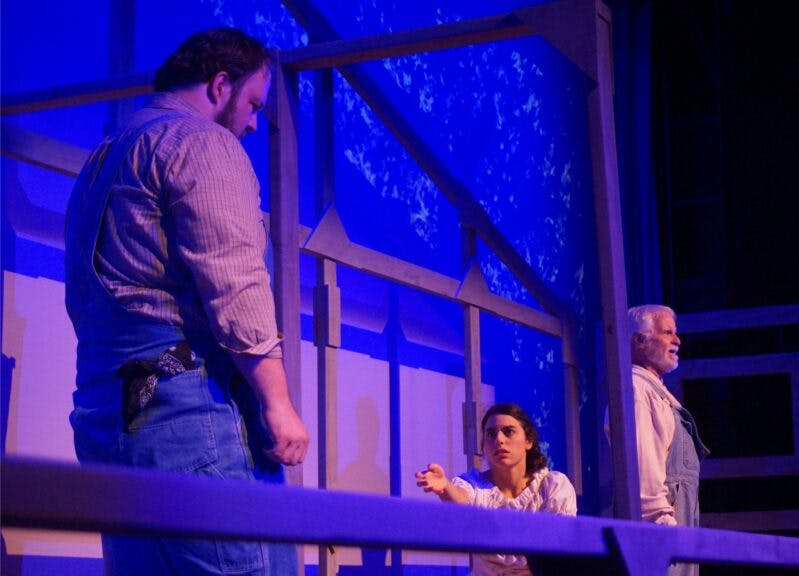
Stage Right Theatrics. Eugene O’Neill’s “Desire Under the Elms.”
The response was ugly. Audience members shouted that the dedication was “inappropriate.” Someone scrawled “Bigot” on a box of playbills. A lead actor threatened to quit. Two patrons demanded refunds. Word spread quickly through the local theater community, further isolating Stage Right.
This cultural enforcement extends far beyond Columbus. When President Trump restructured the Kennedy Center’s board with the stated aim of broadening ideological inclusion and halting overtly woke productions from being staged, several prominent artists canceled their performances, claiming the institution had become “political.”
The irony was glaring. For decades, the Left has insisted that art is apolitical while simultaneously saying anything conservative is propaganda. Institutions like Stage Right and the Trump-era Kennedy Center expose that lie.
While the hostility from the Left was expected, Cooperman now faces a new challenge as conservatives fracture over key political issues.
Cooperman says his pro-Israel stance has led some conservative and libertarian figures to distance themselves from the organization. A prominent podcaster declined an interview for that reason. A local classical academy backed away from a potential partnership. Cooperman now finds himself defending his principles on two fronts, both from friends and foes.
In 2026, Stage Right celebrated its tenth annual Conservative Theatre Festival. He hopes to encourage conservatives not only to criticize the state of the arts, but to engage in them.
There are conservative artists across the country who remain silent, fearing professional or personal fallout. Cooperman understands the fear, but insists that meaningful change requires courage. There will be consequences, but he insists that standing for something true and good is worth the cost.
The theater company’s motto says it plainly: “Disagreement Does Not Equal Hate.”
Cooperman also hopes that one day there will be dozens of companies like his across the country.
“I’d love to see theatre companies that present counter programming to what is currently being offered by “mainstream” theatre,” he said. “I’m not talking about the “tied and true” classics that conservatives will generally attend, but experimental pieces and musicals that present a conservative worldview with hope and redemption built into their structure.”
After ten years, he has learned that no amount of wokeness, past or present, is going to bring him down.