
I don’t hear any cheering out there.
A federal judge has thrown out the Pentagon’s draconian restrictions on what journalists can report, but most Americans don’t care.
A policy that led to the eviction of major news organizations — from the New York Times, Washington Post and Wall Street Journal, to ABC, NBC, CBS and Fox News — has been overturned. It’s a big-time win for free speech.
But the media’s credibility is at an all-time low, the result of years of bias, blunders and boneheadedness. That’s why there’s no sign-waving in the streets or digital high-fiving outside those involved in the business.
Just compare that with the tsunami of reaction to ABC canceling "The Bachelorette" over violent footage of its star.
Sure, many people may not know about the judge’s ruling, given that it’s hard for civilians to follow the blizzard of court cases involving President Donald Trump. It’s a challenge even for those of us who do this for a living.
But here’s why ordinary folks should care.
If this administration, or a future Democratic administration, can routinely yank the credentials of correspondents who cover defense, then the official version of how great things are going will dominate the news.
And here’s why they should especially care right now.
We’re in the middle of a war with Iran.
In the lawsuit brought by the New York Times, Judge Paul Friedman in Washington said, "those who drafted the First Amendment believed that the nation’s security requires a free press and an informed people and that such security is endangered by governmental suppression of political speech." It’s been that way, he said, for 250 years.
A Pentagon spokesman said the department is appealing.
What news outlet, regardless of political persuasion, could agree not to solicit information that hasn’t been officially approved for release by the Department of War?
Well, there’s MyPillow guy Mike Lindell, who blew up his business to zealously support Trump. He regularly promotes conspiracy theories about how the 2020 election was stolen. His LindellTV is credentialed press at the Pentagon.
PETE HEGSETH CRITICIZES 'FAKE NEWS' COVERAGE OF IRAN STRIKES, SAYS ONLY TRAGEDIES MAKE FRONT PAGE
So is former Congressman Matt Gaetz, whose nomination as attorney general collapsed over accusations of paying an underage girl for sex. He now hosts a show on One America News.
So is Laura Loomer, the far-right activist and Trump confidante who has said a 2022 mass shooting in Buffalo was a hoax perpetrated by the Democrats; suggested that the deep state used weather manipulation in 2024 to cause a blizzard before the Iowa caucus to benefit Nikki Haley; and, during that campaign, that "Joe Biden is dying."
So is James O’Keefe, founder of the conservative group Project Veritas, which used undercover video to capture biased conduct and embarrassing comments by those in the mainstream media. He once pleaded guilty to entering a senator’s office under false pretenses, and was removed by his board in 2023, over allegations of financial improprieties.
Trump has long been engaged in legal and rhetorical combat against the media, especially in the last year. He has successfully sued CBS and ABC for settlements worth at least $16 million apiece. He has denounced journalists he views as unfair and major news outlets as corrupt. Trump has said some media outlets should be prosecuted for treason over their "lies" about the Iran conflict.
At the same time, Trump provides previously unthinkable levels of access, holding constant news conferences and gaggles, and repeatedly taking brief calls from reporters and anchors on his cellphone.
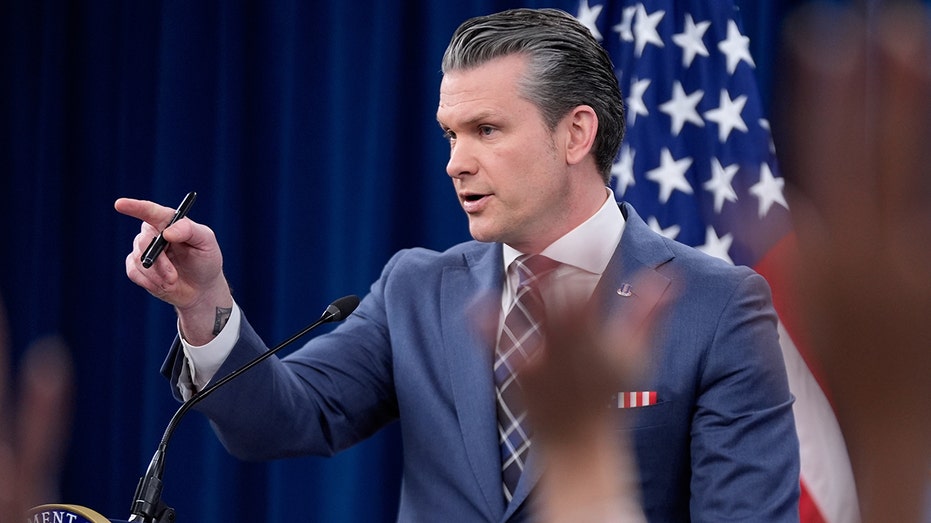
At the Department of War, Secretary Pete Hegseth has also accused "dishonest" media outlets of deliberately playing up American casualties and other negative war news to make Trump look bad.
But such criticism, even if it’s warranted, is a far cry from the secretary’s move last October, giving his department sweeping power to classify reporters as "security risks" and revoke their credentials. What’s more, journalists, who regularly rely on unnamed sources, had to agree to seek information only from those authorized to speak for the Pentagon.
That, said the judge, would allow only stories "favorable to or spoon-fed by department leadership." He said the evidence shows that the department targeted "disfavored journalists" and sought to replace them with those who are "on board and willing to serve."
Imagine the reaction on the right if Gavin Newsom was president and his defense secretary went after journalists with conservative viewpoints.
Friedman tied his 40-page ruling to the current military environment and even the midterms.
"Especially in light of the country's recent incursion into Venezuela and its ongoing war with Iran, it is more important than ever that the public have access to information from a variety of perspectives about what its government is doing — so that the public can support government policies, if it wants to support them; protest, if it wants to protest; and decide based on full, complete, and open information who they are going to vote for in the next election."
Journalists have been asking plenty of probing questions about the war. How can the U.S. break Iran’s blockade of the Strait of Hormuz, which has choked off a chunk of the world’s oil supply? How can Americans in the surrounding Arab countries be protected from Iranian drones? What about soaring gas prices at home?
The president addressed such questions at a news conference the other day without attacking the press. He’s upset with our European allies who refuse to protect the strait. He thought the rise in oil prices would be much worse. He initially projected a timetable of four to six weeks, but now says he can declare victory and end our "incursion," as he calls it, at any moment.
Trump keeps stressing that our military has decimated Iran’s defenses, and of course he’s right, a reality that sometimes gets lost in the coverage.
The point is that journalists have to ask these questions in wartime. But it is harder for Pentagon correspondents, who tend to be specialists, to do their jobs without credentials. They’re not "in the room," as they say in "Hamilton," but outside the massive building looking in.
If the judge’s injunction stands, that will change. Defense reporters will no longer be excommunicated for doing their jobs or holding certain political views.
The vast majority of Americans may not care, but the press corps — for all its flaws and excesses — is making sure they get the full story when the stakes are life and death.