

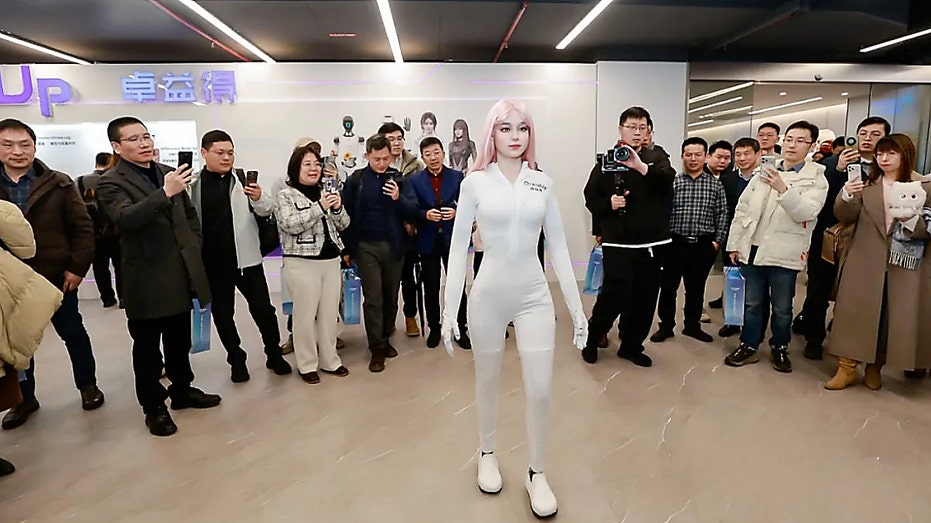
Humanoid robots are no longer hiding in research labs somewhere. These days, they are stepping into public spaces, and they are starting to look alarmingly human.
A Shanghai startup has now taken that idea further by unveiling what it calls the world's first biometric AI robot. Yes, it is as creepy as it sounds. The robot is called Moya, and it comes from DroidUp, also known as Zhuoyide. The company revealed Moya at a launch event in Zhangjiang Robotics Valley, a growing hotspot for humanoid development in China.
At first glance, you can still tell Moya is a robot. The skin looks plasticky. The eyes feel vacant. The movements are slightly off. Then you learn more details about her, and that's when the discomfort kicks in.
Sign up for my FREE CyberGuy Report
Get my best tech tips, urgent security alerts and exclusive deals delivered straight to your inbox. Plus, you’ll get instant access to my Ultimate Scam Survival Guide – free when you join my CYBERGUY.COM newsletter.
HUMANOID ROBOTS ARE GETTING SMALLER, SAFER AND CLOSER
Most robots feel cold and mechanical. Moya does not. According to DroidUp, Moya's body temperature sits between 90°F and 97°F, roughly the same range as a human. Company founder Li Qingdu says robots meant to serve people should feel warm and approachable. That idea sounds thoughtful until you picture a humanoid with warm skin standing next to you in a quiet hallway. DroidUp says this design points toward future use in healthcare, education and commercial settings. It also sees Moya as a daily companion. That idea may excite engineers. However, for many people, it triggers the opposite reaction. Warmth removes one of the few clear signals that separates machines from humans. Once that line blurs, discomfort grows fast.
Moya does not roll or glide. She walks. DroidUp says her walking motion is 92% accurate, though it is not clear how that number is calculated. On screen, the movement feels cautious and a little stiff. It looks like someone is moving carefully after leg day at the gym. The hardware underneath is doing real work. Moya runs on the Walker 3 skeleton, an updated system connected to a bronze medal finish at the world's first robot half-marathon in Beijing in April 2025. Put simply, robots are getting better at moving through everyday spaces. Watching one do it this convincingly feels strange, not impressive. It makes you stop and stare, then wonder why it feels so uncomfortable.
Behind Moya's eyes sit cameras. Those cameras allow her to interact with people and respond with subtle facial movements, often called microexpressions. Add onboard AI and DroidUp now labels Moya a fully biomimetic-embodied intelligent robot. That phrase sounds impressive. It also raises obvious questions. If a humanoid robot can see you, track your reactions and mirror emotional cues, trust becomes complicated. You may forget you are interacting with a machine. You may act differently. That shift has consequences in public spaces. This is AI moving out of screens and into physical proximity. Once that happens, the stakes change.
If you are worried about waking up to a warm-skinned humanoid in your home, relax for now. Moya is expected to launch in late 2026 at roughly $173,000. That price places her firmly in institutional territory. DroidUp sees the robot working in train stations, banks, museums and shopping malls. Tasks would include guidance, information and public service interactions. That still leaves plenty of people uneasy, especially those whose jobs already feel vulnerable to automation. For homes, the future still looks more like robot vacuums than walking companions.
WORLD’S FIRST AI-POWERED INDUSTRIAL SUPER-HUMANOID ROBOT
This is not about buying a humanoid robot tomorrow. It is about where technology is heading. Warm skin, camera eyes and human-like movement signal a shift in design priorities. Engineers want robots that blend in socially. The more they succeed, the harder it becomes to maintain clear boundaries. As these machines enter public spaces, questions about consent, surveillance and emotional manipulation will follow. Even if the robot is polite and helpful, the presence alone changes how people behave. Creepy reactions are not irrational. They are early warning signs.
Think your devices and data are truly protected? Take this quick quiz to see where your digital habits stand. From passwords to Wi-Fi settings, you’ll get a personalized breakdown of what you’re doing right and what needs improvement. Take my Quiz here: Cyberguy.com.
Moya's debut feels worth paying attention to because she is real enough to trigger discomfort almost instantly. That reaction matters. It suggests people are being asked to get used to lifelike machines before they have time to question what that really means. Humanoid robots do not need warm skin to be helpful. They do not need faces to point someone in the right direction. Still, companies keep pushing toward realism, even when it makes people uneasy. In tech, speed often comes before reflection, and this is one area where slowing down might matter more than racing ahead.
If a warm-skinned robot with camera eyes greeted you out in public, would you trust it or avoid eye contact and walk faster? Let us know by writing to us at Cyberguy.com.
Sign up for my FREE CyberGuy Report
Get my best tech tips, urgent security alerts and exclusive deals delivered straight to your inbox. Plus, you’ll get instant access to my Ultimate Scam Survival Guide – free when you join my CYBERGUY.COM newsletter.
Copyright 2026 CyberGuy.com. All rights reserved.