

Trump Floats Idea For His Next Supreme Court Appointment As Rumors Swirl About Possible Retirements

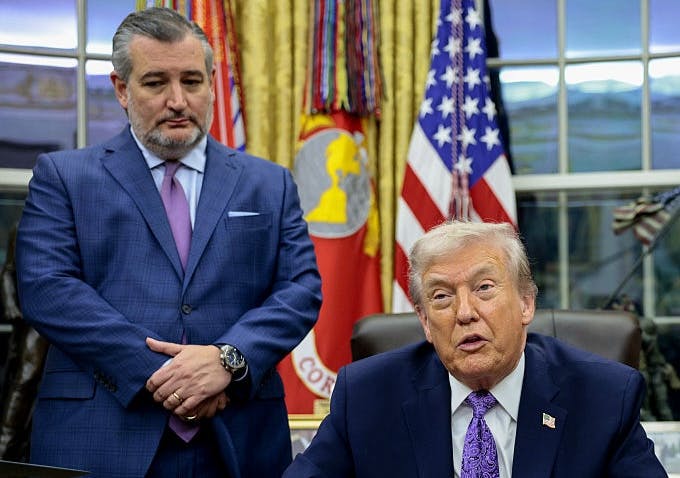
President Donald Trump said Senator Ted Cruz could be Supreme Court nominee in the near future, praising the Texas Republican during a speech in Corpus Christi on Friday evening.

Trump, who was once a fierce critic of Cruz, called the senator “an amazing guy” who is “so good and so talented.”

“I’m thinking about putting him in the Supreme Court,” Trump said. “I’m thinking because it’s very hard, getting these nominations through is tough.”

The president added that Cruz would receive “100%” of the Democratic and Republican vote, arguing that Cruz’s foes would “want to get him out of [the Senate]. He is such a pain in the ass.”

Trump also floated the idea of a Cruz Supreme Court appointment during a speech last month, calling the senator a “brilliant legal mind.” Cruz, however, shot the proposal down in January.

“My answer’s not just no, it’s hell no,” he said. “It is interesting in the first Trump term, the president talked to me about all three Supreme Court vacancies, and we had very serious conversations and I told him no all three times.”

Cruz added that he wants to be “right in the middle” of political battles, something the Republican said a “principled federal judge” would stay out of.

After completing law school, Cruz clerked for Chief Justice William Rehnquist at the Supreme Court from 1996 to 1997. Trump first discussed the idea of nominating Cruz to the Supreme Court with the senator privately after the death of conservative Justice Antonin Scalia, according to Cruz.

“I wrestled with it because I knew Justice Scalia and revered him,” Cruz added. “And to have the opportunity to succeed him, I mean, talk about taking your breath away.”

While none of the Supreme Court justices have announced plans to retire anytime soon, there has been talk of either Samuel Alito or Clarence Thomas, the two oldest and most conservative justices, retiring within the next couple of years to give Trump a chance to replace either of them with another conservative. Thomas is 77-years-old and Alito is 75.

Alito is set to release a book in early October, which has sparked rumors that the conservative justice could be hanging up his robe before the beginning of the Supreme Court’s next term, which also begins in October. Alito has served on the court for 20 years, while Thomas is the longest-tenured justice, nearing his 35th year on the high court.

When asked about Thomas or Alito potentially retiring in the near future, Trump told POLITICO in December that he wants both of them to stay on the court.

“Both of those men are fantastic,” he said.

After Republicans successfully prevented former President Barack Obama from tapping Merrick Garland as Scalia’s replacement — thanks to the efforts of then-Republican Majority Leader Mitch McConnell — Trump nominated Neil Gorsuch in 2017. Trump went on to nominate two more justices, Brett Kavanaugh and Amy Coney Barrett, during his first term. Conservatives now have a 6-3 majority, but Trump has recently been frustrated with conservative justices, including Gorsuch, Coney Barrett, and Chief Justice John Roberts.
Pentagon Moves To Blacklist AI Company In Escalating National Security Clash

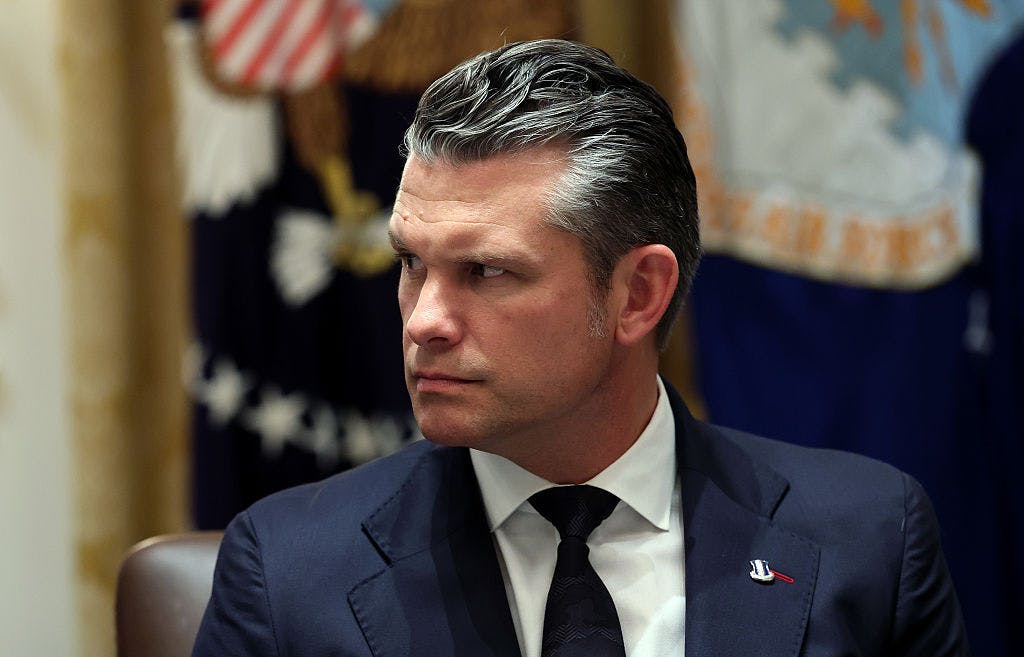
The Pentagon is severing ties with a major AI developer after a standoff over military access to artificial intelligence tools, Secretary of War Pete Hegseth announced Friday, designating Anthropic a “Supply-Chain Risk to National Security.”

In a lengthy X post, Hegseth stated in part: “Our position has never wavered and will never waver: the Department of War must have full, unrestricted access to Anthropic’s models for every LAWFUL purpose in defense of the Republic.”

Hegseth said Anthropic and CEO Dario Amodei chose “duplicity,” accusing them of trying to “strong-arm the United States military into submission – a cowardly act of corporate virtue-signaling that places Silicon Valley ideology above American lives.”

“Their true objective is unmistakable: to seize veto power over the operational decisions of the United States military,” the secretary said. “That is unacceptable.”

The War Secretary added that “Anthropic’s stance is fundamentally incompatible with American principles,” and announced that, as a result of the company’s refusal to accede to the Pentagon’s demands, it would be designated a “supply-chain risk.”

“Effective immediately, no contractor, supplier, or partner that does business with the United States military may conduct any commercial activity with Anthropic,” Hegseth stated, adding that the Pentagon and Anthropic will untangle their relationship over the next six months while the federal government transitions to a new AI partner.

Hegseth’s announcement follows President Donald Trump’s statement earlier Friday, in which the president ordered “EVERY Federal Agency in the United States Government to IMMEDIATELY CEASE all use of Anthropic’s technology.”

Trump called Anthropic a “radical Left, woke company” whose “selfishness is putting AMERICAN LIVES at risk, our Troops in danger, and our National Security in JEOPARDY.”

In January, the Department of War released a document outlining its strategies for AI dominance, which included the following statement: “The Department must also utilize models free from usage policy constraints that may limit lawful military applications.”

Anthropic CEO Dario Amodei released a statement of his own on Thursday as the negotiations were ongoing, stating that while he believes in utilizing artificial intelligence to defend the United States and push back against autocracies, in certain cases, AI could be used in opposition to such goals.

Those cases, according to Amodei, are “mass domestic surveillance” and “fully autonomous weapons.”

“AI-driven mass surveillance presents serious, novel risks to our fundamental liberties. … For example, under current law, the government can purchase detailed records of Americans’ movements, web browsing, and associations from public sources without obtaining a warrant, a practice the Intelligence Community has acknowledged raises privacy concerns and that has generated bipartisan opposition in Congress. Powerful AI makes it possible to assemble this scattered, individually innocuous data into a comprehensive picture of any person’s life—automatically and at massive scale,” Amodei said.

As to fully autonomous weapons, the CEO acknowledged that such weapons may one day “prove critical,” but with current AI technology, “systems are simply not reliable enough to power fully autonomous weapons.”

The clash marks a dramatic rupture between the U.S. military and one of Silicon Valley’s most prominent AI firms, escalating a broader battle over who controls the future use of artificial intelligence in national defense.

About Us

Virtus (virtue, valor, excellence, courage, character, and worth)

Vincit (conquers, triumphs, and wins)