


‘Hotwifing’ Is Being Sold As A Marriage Booster — Yes, Really

The following is an edited transcript excerpt from The Michael Knowles Show.

* * *

The New York Post published an article yesterday based on a new survey that’s just come out.

The headline reads:

‘Hotwifing’ — the sexy new couples trend that’s ‘strengthening’ marriages across the country

Now, to be clear, I don’t encourage you to read the article or the survey, but this is part of a broader cultural trend, a broader cultural normalization of polyamory, of “consensual non-monogamy.” That’s the new gross clinical jargon they use to sanitize their own perversions.

From the article:

Could ‘hotwifing’ save your marriage? 71% of kinky couples say loaning their wives out for that thing that only husbands and wives are supposed to do together strengthened their union.

Seventy-one percent. The overwhelming majority of these “kinky couples” say it strengthened their union. In reality, these are people whose unions are probably not all that strong to begin with. But they say — and these are people who are obviously very, very confused about a lot of things — that pimping out their beloved actually strengthened their union.

Color me a little bit skeptical.

Could ‘hotwifing’ save your marriage? 71% of kinky couples say loaning their wives out for sex ‘strengthened’ their union https://t.co/U2cynXcIlF pic.twitter.com/aA51Nem0Eu

— New York Post (@nypost) March 11, 2026

In any case, you hear a lot about this right now. When some people read this, they react in the old fuddy-duddy way: “Geez, these kids today. This is crazy. Can you believe what they’re doing now? In the olden days an inch of stocking was looked at as something shocking, but now anything goes.”

That’s the wrong approach. Because this is not novel. This is not an innovation. There’s nothing new about this. This is just paganism.

Our culture — the West, sometimes we describe our nation as a Christian nation — but even what we call the West is really a pale shadow of what we used to call Christendom, which was Christian civilization that thrived from roughly the age of Constantine up through the Protestant Revolution, which then starts to crack it up a little bit. But still you had a substantially Christian civilization, albeit amid wars of religion.

Then with the Peace of Westphalia and the Enlightenment, people tried to preserve Christianity but without taking religion all that seriously. You get into modernity and you’re really living on the fumes of Christendom. Soon enough that gives way to overt paganism.

DailyWire+

Here’s what Tertullian, an early Christian writer and Father of the Church, has to say about how pagans versus Christians regarded sex.

A great line from Tertullian in his “Apology”:

All things are common among us, except our wives. We give up our community where it is practiced alone by others who not only take possession of the wives of their friends but most tolerantly also accommodate their friends with theirs.

It’s a great observation — almost Chestertonian millennia earlier. He says: we Christians are different from the pagans in that we share everything except our wives, and the pagans share nothing with each other except their wives. They won’t share their money, they won’t share their food, they won’t share their resources, they might not share their time — but they will share their wives.

But we Christians are the opposite. We’ll give anything to each other except for our wives.

Saint Jerome has a famous line in his commentary on Hosea:

Rarely does a heretic love chastity.

Every so often there is a heresy that promotes chastity, but generally speaking you notice — especially in modern religion, with wacky pastors of weird breakaway schismatic churches — they’re always promoting strange sexual practices. That’s the one common thread among all the weird heretical forms of Christianity today.

Rarely does a heretic love chastity.

What this new study reveals — the one meant to shock us with a New York Post headline, “Can you believe 71% of these kinky couples say it’s actually great for their marriages when they cheat on each other?” — is not a new discovery about the present. It reveals how ignorant we are of the past.

This is what paganism was always like.

It’s amusing when people think they’ve discovered something new. These people promoting orgies and decadence and bacchanalia think they’ve discovered freedom. “In the old days people were uptight, but now we’re free. We have free love, we’re doing drugs, we’re polyamorous.”

It makes you think: wow, no one has ever thought of that before — doing drugs and behaving like degenerates. What innovators you are.

It just reveals how little we understand the past. We pretend we understand ancient paganism. We pretend we understand what Christianity replaced. We really don’t.

A great example of this is in the Bible. In Exodus, the Israelites leave Egypt, and Moses goes up Mount Sinai to receive the Ten Commandments. Five seconds later, the Israelites abandon the God who led them out of Egypt and start worshiping a golden calf.

Moses comes down and essentially says: what are you doing? Stop worshiping this golden calf.

When people imagine that scene, they think the Israelites were just bowing down saying, “Oh golden calf, we worship you.” But that’s not really what was happening.

They were actually doing the same stuff modern pagans do. They were indulging in food and drink, engaging in all kinds of strange sexual behavior, revelry, and excess.

It’s the same pattern.

There is nothing new under the sun.

So when we come across these “new discoveries” about relationships and marriage and free love, what we’re really doing — wittingly or unwittingly — is rejecting Christianity, reverting to a kind of base, degraded paganism, and pretending that we’ve discovered some new revelation.

But it’s the opposite of a new revelation.

It’s the rejection of revelation.
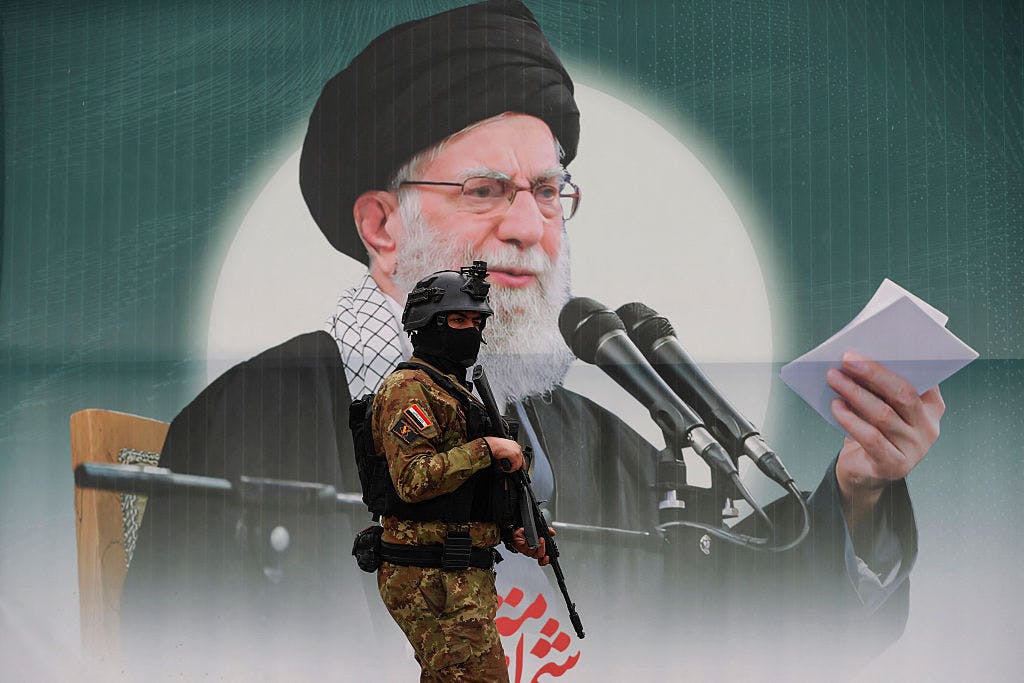
Death Throes Of A Regime

Headlines today claim the war in Iran is a catastrophe.

We awakened to some bad but true stories: Oil tankers on fire in the Strait of Hormuz, leading to large-scale oil disruptions and a spike in the price of Brent Crude oil. Rumors of impending Iranian drone attacks in California. And then, the Iranian schoolgirls who were killed in a botched missile attack.

We’re not going to sugarcoat what’s going on because war is ugly.

But what’s happening right now is that Iran is fighting back. The regime is on its last legs, and it knows it. Even if it survives the current conflict, the question is, for how long? Because if they’re heavily damaged, and if it turns out they can’t defend against insurgents in their streets or against air flights, air sorties from opposing forces, how long does the regime last?

What we’re watching right now are the dying throes of a poisonous snake.

But that doesn’t mean the snake can’t do serious damage before it goes. This is typically what the endgame of a war looks like. The enemy lashes out with all of its final strength, pulling out every stop, pulling every lever. And then, unless we lose our willpower, they lose.

As Japan collapsed at the end of World War II, American casualties went up, not down. The Battle of Okinawa — fought on territory controlled by Japan since 1879, populated heavily with Japanese citizens and entirely with Japanese subjects — was the bloodiest battle of the Pacific War; 12,000 Americans ended up dead, between 36,000 and 49,000 Americans were wounded, alongside some 110,000 Japanese military killed and another 100,000 to 150,000 Japanese civilians, many of whom committed suicide.

That battle ended June 22, 1945, and within seven weeks the war was over.

DailyWire+

This sort of activity isn’t uncommon, as America’s enemies realize that they are in their final hours.

The Battle of the Bulge was Hitler’s final attempt to stave off defeat. It was bloody. It was terrible. And Hitler lost.

At the end of the Gulf War, actually, even after a cease-fire had been declared, the Iraqi Hammurabi Republican Guard Division attacked the U.S. 24th Infantry Division. That was a large-scale mistake, and the U.S. ended up destroying nearly 200 tanks and erasing the Hammurabi Division entirely. But that was sort of the last gasp.

It’s quite common.

In the 2001 war in Afghanistan, the final Taliban stand, before the launch of their large-scale insurgent warfare strategy that lasted years, was something called Operation Anaconda. That’s where the Taliban fighters dug in in the mountains, and then they tried to engage U.S. forces. This was in 2002, and they lost.

The losing side very often will launch a last stand, a final push, or pull out all the stops.

That’s what we’re actually watching right now. The question is whether Iran’s activity represents the death throes of the regime or the reconsolidation of regime power.

The answer is not up to Iran. It’s up to the United States and Israel.

The only hope for the Iranian regime right now is that the United States and Israel somehow stop in their tracks before the Iranian regime suffers irreparable damage.

That is precisely why American enemies make that final push. It’s the last-gasp attempt to prevent the increasingly inevitable.

Iran is a terrorist regime, and so it’s pursuing three lines of terror tactics. One terror tactic is targeting the American homeland; a second is targeting the Strait of Hormuz and other Gulf oil supplies, and the third is targeting our allies.

First: The American Homeland

Yesterday, ABC News reported that the FBI has warned police departments about the possibility of an Iranian drone attack on American soil. According to the FBI, “As of early February 2026, Iran allegedly aspired to conduct a surprise attack using unmanned aerial vehicles from an unidentified vessel off the coast of the United States homeland, specifically against unspecified targets in California.”

President Trump said, “We’ve got our eyes on the terrorists.” Asked, “Have you been briefed about how many Iran sleeper cells there could be inside the U.S. right now?” he answered, “I have been and a lot of people came in through Biden with his stupid open border, but we know where most of them are. We’ve got our eye on all of them.”

The president is not wrong about the open border. The president also added that when it comes to these threats, all we can really do is take them as they come, which, of course, is the reality.

None of this should be a major shock. Iran has infiltrated South and Latin America. That is one of the reasons that the Trump administration moved against Venezuela, which was the center of Iranian activity in the Western Hemisphere under Nicolas Maduro, now a treasured guest of President Trump in prison. Iran and Venezuela even signed a 20-year cooperation agreement, and that included drones and missiles shipped from Iran to Venezuela.  

Second: The Threat To The Strait Of Hormuz

This is making a lot of headlines because it should. Iran has been firing ordnance at oil tankers that have been shipping through the Strait of Hormuz. 

But here’s the point. If you leave the regime in place, a regime that is increasingly powerful and can choke off that waterway any time it wants, it doesn’t make things better. 

The Wall Street Journal stated: 

Leaving in place Iran’s theocratic regime—angry, defiant and in possession of its nuclear stockpile and what remains of its arsenal of missiles and drones—would essentially grant Tehran control over the world’s energy markets. It would also sacrifice the security of America’s partners and allies, and possibly make another, more devastating, regional war likely.

Right now, President Trump is holding down oil prices largely by talking about the incipient end of the war through the release of the Strategic Petroleum Reserve. But the problem with talking about the end of the war is that it’s the kind of talk that actually emboldens the Iranians to increase their attacks on shipping, hoping that exerting more pressure on the Strait of Hormuz will force President Trump to stop.

What would be really, really helpful here would be America’s Gulf allies. Saudis, UAE, Qatar: None of them has actually engaged in action against Iran, even though they’re the ones who are getting truly pounded. You know what they could do? They could increase their pumping. They could pump to areas not controlled by Iran, such as the west of Saudi Arabia.

Iran has fired far more ordnance at the UAE than it has fired at Israel. If our allies are not going to join us offensively in the fight, they could at least relieve pressure on the oil markets created by the Iranian attacks. We are defending them.

Third: Terrorizing Our Allies

Which brings us to the third tentacle of Iranian terror, terror against our allies. Iran knows that the entry of the Saudis and the UAE directly into the war would be quite bad for them. And they know that the Saudis and UAE could help the United States calm world markets. That would allow the U.S.-Israel operation to continue, which is why they’ve been firing more missiles at the Gulf states than at Israel, trying to convince them to cower in fear.

 Israel has been targeted with 550 strikes by Iran. That is 14% of all strikes. Kuwait has been targeted with 24%, UAE with 44% of all strikes. Bahrain has been hit with almost as many strikes as Israel, and Saudi Arabia has been hit with 176.

Qatar is low on the list because, obviously, Qatar and Iran are half-allies.

Iran has been taking indirect counteraction against Israel. They’ve been using their proxy, Hezbollah. Hezbollah has been absolutely shellacked by Israel over the last couple of years, since the pager operation, the killing of Hassan Nasrallah, and the ground operation in Lebanon. Iran is hoping that drawing Israeli resources toward Lebanon might somehow save the Iranian government. They’re counting on the Lebanese government to back down, because the Lebanese government could theoretically exert some sort of pressure or push the Americans to stop Israel. That is why overnight rockets were raining on northern Israel.

If the Lebanese government doesn’t stop Hezbollah from its offensive action, if Israel is forced to stop its destruction of Hezbollah yet again, that would be a disaster for the region’s Christians. Lebanon used to be a Christian country before it was wrecked by the Palestine Liberation Organization, before it was wrecked by the Iranians through Hezbollah. Hezbollah is moving to destroy Lebanon’s Christian population.

Ordering Hezbollah to attack Israel is another sign of a last gasp.

What does all this mean?

It means that in the end, only the true collapse or serious damage leading to the collapse of the Iranian government will bring lasting victory. That’s what it means. 

Which is why President Trump correctly says we have to finish the job.

“As we end this threat to America and the world, we don’t want to leave early. We have to finish the job, right?” he told a cheering crowd. 

He is correct. We actually have to finish the job. And the goals spelled out by the administration are clear: ending the missile threat, ending the nuclear threat, and ending support of terrorism. Leaving an Iranian regime in power, or at least not seriously destabilized or weakened, would likely encourage China to take aggressive action against Taiwan. 

It is astonishing to me to see the level of uproar over a war that has lasted less than two weeks with extremely low American casualties, by any historic comparison. If China understands that the American attention span is so short that we can’t even sustain a serious offensive action with low cost for longer than a few weeks, they will know they can move. 

Not only that, if we don’t do what we can while President Trump, who actually has stones, is president, then Iran likely will come back, mainly because weaker people will be president. People like Barack Obama, Joe Biden, or pretty much anyone else, because Trump has been uniquely strong on this score. 

President Trump is not wrong to call this out. He stated: 

“We don’t want to go back every two years. There’ll be some day when you don’t have me as president, you’ll have perhaps a weak, pathetic person like we’ve had in the past. Like Barack Hussein Obama, who signed one of the worst deals ever with Iran, where they were going to give up everything. Remember when he filled up a 757 with billions of dollars of cash and sent it to Iran? People forget that. That’s when I realized the presidency is very powerful. When you could put over $1 billion in an airplane and fly it over and give it to a foreign country that’s your enemy. How stupid was that?” 

The president is not wrong. 

If you want to end threats to America, you actually have to end them.

About Us

Virtus (virtue, valor, excellence, courage, character, and worth)

Vincit (conquers, triumphs, and wins)
