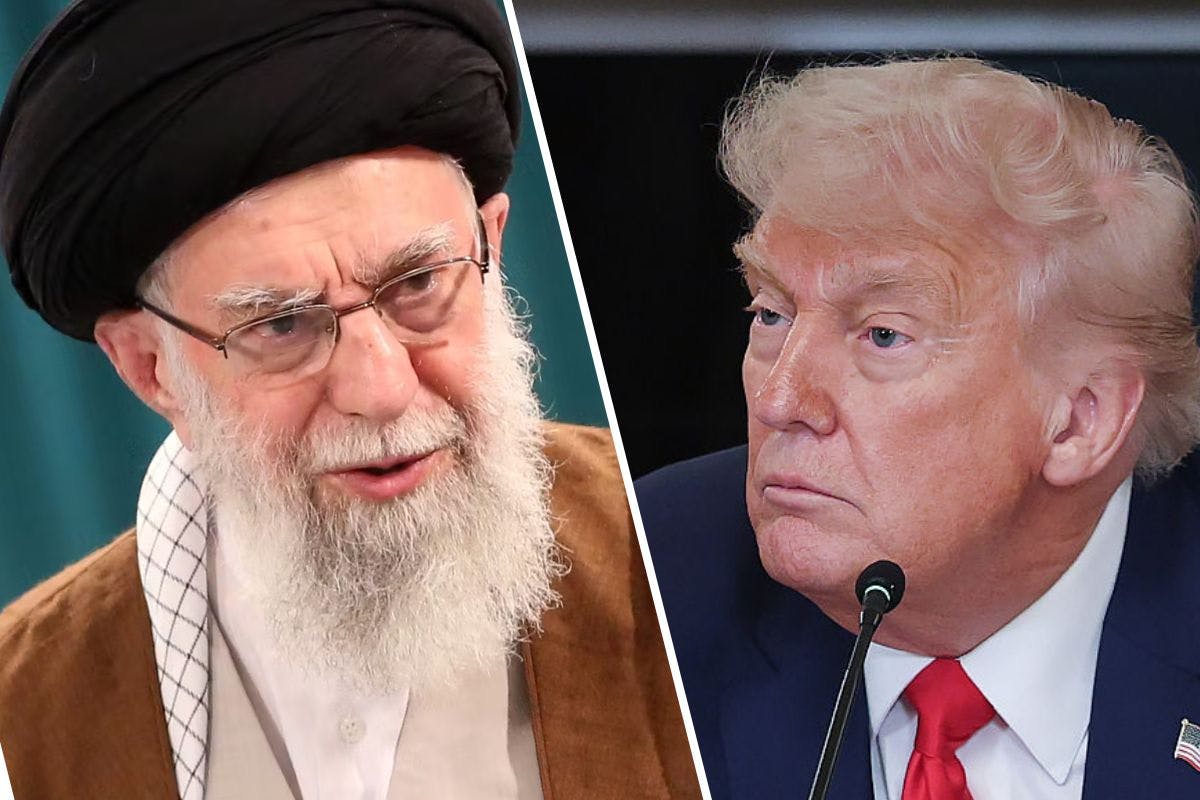

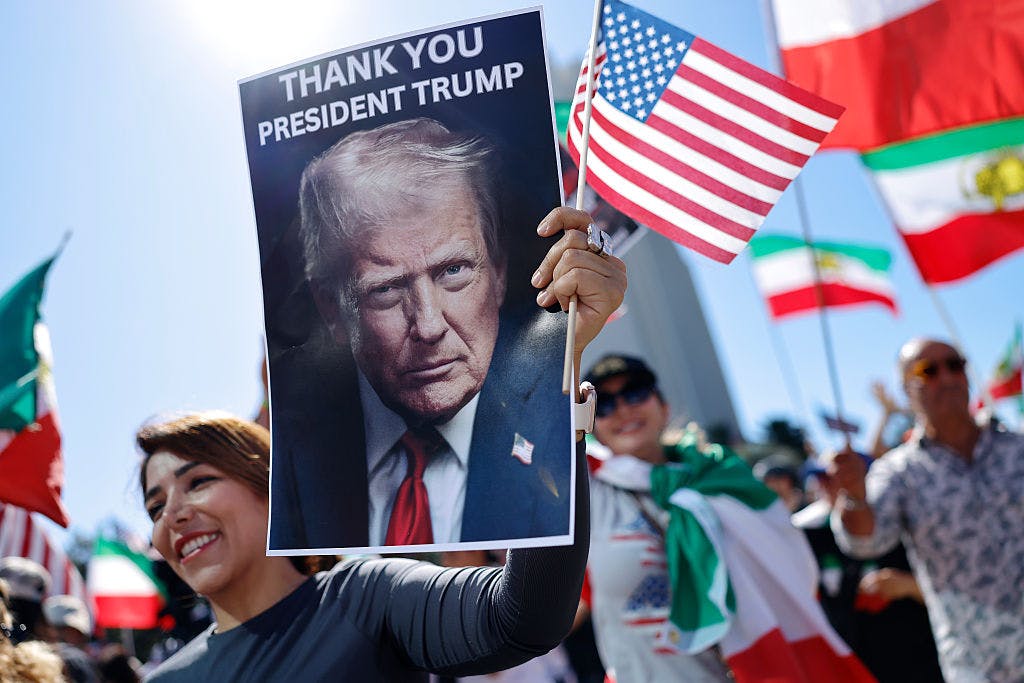
President Trump is the most courageous commander-in-chief in modern American history.
There is no question about it.
What he just did is the bravest move by a president of the United States of my lifetime, bar none.
The president of the United States made the unbelievably brave decision — and it was a brave decision — to move to end the chief threat against America and her allies in the Middle East — the core threat, the Iranian regime, that has been percolating, militating, killing Americans and American allies since 1979. That is the first thing to recognize about what President Trump did.
President Trump is doing so because he understands what it means for America to get rid of long-standing enemies. He understands that the use of force is a necessary component when it comes to America’s geopolitical position in the world.
He is doing so because he understands better than any American president of my lifetime that America does not need to get bogged down in a long, prolonged war with hundreds of thousands of troops on the ground.
America needs to flex her power when necessary and do the thing that is right when necessary in order to protect her core interests.

One of the things you’re hearing tonight from critics of the president is that there is no direct attack on the United States, therefore, no sort of military action ought to have been undertaken with regard to Iran.
First of all, historically speaking, that’s not true. The Iranian government has been responsible for the deaths of hundreds, if not thousands of Americans over the course of time, ranging from the 1983 barracks bombing in Lebanon via its proxy Hezbollah, to the death of hundreds of American soldiers in Iraq during the Iraq War.
The Iranian regime has also been responsible for the murder of people abroad, ranging from Europe to South America to, obviously, the Middle East, where it has activated its proxies against American allies, not just Israel, but also including Saudi Arabia, the UAE and other countries in the region.
The Iranian government is the leading sponsor of terrorism on planet Earth. It has been for decades.
The president decided to end that threat.
The idea that America has never suffered a direct attack or has not recently suffered a direct attack from Iran is not true. But people say, “It wasn’t a direct attack right now. Iran didn’t attack a tower in New York.”
That’s true. But that is not the only reason why you take out a regime, why you go after the leadership. What the United States is doing right now is recognizing that there was a unique opportunity presented by the situation on the ground in Iran for a change of direction in Iran, which will totally upend the politics of the Middle East, and of the world, in a tremendous way.
Let’s start with geopolitics. What’s the geopolitical reason for the United States to be involved? Because geopolitics do affect Americans. America takes action abroad in order to affect its geopolitical position. This, for example, is why, if China were to threaten Taiwan, that would affect Americans because we get semiconductors from Taiwan.
Also, if China continues to expand its footprint, then that means America’s economic and military interests are threatened. The current regime in Iran acts as a linkage between China and Russia. It provides enormous amounts of oil to the Chinese machine, and it gives the Russian war machine its drones. And, of course, it acts as a check and balance against the United States in the Middle East.
That is what Iran has historically done.
In order to understand what President Trump is doing geopolitically, you have to understand the consequences if he didn’t do it. If President Trump had left the Iranian regime in place after it murdered 32,000 of its own citizens in violation of his own red line; if the Iranian regime continued to rebuild all of its military and nuclear facilities, which is what it was doing — if it continued to do that and President Trump did nothing — the geopolitical consequences for the United States would have been disastrous.
Why? Because when China looks at that, perhaps they make their move on Taiwan. When Russia looks at that, then they really up the ante in Ukraine.
President Trump is the president who will not allow, under any circumstances, the threat of force to go away. He understands better than anyone that the credible threat of American military force is the thing that keeps America in the driver’s seat globally. That is what he was doing. He is pushing China off the ball with regard to Taiwan. He is pushing Russia off the ball with regard to Ukraine.
And yes, of course, he is getting rid of the cancerous regime in Tehran, which has spread its terror tentacles all over the world, predominantly in the Middle East, but also in South America and in Europe, where it has pursued terrorist attacks.
WATCH: The Ben Shapiro Show | Special Edition | “Trump Strikes Iran” on DailyWire+
Changing out the top of the regime in Iran will have massive repercussions.
There are a lot of people who think that in order for the United States to justify any military action, a threat must either be immediately imminent — meaning like they’re going to blow up a building in New York right now — or that there must have been a direct attack.
Historically, blown opportunities lead to significantly worse after-effects. Bill Clinton failing to kill Osama bin Laden in the late 1990s when we had him in the crosshairs led to the attack on the USS Cole and the attacks on 9/11.
The unwillingness of the West to topple the Bolshevik regime in its earliest iterations in Russia — failing to sufficiently support the Whites against the Reds in Russia — led to a full century of Soviet sponsorship of mass murder.
The unwillingness of the United States to help Chiang Kai-Shek fight back against the Communists in China led to the rise of the Chinese Communist Party — responsible for not only the deaths of tens of millions of its own citizens, but is now the main geopolitical threat facing America today.
In other words, when you have an opportunity to effectuate serious change at relatively low cost, you do it.
The United States has complete air superiority. Why? Because after the 12-Day-War last year, in which Israel essentially defenestrated the air defense systems in Iran, the United States essentially had clear airways to go and take out huge numbers of Iranian regime targets. The opportunity was there.
Not only that, but the opportunity became even greater because the Iranian people were tired of living under this regime. The Iranian rial (IRR) right now is so dirt cheap, it would take 1 million Iranian rials to amount to 0.75 cents in the United States. And so, the Iranian people were tired of it, which is why they rose up in December of last year and started mass protesting in the streets.
So the opportunity is for the people to take charge of their future with the help of the United States from above.
And that’s what President Trump is saying: We’re not going to put hundreds of thousands of troops on the ground and just effectuate a regime change. We are going to take out the people who are most threatening.
Now, go take control of your own country.