

This article is part of Upstream, The Daily Wire’s new home for culture and lifestyle. Real human insight and human stories — from our featured writers to you.
***
As the resident wino and oenophile in my orbit, I am routinely confronted with the same question: “What would you pair this with?” It is a reasonable inquiry, given wine’s ability to elevate and enhance meals, creating something greater and more memorable than the mere sum of its parts.
Yet too often people approach pairing as though they are defusing an explosive — as if pouring a Riesling alongside a steak might trigger a detonation. Terrified of such imaginary calamities, they cling to trite dicta such as “red with meat, white with fish” as though the rule were dictated through decree (it isn’t). Wine pairing is less about dogma than about balance, contrast, and texture. Here are a few principles — and specific examples — to make the exercise more pleasurable than paralyzing.
First, let’s talk about why pairings work. Certain structural elements in the wine bind to or cut through elements in the food. There is decidedly some chemistry involved, but we are here to talk drinking. Structurally, wines are composed of acidity, sugar, alcohol, and tannin (for red wines). As a grape develops on the vine and approaches harvest, its natural acidity declines while sugars increase; in general, wines from cooler climates retain more acidity than those from warmer regions.
Acidity lends wine its freshness and makes your mouth water — which is why high-acid wines also excel as aperitifs. The next time you take a sip, swirl it, swallow, and tilt your head down. Notice the saliva pooling along the sides of your tongue. The more pronounced the sensation, the higher the acidity. Acidity cuts through fat, salt, and umami, making it a natural partner for food.
Sparkling wines rank among the highest in acidity and are astonishingly versatile — equally at home with such ritzy entrées as oysters and caviar, working-man foods like fried chicken or pizza, and everything in between, from risotto to sushi and spicy Thai dishes.
Without descending into the technical thickets, think of sparkling wine in two broad camps: prosecco (tank method) and champagne (traditional method). The former tends toward lighter, fruit-driven styles. The latter yields wines that are richer, creamier, and often layered with notes of brioche, butter, and toasted hazelnut.
One of the few pairing rules worth keeping is to match the weight of the wine to the weight of the food. A delicate wine such as an aromatic Sauvignon Blanc will be steamrolled by a fatty ribeye, and a heavy wine such as a full-bodied Cabernet Sauvignon will swallow up something subtle like a halibut fillet. Among my favorite pairings is the high-low contrast of rich, indulgent fried chicken with a powerful champagne. Along the same lines, greasy but simple snacks like Lay’s potato chips or buttered popcorn pair beautifully with a light, cheerful prosecco.
“Champagne,” of course, is legally confined to its namesake French region. But the method that produces it is hardly proprietary. Traditional-method sparkling wine is made across the globe — often at a fraction of the cost. In France, it is labeled Crémant (Loire for Chenin Blanc; Bourgogne for Pinot Noir and Chardonnay). Spain produces Cava from Penedès. South Africa calls its version Cap Classique. And California increasingly turns out bottles that can hold their own.
Beyond bubbly, Riesling is another favorite grape flush with acidity. Its spiritual home is Germany — where the only thing more complicated than the parliamentary system is the wine classification scheme — but excellent examples also emerge from Alsace, Austria, and New York State, which has been producing increasingly compelling bottlings in recent years. Riesling spans the full spectrum of sweetness, from bone-dry to lusciously sweet dessert styles. My preferred pairing is to contrast an off-dry Riesling (just a touch of residual sugar) with a spicy Asian dish.
Another common pairing mistake is fixating on the protein (steak, chicken, fish) while ignoring preparation and sauce. The same cut of meat can behave entirely differently depending on whether it is grilled, braised, fried, or bathed in cream.
Take Chardonnay. It is one of the world’s most widely planted grapes and perhaps the most stylistically elastic. In cooler climates, it can be high in acidity with notes of citrus, green apple, and salinity. In warmer regions, it turns richer and more tropical. When aged in oak, it takes on baking spice, vanilla, and a creamy texture. An austere, high-acid Chardonnay may complement oysters or roasted chicken. A fuller-bodied, oak-aged expression can stand comfortably alongside cheeseburgers or creamy pasta.
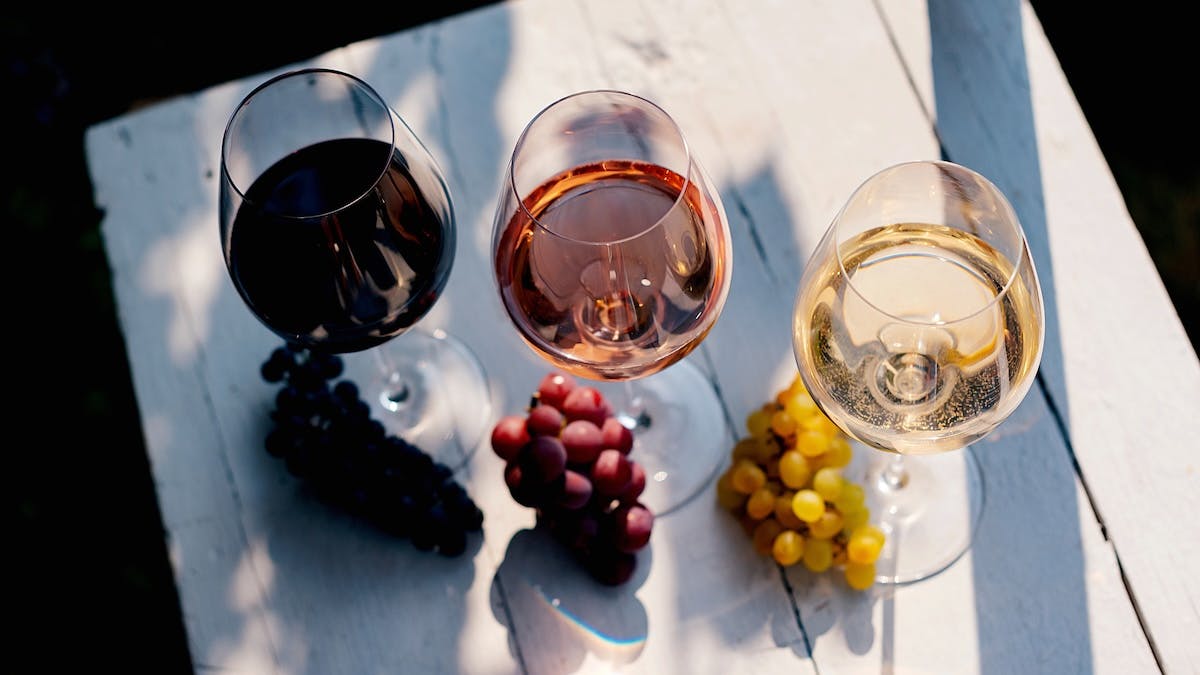
What distinguishes red wine from white is contact with the grape skins during fermentation — and if you’ve ever heard hipsters clamour about “orange wine,” that is simply white wine similarly fermented on its skins. Those skins provide color — and, more importantly, tannin. With few exceptions, the thicker the skins, the richer and darker the wines.
If you’re unsure what tannin feels like, try this. Take a grape from the grocery store and gently peel away the skin. Eat the skin on its own. You’ll notice a drying, slightly puckering sensation along your gums and cheeks. That’s tannin. When you eat the whole grape, the juicy pulp softens that effect, and the natural acidity keeps everything in balance.
Tannins bind to proteins in your food, softening their grip and allowing the savory elements of the dish to emerge. It’s why a tannic Cabernet can feel abrasive on its own yet suddenly supple beside a well-marbled steak.
Red wines span a broad structural spectrum. Some lean toward darker, black-fruited intensity — Cabernet Sauvignon and Syrah, for example. Others are lighter, more red-fruited and translucent in character, such as Pinot Noir, Gamay, or Nebbiolo. In between sit grapes like Merlot, Cabernet Franc, Grenache, and Tempranillo, offering varying degrees of weight, tannin, and fruit expression.
As always, when pairing wine with food, match the weight of the wine to the weight of the dish. Gamay — most famously from France’s Beaujolais region, though increasingly compelling examples emerge from Oregon’s Willamette Valley and Ontario’s Niagara — is a favorite for its affordability and versatility. Bright in acidity and modest in tannin, it pairs effortlessly with pan-seared salmon, roast chicken, most salads, or a decadent cheeseboard.
If you’re hankering for something richer to pair with something like barbecue, look no further than the southern Rhône’s Grenache-driven blends. These wines are plush, spice-laced, and comfortably at home beside smoke and char (also delightfully affordable). Southern Italy’s Primitivo — the same grape as California’s Zinfandel — offers a similarly ripe, generous profile, with enough structure and body to stand up to sauce-slathered ribs, brisket, or burgers.
And if meat isn’t your preference, southern Rhône reds still shine alongside such vegetarian options as charred eggplant, roasted beets, or sautéed mushrooms. Lighter reds such as Pinot Noir are classic companions for mushroom risotto, where Pinot’s signature “forest floor” and earthy notes complement those of the dish. Another useful technique is to match aromas and flavors in the glass with those on the plate.
Whatever red you ultimately choose, be sure to chill it slightly; most people drink their reds far too warm. “Room temperature” refers to the drafty halls of a medieval French castle, not a modern, climate-controlled and insulated house or condominium. Twenty minutes in the refrigerator before serving will bring most reds into the ideal range — around 60°F (15–16°C) — preserving freshness and sharpening acidity.
The permutations for wine pairings are effectively limitless. There are countless grapes and styles not mentioned here (forgive me if I omitted your favorite). But the guiding principles remain the same: Think about structure, think about weight, think about balance — though ultimately, drink the wines you love. The only real rule is to experiment, embrace curiosity, and trust your palate.
***